Alternative TitlesSynonyms: Charcoal Feather Federation Japanese: 灰羽連盟
Information
Type: TV
Episodes: 13
Status: Finished Airing
Aired: Oct 10, 2002 to Dec 19, 2002
Duration:
24 min. per episode Rating:
PG-13 - Teens 13 or older
L represents licensing company
StatisticsScore: 8.191 (scored by 23642 users)
Ranked: #2912
Popularity: #199
Members: 44,589
Favorites: 1,670 1 indicates a weighted score
My Info
Popular Tags
drama fantasy mystery slice of life |
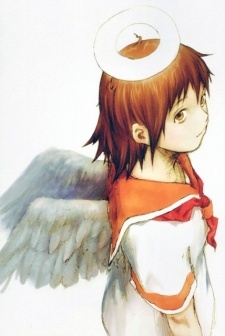
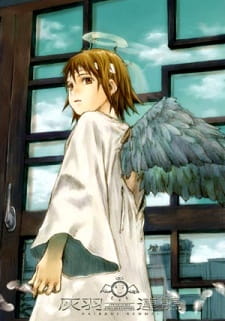
SynopsisA dream of falling from the sky...and then birth. Rakka is born from a large cocoon into the Old Home, greeted by a group of females with small wings on their backs and shining halos above their heads. Soon Rakka’s own wings grow, a halo is placed on her head and she is told that she must work in the nearby town of Grie. She soon realizes that the town and the entire world they live in are confined behind the Wall, a tall, impenetrable wall that none except the mysterious Toga are allowed to exit.
(Source: ANN) |
Related AnimeAdaptation: Haibane Renmei
Characters & Voice Actors
Staff
Reviews
|
|
Siarus
145 of 176 people found this review helpful
|
13 of 13 episodes seen
|
| Overall |
10 |
| Story |
8 |
| Animation |
8 |
| Sound |
10 |
| Character |
9 |
| Enjoyment |
9 |
This is the most striking anime I've ever seen. The care and imagination that went into every aspect of the show is remarkable, but due to the slow, gentle nature of the series I wouldn't recommend it to everyone, if only because this isn't a typical anime in terms of plot. The suspense is subtle -- difficult to spot if you're watching it for the first time -- and builds up over half of the series. Haibane Renmei starts off languid and mysterious, and it tapers off just as languid and mysterious, and every episode seems to reveal more questions that never get answered. Even with the sudden spike in conflict later in the series, most of it is internal.
Don't be fooled by the angel-like appearance, by the way. Religion has nothing to do with this anime, and ABe has said before that it's a purely aesthetic choice, though some do feel that there's symbolism involved.
That said, it's provocative and heartbreaking and dreamlike. Pacing is slow, but expertly done. You'll find that one episode transitions easily into the next. And so much of the story is implied... as well as character backgrounds and the like.
Its art doesn't try to wow the viewer, and it seems content to just let the setting and soft colors and unique character designs speak for themselves. The backgrounds are gorgeous and detailed. Characters' personalities are mild and realistic; no character gets shoved into the standard archetypes you so often see in anime.
Also notable is the soundtrack. Every song fits the mood of Haibane Renmei perfectly -- especially notable (aside from the opening, "Free Bird," and ending theme "Blue Flow") are "Garasu no Yume," "Ailes Grises," "Starting of the World," and "A Little Plate's Rondo." Many of them feel like lullabies. Personally, the soundtrack is one of my favorite parts of this series, but looking at the other reviews, it looks like I'm the only one who finds it so breathtaking. Your mileage may vary.
It begins by letting the viewer into the peaceful simplicity of daily life in Glie, allowing insight into the setting and the minor characters, but it grows into a story about friendship and letting go and guilt and forgiving yourself and so much more. The climax of the story is likely to make you cry or cringe or suck in your breath -- maybe all three.
At times depressing and at times gently uplifting and feather-soft, Haibane Renmei is unparalleled in beauty, and I wouldn't hesitate to call it my favorite anime of all time. read more
|
|
TrenchKamen
117 of 155 people found this review helpful
|
13 of 13 episodes seen
|
| Overall |
9 |
| Story |
8 |
| Animation |
10 |
| Sound |
10 |
| Character |
8 |
| Enjoyment |
9 |
This is truly a stand-alone work in terms of originality. ABe did not self-censor and allowed the full weight of his intuition and dreams to direct his hand, and the result is a beautiful, ethereal, archetypal world fully-realized and yet deep enough to retain mystery. The show does not explain everything, even the most important aspects of Gile, and that feels okay. We can see in this fantastic world what is in our innermost hearts, and our intuition fills in so many of the gaps. Few stories manage to do this so well.
The story manages to blend soft, yet interesting, aspects of slice-of-life with haunting and bittersweet themes such as suicide, sacrifice, and redemption. This hints of something intimate from within ABe's innermost heart, something he himself has experienced--and in that rawness, there is a universal quality. Many people in fandom have experienced profound loneliness and depression in a manner that seems to echo throughout the story. Many of us have felt useless, hopelessly misunderstood, and lonely. This is a story of comfort.
True to ABe's style, the artwork for this title is utterly fantastic. The setting is stunning in its beauty, European-style architecture amid emerald-green fields and rust-mottled windmills, harmonized with East Asian-style shrines, festivals, and esoteric memorabilia. The characters' names come from Japanese words for concepts, and the world's writing is in Japanese, so it is by no means divorced from its source country, nor does ABe try. The result is not in the least jarring: if anything, it is merely another aspect of integration, something soft and beautiful and lush. And the clouds--the weather phenomena simply looks fantastic.
If you cannot stand anime with a slow, idyllic pace, or you simply must have action, giant robots, and political intrigue, this is not the show for you. Likewise, if you cannot stand symbolic, dreamlike storylines in which not everything is explained explicitly, this will drive you mad. Otherwise, I highly recommend taking a trip into Gile. It will be greatly worth your time. read more
Recommendations
|
|
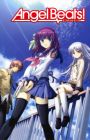
While Haibane Renmei couldn't be more dissimilar, the concept of the characters being in a supposed afterlife or purgatory are both extremely integral to the setting. Although in Angel Beats!, it seems like they fear the next step and thus rebel in anyway to ensure they don't disappear. However, in Haibane Renmei, they do the exact opposite and are more resigned to their fate, and there is little conflict.
Both are Slice-of-Afterlife.
Сonsimilar afterlife setting.
Similar premise, very different execution.. Haibane takes away the comedy, action and some cuteness factor in order to bring more deepness to the premise setting, but both anime can leave you wondering the same questions about life purpose, and death.
Similar in both is by accepting yourself(regret) or atone your sin of your past before death you will be free from that world. Born to other world where they had to do work and live on with other people a.k.a citizen of that world.
In both, people are born into another world after they die because of regrets from their life before and stuck there until they can get rid of their regrets and become at peace with themselves.
Angel Beats! and Haibane Renmei have similar concepts, and both are centered around characters who are in a purgatory-like setting. While Angel Beats! has more comedy and action, Haibane Renmei takes a much more serious tone, and likes to leave things up to the viewer to interpret. Liking one of these shows does not necessarily mean you will like the other, but it is worth trying.
Same concept.
Haibane Renmei is Angel Beats! done right.
Both stories take place in an after life of some sort and has simmilar themes.
Haibane Renmei is more serious then Angel Beats, though.
Both anime explore the concept of "Afterlife", and features the characters being trapped in another world due to their regrets from their past lives. Both characters are required to find peace within themselves to be finally set free.
Haibane Renmei is much more serious and complex, while Angel Beats! is a lot more comedic and action-packed.
|
|
|
It has the same atmosphere - even if the heroines are cute and nice, the reality is still bitter sweet.
Seemingly unassuming slice of life shows which eventually take a more dramatic, sinister twist. The settings in these shows are fascinating and mysterious, and play a huge role in the story, as much as the main characters themselves.
Similar setting: an isolated, ancient outpost near a small medieval town with odd traditions.
Similar style: cheerful slice-of-lifeish with periodic depressing points.
Similar focus: characters and their pasts.
Similar Characters:
A friendly, yet initally immaturely self-centered protagonist: check
A highly respected, yet sometimes moody leader who takes the protgonist under her wing: check
A motherly and sedate character: check
A mechanically-inclined character: check
Sora no Woto is just Haibane Renmai with a K-ONesque art style
Both are series that have a LARGE, and more complex universe, that... really only serves to accent/fuel the actual purpose of the series: The unbreakable bonds formed through identical circumstances.
Both also have some fine art and have a legendary composer(ironically, both composers are primarily known for one or two specific series).
They both start off with simply creating their own peculiar aura as well as setting up their own way of life. It isn't until later when those commonalities serve more as an obstacle than a stimulant.
They both have wonderfully sweet casts.
Sora no Woto's world is touched upon more than Haibane's. Less mystery in that department. Still, character mystery, in addition to secondhand character growth is present. Complementary enjoyable side stories are here too. Admittedly, the topic is a bit darker.
Haibane's world serves as one BIG allegory or theory. Nothing is really answered about those things as they serve to assist with the character's ensuing destinies. The powers that be all also a bit more in control, though with better, purer intentions. Haibane's soundtrack is also more of a home-run than Sora's. Lastly, Haibane's functionality is sooo differently well done that it earns the title of "classic".
If K-on similar in music motives and character design, than Haibane Renmei is similar in atmosphere.
We have small closed society inside the city. Platoon 1121 is honorable part of towns life, but they aren't part of town itself. Same as Graywings honored within the city, they are outcasts in peaceful world.
The beginning of Kanata's and Rio's relationships resembles Reki's and Raka's.
And of course we have this quiet sensation of something hidden, but it is not dangerous, but simply unknown.
Gentle slice of lifes that get dramatic towards the end. Both excel in atmosphere and world building. They also both have great soundtracks. Sora no Woto isn't quite as "deep" as Haibane Renmei, character-wise or theme-wise, but it's still got plenty of merit of its own.
Very similar art style and characters, has the same atmosphere of a peaceful, secluded town in a very unknown world. The only key difference is that Sora no Woto tends to open it's world a bit more, while the Haibane world is only limited to both people and locales inside the wall. In fact, I was quite surprised that the two series weren't made by the same person. 0_o
Sora no woto is setting is a post-war era where the previous humanity was nearly wiped out. Very little culture and knowledge seems to have survived. Throughout the series you just try to piece together what's the world is like from the main cast daily interactions.
Similar to Haibane Renmei, it is some what of a mystery as to what the world around them is like. A female main character joins an existing group of characters to learn their way of life. Each episode is structured like a slice of life genre, and also the entire cast is female. You can expect character development to unfold slowly with each episode. You have a bunch of cute/moe moments but the over arcing story is rather tense.
Sora no Woto does have some sad moments, but I wouldn't call it a tear jerker like how Haibane Renmei built up to. But overall I think you would see similarities you might enjoy in Sora no Woto.
|
Opening Theme"Free Bird" by Kou Otani
Ending Theme"Blue Flow" by Heart of Air
| No posts for this board were found |
Fansubbing Groups
Which fansubbers do you like the best? Click + to approve of their subs for this show. Click - if you don't think they did such a great job.
Related Clubs~ Nothing Special About Angels ~, Anime 360, Cogito Ergo Sum - Philosophy In Anime and Manga, Beautiful Anime Club, We Love MASKS!!~, Smoker's club, Kou Ootani FC, Ryou Hirohashi Fan Club, The Emotional/Sad/tragic Anime Collection worth watching club!, Ryou Hirohashi Fan Club, Fantasy Anime Club!, AnimeTracker, Kemonomimi Shoujo, High Class, English Dub Watchers, CNCFixins, Kimi-chan's fanclub, Dark and Light Angel fan club, Wings, Yoshitoshi ABe★Pictorial Culture Miscellany★, Fantasy Club, Angel girls, The Classics Club, Black Rain Cards [BRC], Elegant Imouto, Reki Fanclub, Бессюжетные девочки, Overrated Shit, Haibane Renmei - Charcoal Feather Federation, Watch Anime Together Club Headquarters, Anime Association of Northern Illinois University MyAnimeList club, animeshon, Draccon's Tea House, Reanimedia / Реанимедиа, The Anime Alley Champagne Room, Decadence, Anti Loli Association, Brie and Spirals club of super amazing awesomeness!!, Moe and loli haters , Marketplace Germany, Scooter Girls, Реафаны, Critics and Connoisseurs, Anime Experience, seinen & josei see all
Recently Watched By|
22 minutes ago |
24 minutes ago |
1 hour ago |
2 hours ago |
2 hours ago | |
2 hours ago |
2 hours ago |
2 hours ago |
2 hours ago |
3 hours ago |
|
|