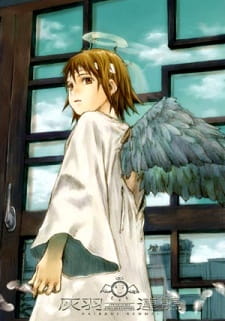
Alternative TitlesSynonyms: Charcoal Feather Federation Japanese: 灰羽連盟
Information
Type: TV
Episodes: 13
Status: Finished Airing
Aired: Oct 10, 2002 to Dec 19, 2002
Duration:
24 min. per episode Rating:
PG-13 - Teens 13 or older
L represents licensing company
StatisticsScore: 8.161 (scored by 28861 users)
Ranked: #3162
Popularity: #246
Members: 56,702
Favorites: 1,945 1 indicates a weighted score
My Info
Popular Tags
drama fantasy mystery slice of life |
Recommendations Submitted by Users
|
|
Both of these shows leave things open-ended, even after the end. If you're interested in thinking about the world that the characters live in when you watch anime, what important concepts are expressed in anime, or want to still think about a show long after it's over, these two shows work well. While they cover different ideas among those concepts, I feel they both cause similar responses.
Both are slow-paced, slice-of-life quiet shows with a lot of character development. Kino's Journey is more episodic, while Haibane Renmei has an over-arching plot.
Slow-paced story about life in a world different than ours. Both anime have the same light atmosphere.
Both are lyrical, soft, eccentric collections of stories about various philosophical observations. Kino is far more preachy and direct with its observations, but is ultimately no less beautiful.
Both Animes start quite slow, and carry on calm and relaxing, but have got a very deep meaning about them. As well, both have got a theme you could call "talk about philosophical life and meanings". A bit exaggerated, but they still definitely have got a special meaning. The Ending is quite open too, nothing really ever happens particular, but still both have got that little, special sparkle, that's rare to find in an anime.
same beautiful and philosophical plot
Both have a calm and slightly ominous atmosphere, make good use of muted colour palettes, and are chock full of metaphor. Kino no Tabi is episodic and more focused on giving a different message or making a different point each episode while Haibane Renmei is built around character interaction and drama.
I found these two series quite alike with their philosophical themes with an emotional story and an insightful main female protagonist. Although slow paced, both of their stories are intriguing and unique that explores subjects that can be emotional for viewers.
Both series also made me think about life and death occasionally that also deals with themes like redemption and forgiveness.
Both series takes an approach in a dream like environment with an insightful depth exploring questions that we often so much around the world. I also found two female protagonist in both series quite similar in several aspects especially in their independence and personalities.
Both series are quite beautiful as well that takes journey of its own.
Both anime have a very similar feel in terms of storytelling and both contain many philosophical and thoughtful undertones, like Kino's Journey Haibane Renmei is very unique and intelligent, and will make you think deeply after every episode. While the plot may be different at the core you will find many similarities, it is safe to say that if you enjoyed Kino's Journey you will definitely enjoy Haibane Renmei.
|
|
|
It has the same atmosphere - even if the heroines are cute and nice, the reality is still bitter sweet.
Seemingly unassuming slice of life shows which eventually take a more dramatic, sinister twist. The settings in these shows are fascinating and mysterious, and play a huge role in the story, as much as the main characters themselves.
Similar setting: an isolated, ancient outpost near a small medieval town with odd traditions.
Similar style: cheerful slice-of-lifeish with periodic depressing points.
Similar focus: characters and their pasts.
Similar Characters:
A friendly, yet initally immaturely self-centered protagonist: check
A highly respected, yet sometimes moody leader who takes the protgonist under her wing: check
A motherly and sedate character: check
A mechanically-inclined character: check
Sora no Woto is just Haibane Renmai with a K-ONesque art style
Both are series that have a LARGE, and more complex universe, that... really only serves to accent/fuel the actual purpose of the series: The unbreakable bonds formed through identical circumstances.
Both also have some fine art and have a legendary composer(ironically, both composers are primarily known for one or two specific series).
They both start off with simply creating their own peculiar aura as well as setting up their own way of life. It isn't until later when those commonalities serve more as an obstacle than a stimulant.
They both have wonderfully sweet casts.
Sora no Woto's world is touched upon more than Haibane's. Less mystery in that department. Still, character mystery, in addition to secondhand character growth is present. Complementary enjoyable side stories are here too. Admittedly, the topic is a bit darker.
Haibane's world serves as one BIG allegory or theory. Nothing is really answered about those things as they serve to assist with the character's ensuing destinies. The powers that be all also a bit more in control, though with better, purer intentions. Haibane's soundtrack is also more of a home-run than Sora's. Lastly, Haibane's functionality is sooo differently well done that it earns the title of "classic".
If K-on similar in music motives and character design, than Haibane Renmei is similar in atmosphere.
We have small closed society inside the city. Platoon 1121 is honorable part of towns life, but they aren't part of town itself. Same as Graywings honored within the city, they are outcasts in peaceful world.
The beginning of Kanata's and Rio's relationships resembles Reki's and Raka's.
And of course we have this quiet sensation of something hidden, but it is not dangerous, but simply unknown.
Gentle slice of lifes that get dramatic towards the end. Both excel in atmosphere and world building. They also both have great soundtracks. Sora no Woto isn't quite as "deep" as Haibane Renmei, character-wise or theme-wise, but it's still got plenty of merit of its own.
Very similar art style and characters, has the same atmosphere of a peaceful, secluded town in a very unknown world. The only key difference is that Sora no Woto tends to open it's world a bit more, while the Haibane world is only limited to both people and locales inside the wall. In fact, I was quite surprised that the two series weren't made by the same person. 0_o
Sora no woto is setting is a post-war era where the previous humanity was nearly wiped out. Very little culture and knowledge seems to have survived. Throughout the series you just try to piece together what's the world is like from the main cast daily interactions.
Similar to Haibane Renmei, it is some what of a mystery as to what the world around them is like. A female main character joins an existing group of characters to learn their way of life. Each episode is structured like a slice of life genre, and also the entire cast is female. You can expect character development to unfold slowly with each episode. You have a bunch of cute/moe moments but the over arcing story is rather tense.
Sora no Woto does have some sad moments, but I wouldn't call it a tear jerker like how Haibane Renmei built up to. But overall I think you would see similarities you might enjoy in Sora no Woto.
Both series are essentially atmospheric slice of life shows with a focus on world-building. However, there are some key differences. The contrast between the serious and the lighthearted is more dramatic in Sora no Woto while Haibane Renmei's tends to be subtler in all aspects. Furthermore, the post-apocalyptic setting of Sora no Woto is beautifully tangible and chillingly possible with the story taking place in a colorful town littered with cultural relics from our own world while Haibane Renmei's magical realist universes more allegorical in nature with fantastical elements alongside the mundane.
Ultimately both series are wonderfully paced atmospheric pieces that forgo plot in favor of letting the characters explore and guide the viewers through meticulously crafted environments.
|
|
|
While Haibane Renmei couldn't be more dissimilar, the concept of the characters being in a supposed afterlife or purgatory are both extremely integral to the setting. Although in Angel Beats!, it seems like they fear the next step and thus rebel in anyway to ensure they don't disappear. However, in Haibane Renmei, they do the exact opposite and are more resigned to their fate, and there is little conflict.
Similar premise, very different execution.. Haibane takes away the comedy, action and some cuteness factor in order to bring more deepness to the premise setting, but both anime can leave you wondering the same questions about life purpose, and death.
Similar in both is by accepting yourself(regret) or atone your sin of your past before death you will be free from that world. Born to other world where they had to do work and live on with other people a.k.a citizen of that world.
In both, people are born into another world after they die because of regrets from their life before and stuck there until they can get rid of their regrets and become at peace with themselves.
Angel Beats! and Haibane Renmei have similar concepts, as both are centered around characters who are in a purgatory-like setting. While Angel Beats! has more comedy and action, Haibane Renmei takes a much more serious tone, and also likes to leave things up to the viewer to interpret. Liking one of these shows does not necessarily mean you will like the other, but it is worth trying.
Same concept.
Haibane Renmei is Angel Beats! done right.
Both anime explore the concept of "Afterlife".
The characters appear to be in some sort of afterlife. The characters appear to have all gotten there after suffering some sort of grief or regret in their past life
There is a distinct possibility that most, if not all, of the characters committed suicide
It appears that a primary way to “disappear” from where they are is to forgive themselves for some regret that the held over from their previous life.
Both stories take place in an after life of some sort and has simmilar themes.
Haibane Renmei is more serious then Angel Beats, though.
Both anime explore the concept of "Afterlife", and features the characters being trapped in another world due to their regrets from their past lives. Both characters are required to find peace within themselves to be finally set free.
Haibane Renmei is much more serious and complex, while Angel Beats! is a lot more comedic and action-packed.
|
|
|
If you like the artwork of Yoshitoshi Abe, then you will love this series.
These anime share the same weird atmophere. The stories are mostly slow and in the end, you will probably still have lots of questions. The story lines aren't always similliar, but they are both about a girl who doesn't understand the world.
Both series feature character designs by Yoshitoshi Abe and they are both very atmospheric.
Both are great animes from same director, Yoshitoshi Abe. Altrough stories may seem very different, they have same level of understanding and deepness. Also, they are very slow paced, so if you don´t like this kind of anime, then don´t watch it. Artwork in both Serial Experiments Lain and Haibane Renmei is top-notch, altrough style of Serial Experiments Lain is much more darker than style of Haibane Renmei.
weirdness, art of life, drawing
|
|
|
Im not saying the story line is the same but it'll gives you quite the same feeling when you're watching Mushishi. You'll be waiting patiently for the mystery to unfold itself.
Adopt modest and humble approach to its way of narrating their stories. Contain a lot of symbolism too.
These series have similar atmosphere of mysterious world surrounding main characters. They both have relaxing soundtrack and beautiful art style. I recommend you to watch them after hard day ;)
Slow pace and very beautiful.
These two anime series have a few things in common. They both share a light-fantasy setting and they are both very calming to watch.
|
|
|
While the settings are vastly different (Futuristic computerized city, verses rural small town) the over all themes dealt with in the two series are very similar. Loss of loved ones and learning to move on, understanding what is real and what is fake, etc.
Haibane Renmei and Denno Coil may seem very different at first glance, HR taking place in an environment deprived of modern technology while DC focuses on the borders between reality and the internet but the spirit of both shows is remarkably similar. Both deal with young female leads who must learn how to adjust to unusual circumstances surrounded by mystery in a world where things are not as they at first may seem. The original take on this theme is enhaced by thoughtful moments and a subdued but very lush artwork. What truly seals the deal in establishing a kinship between the two titles is the relationship between two young girls: a certain emotional healing takes place in HR and DC, providing excellent character development through and through.
In both these series, the ultimate conflict involves an emotionally damaged girl having to come to terms with her past trauma through the help and friendship of another girl. The latter parts of both series have a similar mood.
They are both about young people coming to trust others and move on from the past. Endearing, believable cast of characters combined with a surreal setting that both warms and chills the viewer, makes these two more similar at heart than any other series that are recommended.
There are strange parallels in characters. And o much kindness in both titles!
|
|
|
A slow and gentle progression, showing a different world, the different people that live there and their various occupations, while the involved characters grow and learn about life.
Mainly, the atmosphere of both 'Haibane Renmei' and the 'Aria' series is extremely similar for their overwhelming calmness. Also, the plot of both are somewhat similar in that both characters are in a certain type of organization and are striving to become a 'useful' member of that organization.
If you liked Haibane Renmei, then there is a 90% chance that you'll love the Aria series
(In my case, it was so ^_^)
These two slice of life animes are similar in the calm atmosphere both have
The characters kindness and in some way the peaceful worlds are also something alike
While Haibane is more melancholic, Aria is more effusive. However, in both series you get a warm feeling in every episode
Its a very soft anime. It's about enjoying life, I think. I also recommend the manga.
|
|
|
It has the same atmosphere.
They have a similar atmosphere.
Both feature a medieval-ish setting and are lightly supernatural.
They show traditions of different people.
Haibane Renmei and Spice and Wolf are incredibly similar in terms of pacing and atmosphere. They feature more mature plots and subdued characterizations than most anime, and I think they would appeal to the same type of audience.
|
|
|
Zettai Shonen may be twice as long as Haibane Renmei, but the pacing of both the shows is similar. They both are more reliant on character development than moving the plot forward. There is an aura of the supernatural in both shows, however Haibane Renmei has a superior art style.
The slowly revealed plot and the strength of character development make both of these shows worthwhile.
Zettai Shounen has a slow, melancholy pace, unexplained or slowly explained phenomenon, and mystery with some connection to an unclear past. I'm not crazy about the character art but gets the job done but the background art combined with minimal dialogue and a natural sound track that includes bird songs and insect noises works very well. The summer arc conveys the slow, heavy, hot, sun bleached, dusty feel of August and the winter arc the quiet chill of winter as the story oozes forward. Not for every one but worth a look if you enjoy the mystic.
The genres of these two shows are slice of life with a few supernatural/fantasy quirks added. A plot later does reveal itself. The two start off with a very similar atmosphere of a sleepy peaceful town and a newcomer to that place. If you can stand slow pacing, these two are great. Along with a similar atmosphere, the music is also very similar. I can't stress this enough. I had to actually check if they had the same composer but they are different. Both soundtracks are very great. Also, if you were alright with either one of the two shows endings which left a few unanswered questions, you'll be alright with the other as well. They have satisfying endings.
|
|
|
Both series are of similar nostalgic feelings. Problems that they are showing are difficult to assess. Very ambiguous. Both anime are also formally similar (colors, the pace of action, universal message).
Although the topics aren't the same, they have an extremely similar emotion to them. If you liked Haibane Renmei, you'll surely enjoy Gunslinger Girl.
As another user said, there is a certain emotion one feels for the girls. As you watch you feel sorry for them yet enjoy that they can still manage to find happiness from day to day.
|
|
|
Out of all of Yoshitoshi ABe's series, I believe NieA_7 is the one that bears the most resemblance to Haibane Renmei. Both are set in laid back rural settings where nothing of importance happens day to day and both are about extraordinary beings living off of the good will of normal human beings. NieA_7 focuses on the relationship of two characters. NieA, an alien, is freeloading off of Mayu, a young woman attending cram school because she failed to get into college. It's more of a comedy than Haibane Renmei but if you enjoyed the calm idyllic pace of Haibane Renmei NieA_7 should fit your tastes as well.
both r by the same creator....and the art,character design and atmosphere is pretty much the same...
same art style and same atmosphere. both are a little mysterious because Haibane Renmei deals with angels while Niea Under 7 deals with aliens. Both also deal with human behavior and such. Niea Under 7 is like the comedy and less serious version of Haibane Renmei in my opinion.
|
|
|
Both of these anime deal with self discovery. But while Haibane Renmei is about learning who you are to move on and liberate yourself, Colorful (Movie) is about learning who you are to reorient yourself in life. They're each other's antithesis on the same subject.
Both shows deal with souls set apart from the usual system of reincarnation and given a time-limited chance to correct the errors of their former lives.
|
|
|
Although the plots have practicably nothing in common the characters on the other-hand do have the same vibe to them
Both shows have similar character archetypes and interactions. One won't find many similarities in terms of plot or setting. But the way that the characters are portrayed ultimately gives one similar emotions that can best be described as "a warm fuzzy feeling."
|
|
|
My favourite thing about Haibane-Renmei was the world the Haibane lived in. I liked seeing how the people there lived and worked, but felt there wasn't enough attention paid to theirdaily lives or interests. The major frustration I had with the series was that we knew so little of the town's history - its own story. ARIA managed to follow up with that beautifully.
These series are similar not in their mood (Haibane-Renmei is MUCH darker in its plot and development, whereas ARIA stays light throughout) or even their characters, although some similarities are present, but in the introduction of the world that they live.
Both Gile and Neo-Venezia are cities where people share generousity and politeness, where animals have symbolic meaning and working is pure happiness.Sheer utopia
|
|
|
The leads in both stories join a gang, grow in the process and give something back to their friends.
They are both slow paced character-centric stories with excellent character interactions, and strong yet subtle emotions underplaying beneath all the dialogues and expressions. An air of mystery and intrigue surrounds both series. The excellent music score is like a separate character itself, and plays an important. Both shows have a unique visual presentation with soothing and deep color palettes.
HR is more angst-filled, while SG handles its emotions with more subtlety.
Mellow, slow paced stories about finding solace in another person. They take a character who seems to be on top of it all and slowly reveal that they're not as tough as they initially appear through flashbacks and character development. They come out of their shells and finally find the comfort they've been searching for in the protagonists.
|
|
|
Both anime are shorter series with an mainly all female cast. both series the characters have to deal with a situation not exactly being all that it seems to be. Both characters deal with an extended amount of sadness and both carry along some fantasy elements with them.
Where Madoka features Magical Girls, Haibane Renmei feature the Haibane or Charcoal Feathers. These two series explore some of the more intricate parts of human nature through a fantasy setting, and the general development of their plots are very similar. Worlds that at first seem to be utopic suggest more melancholic truths, while cute and likable characters deal with heavy existential questions and are forced to make difficult choices.
|
|
|
Both share distinct similarities in regards to their respective protagonists and plots. In both cases, a young girl is transported to a mysterious new world where she must learn to live and work within a community of strange creatures, guided by new-found friends. As time goes by, these girls learn strength and wisdom and question the world they live in and the authority that rules it. Similar plot themes are also notable in how both girls suffer the loss of their identity and memories, and come to recognise the pain in the life of a close friend, setting out to help them.
Slow paced...stuck in a strange new world...calming...and there is fantasy.
|
|
|
Aria is more light-hearted and not as deep as Haibane Renmei, but they truly are two of the best slice of life anime ever made.
Both shows evoke emotions, have subtle character development and take place in astounding settings. Haibane is darker though, while Aria is way longer, features a bigger cast and is episodic for most part (requires the two previous seasons).
|
|
|
The two are oddly similar in that they both have aspects of monkhood. They both have some yuri in them, with Simoun clearly having more. If you're into strange worlds, odd trials, and that slice of humanity that just can't be put into words, then Simoun and Haibane Renmei are for you.
These series both left me speechless. Not in a cliche, "beautiful wonderful" way, but just in the sense that I really didn't know what to think. It's an ambiguous melancholy that walks directly between intolerable and enjoyable, so I assume that one who enjoyed the unique atmosphere crafted by Haibane Renmei would certainly enjoy the universe presented in Simoun.
|
|
|
The slowish yet engrossing pace, and the feel that the series gives off is about the same.
Both stories begins lighthearted and peacefully, and you'll assume that the rest of the story is like this too. Annd then you realize you're wrong :D
if you want something that makes you wonder, Air and Haibane Renmei are the way to go C:
|
|
|
Both have good stories, as that's all I care about.
|
|
|
Same atmosphere, calm animes, same supernatural and slice of life anime...
|
|
|
These two series have different look and feel, yet they take you to the same depths and heights. If you believe that Utena is just about sword-fighting or weird relationships or runaway kangaroos, just skip this recommendation. However, if you're into the spiritual/mystery layer of Utena, then welcome to the town of Glie for another bunch of shockingly right questions and answers. Likewise, if you're a Haibane fan in search of another mind-blowing story of true Friendship and Forgiveness, then Ohtori Gakuen is waiting for you (if only you don't mind some sword-fighting / weird relationships / runaway kangaroos).
|
|
|
Both are beautifully drawn, slow-paced, soft and dramatic at the same time, and both have the main character "take the Day of Flight".
|
|
|
HR is a heartwarming, quiet and smooth anime. So TG is, but you get more humor, action (in the end of the film) en plus, but you won't get angel-girls, yeah i know that's a pity. In HR AND TG characters have to face their shortcomings and to overcome them. To tell the truth, these two animes are completely different in drawing, setting, plot, world and so on, but they are very close to each other in a spirit way (it may be a wrong word,so please, forgive me): you can feel love and creators' soul coming out from both of them. And, whem i whatched them both, i can say i have a similar impression of them. Also, it's as good a time as any to watch a Christmas movie, and TG is one. So go and watch Tokyo Godfathers, i know you'll like it.
|
|
|
well,believe it or not this anime is quiet and peaceful has the same aspect of an old town with similar music and calm lives the storyline is not similar at all but they are similar at one thing and that is that neither the characters from H.R and Alice the main character of P.H do not remember anything from their past,i enjoyed watching both although Pandora hearts is and forever will be my favorite anime of all time ^^
|
|
|
As with Tokyo Magnitude 8.0 the story is character driven and about deep issues that make you think. You'll re-watch this many times to pick up subtle clues to the main story. Also with no main villian t fight the story is about self reflection as we watch this coming of age story with a slight magic theme. but trust me only the situation is magic everything else is about the rakka and reike as they try to resolve many questions about themselve and how they came to be here.
|
|
|
Peaceful atmosphere, slightly touched with magic, that transitions into psychological investigation at the second half of the series, as the newcomer helps her superior who guided her to overcome some painful memories of the past. These series are close both in airing dates and in atmosphere they possess.
|
|
|
although the story is very different and haiane renmei is a bit darker, the main characters remind me of each other. they seem to have the same feel...i think so anyway
|
|
|
Careful storytelling and believable characters are the strength of both shows. And both feature a strong but troubled woman as a main character who selflessly helps others.
While Moribito has more action and is set in a very different world, elements like the mystery and the slow pacing make them feel alike.
And best of all: they will both make you think about them well after watching them.
|
|
|
You've seen one of these masterpieces and you don't know where to go next? Looking for something as brilliant and perfect which isn't a copy of the anime you just saw? This is it. Both are shinning pinnacles of slice-of-life, which may seem like a genre for which it is easy to produce animes, while in reality it's quite tricky to avoid all the pitfalls of mediocrity and make something so enjoyable and heartwarming as these two.
|
|
|
In both series the main characters seek to redeem themselves of sins they don't quite remember. Both sometimes seem meandering at times and absolutely beautiful at others. They also share a similar level of western religious symbolism without ever relying on overt Christian symbolism like Evangelion or Ergo Proxy.
|
|
|
They both are very philosophical and dark. What is one's purpose, why am I here, etc.
|
|
|
Sola reminded me of Haibane Renmei a lot in terms of artwork and the direction. The settin is also somewhat similar with all the protagonists being half-immortal. The main difference I can see is that Sola has a darker tone than Haibane Renmei.
|
|
|
These two shows define the slice-of-life genre pretty well, with a bit of fantasy thrown in. They're both stories of the characters finding themselves after a strange occurrence that changes their lives forever, and overcoming a past that they may not wish to confront. Pretty slow-paced, but fulfilling, as are most animes of this nature.
|
|
|
Haibane Renmei and Figure 17 are essentially about overcoming emotional withdrawal and learning how to connect with others. In both cases the main character is faced with a new environment and must learn how to adjust as well as how to gain self confidence. Forging bonds and dealing with loss are at the core of these two series, even though Figure 17 has a strong sci-fi element that is absent from the highly mysterious Haibane Renmei. In both series the pieces of slice of life are priceless and blend perfectly with the rural atmosphere that makes for lively sceneries in Figure 17 and lush settings in HR. These are very bittersweet and highly emotional efforts that share a lot of themes; fans of one are likely to enjoy the other
|
|
|
Even though the setting is very diffrent both are emotional stories about a group of teenagers and their everyday lives.
|
|
|
strong philosophical, humanistic element
|
|
|
They both have many differences ( Saikano being more of a romance ), but I think the feel of each is similar. Both are deeper type of anime's with a bit of sci-fi mixed in.
|
|
|
In both, a girl is suddenly thrown into a completely new setting where she must learn to adjust to a very different set of circumstances and people than she's used to. After which she learns some lessons about things like finding your path in life and that everything that begins must also come to an end someday.
|
|
|
Both have beautiful art and at times a similar feel. They are both set in heavily developed, atmospheric worlds.
|
|
|
While Princess Tutu is much more shoujo and romantic than Haibane Renmei, if you look beyond the glittery ballet sequences and magical girl elements in PT, there are many simlarities. Both of these tales take place in mysterious towns surrounded by high walls, with likeable, complex characters who struggle to figure out who they are and why they're there. Both are stories of mystery, discovery, and love. Both are rather slow-paced.
|
|
|
although both productions are telling totally different stories, both of them take a deep insight into humans' souls, their sercet desires and weaknesses. both treat about people who lost their way and now seek the way back. set in different realities, Haibane Renmei as well as Gedo Senki points out that no matter how much we sin, we are only humans and there's still the hope for us if we are able to admit our failures. to sum up, both are great anime worth giving a try.
|
|
|
They are both very slow, without an 'action & adventure-plot' If you like slice-of-life and a bit of fantasy, you will enjoy both these anime.
|
|
|
These anime are very different.
Especially, the first 16 episodes of Trigun. Those are mainly focused on action and comedy.
However, I think that from episode 17, Trigun shares a common theme with Haibane Renmei.
Being stuck in a monotone world, not knowing one's purpose. With no certainties. Somehow trying to do what's right. Being subjected to phenomenon beyond the comprehension of an individual. Struggling to accept one's fate.
Wishing to lead a simple life, somewhere far away, in the face of cruel reality.
Other than that, I find the graphics similar - both pale.
If you're looking for something featuring existential angst, this could be it.
|
|