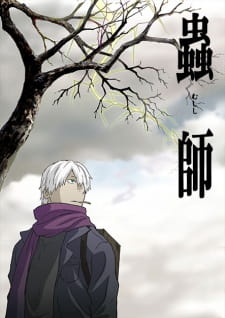
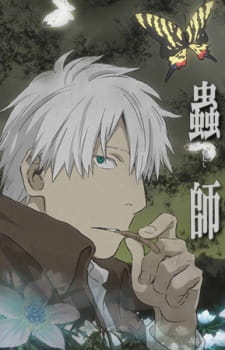
Alternative TitlesSynonyms: Mushi-shi Japanese: 蟲師
Information
Type: TV
Episodes: 26
Status: Finished Airing
Aired: Oct 23, 2005 to Jun 19, 2006
Duration:
25 min. per episode Rating:
PG-13 - Teens 13 or older
L represents licensing company
StatisticsScore: 8.821 (scored by 44459 users)
Ranked: #222
Popularity: #91
Members: 94,006
Favorites: 5,788 1 indicates a weighted score
My Info
Popular Tags
adventure drama fantasy supernatural |
Synopsis"Mushi": the most basic forms of life in the world. They exist without any goals or purposes aside from simply "being." They are beyond the shackles of the words "good" and "evil". Mushi can exist in countless forms and are capable of mimicking things from the natural world such as plants, diseases, and even phenomena like rainbows.
This is, however, just a vague definition of these entities that inhabit the vibrant world of Mushishi, as to even call them a form of life would be an oversimplification. Detailed information on Mushi is scarce because the majority of humans are unaware of their existence.
So what are Mushi and why do they exist? This is the question that a "Mushi-shi", Ginko, ponders constantly. Mushi-shi are those who research Mushi in hopes of understanding their place in the world's hierarchy of life.
Ginko chases rumors of occurrences that could be tied to Mushi, all for the sake of finding an answer.
It could, after all, lead to the meaning of life itself...
[Written by MAL Rewrite] |
Related AnimeAdaptation: Mushishi
Characters & Voice Actors
Staff
Reviews
|
|
Chelle
491 of 596 people found this review helpful
|
23 of 26 episodes seen
|
| Overall |
10 |
| Story |
10 |
| Animation |
10 |
| Sound |
10 |
| Character |
10 |
| Enjoyment |
10 |
"Mushishi" is an episodic anime that has only one main character~ Ginko. Ginko's purpose is to travel from town to town, researching a phenomenon called "mushi" and their effects on humanity. He also helps the different villages deal with any mushi "problems" they may encounter.
Story:
This is the SINGLE MOST beautiful and original story I have ever seen, both inside and outside the anime community. The concept of "mushi"~ an entity that is neither human, plant, or animal, that affects the daily lives of humans is intelligent and thought-provoking. How Ginko deals with these phenomenon, whether he is just researching or "treating" them is even more compelling. Mushishi's stories have great life lessons hidden within them, and they are brought to life beautifully.
Art:
Beautiful. Gorgeous. Breath-taking. What else is there to say? The scenery art for this series is some of the best I have ever seen. My only complaints about the artwork in this series, is the character art (other than Ginko's). The different characters who appear episode after episode seem to be drawn identically, but just with new clothes and a name tacked on to differentiate them from the last episode. However, this is easily over-looked because of the characters themselves (which will be discussed later.)
Sound:
Well, I'm afraid my review will fall short here. I'm afraid sound is not usually something I really pay attention to, typically. I will say, however, that the OP song is one of my favorites (if not my favorite) among all anime I have seen. Yes, it may be my age saying this, but it is reminiscent of the old 70's folk music that I love so much. It really is a beautiful song. I'm giving the sound a 10, though, based on this song, and the music I did notice through the series, which was quite appropriate for the scenes.
Character:
Aaaaaahhhh... the BEST part of the series. Ginko... Ginko... well, he's just awesome. Sometimes he may come across as one of your old "monotone" teachers/professors, but you get the feeling that he truly LOVES what he does, and the interest he has in researching the mushi is undeniable. The way he sees mushi as neither "evil or good" ... they "just exist, like we do" is a testament to his character. Another great thing about this series is the episodic characters. Other than Ginko (and a doctor that shows up in 3 episodes), all characters are only present for 1 episode. But as someone states in the forums, you come to care MORE about some of these 1 episode characters than you do for some recurring characters in other 26+ epi series.
Enjoyment:
Well, if it isn't obvious by now, I enjoyed/am enjoying this series immensely. I was not sure if I could enjoy an episodic anime with new characters introduced each episode, but I was pleasantly surprised. This series has become quite endearing to me, and has taken it's spot as my #1 favorite series of all time. All of the different aspects of this series, good as they are, individually, combine to make one hell of an awesome and original series.
Overall:
The verdict... (as if it wasn't obvious)... 10/10. This is definitely a series worth watching, and definitely one of THE MOST UNDERRATED anime series out there. Please enjoy it, soon... and let's all spread the Mushishi <3. :3 read more
|
|
TheCriticsClub
292 of 381 people found this review helpful
|
26 of 26 episodes seen
|
| Overall |
9 |
| Story |
9 |
| Animation |
9 |
| Sound |
8 |
| Character |
9 |
| Enjoyment |
10 |
“Don’t let yourself be blinded by fear or anger.
Everything is only as it is.”
Story
Mushishi is essentially a series of stories styled after East Asian legends and folktales. In lieu of gods, spirits, and demons, the paranormal phenomena are attributed to more primitive yet no less enigmatic creatures called “mushi”. Dealing with their kind is the expertise of “mushishi”; professionals whose role may be thought of as an amalgam of healer, exorcist, biologist, X-Files investigator, and Jedi master (well, sort of). Ginko happens to be one of these mushishi and he wanders from town to town, looking for interesting cases and lending a helping hand to those adversely affected by these mushi.
As formulaic as its premise may sound, no two incidents are alike and every episode features not only different mushi but a different setting and cast as well (with Ginko as constant exception). Because of these, the series is able to experiment with various concepts and human relationships and none of the stories ever end in a predictable manner. As such, there is little room for stagnation as each tale manages to be unique and refreshing.
The title is often mentioned in the same breath as Kino no Tabi though Mushishi’s oriental setting and animistic influences give it a more distinct flavor and theme. Whereas Kino limits herself to exploring “what if” scenarios by visiting different countries, Ginko takes it a step further by providing possible solutions and emphasizing the importance of living in harmony with nature, with fellow men, and most importantly, with the self.
Characters:
While not exactly an anti-hero, Ginko’s personality is an unusual mix of benevolence tempered with common sense; a combination of “grace to accept with serenity the things that cannot be changed, courage to change the things that should be changed, and the wisdom to distinguish one from the other.” Saving lives is part of his job but he also knows when there’s reason still to hope and when it’s time to move on. He may break his own code at times for the well-being of the majority and he’s not above fooling the gullible either just to get by. His expertise stems not only from his knowledge about mushi but also from his understanding of human nature.
Similarly, none of these supporting characters are shoved into stereotypes which plague most anime and manga. No catgirls, lecherous geezers, or single-minded youngsters (Believe it!); just regular folks in unusual circumstances due to encounters with mushi. Consequently, it doesn’t require much effort to empathize with these characters even if most only appear in their respective episodes.
Art:
Not only is the theme “everything is only as it is” evident in the content but it also permeates the manner in which the stories are presented. Mushishi doesn’t try to impress; it simply delivers. While other shows of this era tend go overboard with the fancy CG animation, Mushishi’s visuals remain spare yet aesthetically pleasing. Rather than filling up the screen with explosions and fanservice shots at every possible moment, vivid scenes of natural beauty such as raindrops falling from the heavens, cherry blossoms drifting in the wind, and sunlight penetrating the dense foliage are shown instead. Of course, the viewers are occasionally treated to fantastic scenes showing the surreal characteristics of the mushi but these are shown only when called for in the stories and nothing is done in excess. Even the character designs are relatively plain but perhaps these also contribute to the story in their own way since the audience is less likely to judge the characters based on their appearances.
Sound:
Likewise, the audio takes the minimalist approach. The soundtrack is comprised of simply melodies which are surprisingly effective in evoking various thoughts and emotions. Ranging from haunting and heart-rending to hopeful and bittersweet, the music often eliminates the need for more words in the most crucial scenes. Also worth noting is the lack of exaggerated voice acting which makes the cast sound more like real people rather than cookie-cutter characters.
Overall:
In addition to its enchanting audio and visuals, Mushishi also serves drama and thought-provoking content in balanced amounts. Its subtle content and execution never insult the intelligence and present several interesting ideas without drowning the viewers in philosophical jargon or sophistry. All in all, Mushishi truly is one of the finest anime specimen out there.
This review is the final result of a review team composed of members from the "Critics and Connoisseurs" club. The team members were:
Yuunagi - Writer
itsmee - Contributer/Editor
June - Contributer/Editor
Talamare - Contributer/Editor
Here are their individual scorings for the show:
Catogory - Yuunagi, itsmee, June,Talamare
Overall: 10, 9, 8, 9 - avg=9.00
Story: 10, 10, 7, 10 - avg=9.25
Animation: 9, 9, 9, 9 - avg=9.00
Sound: 9, 8, 7, 8 - avg=8.00
Enjoyment: 10, 10, 8, 10 - avg=9.5
In the club wide poll held for Mushishi it received an average overall rating of 9.06
read more
Recommendations
|
|
These are both episodic anime that center around someone who travels from town to town and they usually wind up helping someone through a difficult situation at each stop. While Kino's purpose is only to travel and to see different countries, Ginko's is to find and research "Mushi." Both stories have beautiful animation and offer up "life lessons." Although these lessons may be a little easier to see in Kino's Journey, they're there in Mushishi, as well. Enjoy ^_^
One story per episode, with each episode not having much action in but still has something special about them.
Both of these shows focus on a traveler and the people they meet along the way. In Kino's case, she's simply a traveler with no set destination. For Ginko in Mushishi, he goes around to many different places and helps those who have been effected by 'mushi', which is also his job.
They also both share the same thinking-based mature atmosphere as well, sometimes even delving deep into the way the mind works and peoples own effects on the things around them.
These two rather slow, yet extremely interesting, shows are very alike and if you liked one of them you should definitely check out the other.
Both animes are very philosophical. Both tell the stories of two travelers, what pushed them to travel and what happens during their journey.
With each episode being an incident from their journey.
both are very philosophical and, for the most part, bloodless. . .two highly entertaining series that are great to watch when you want to wind down for the day. . .
Both tell the life of a traveller who don't stay for very long on the same place.
Mushishi tends to the supernatural genre while Kino no tabi is just a fantasy genre. The main thing they have in common is that both have really deep stories and don't tend to the comedic spot.
I see so many similarities, I don't know where to begin. Both Ginko and Kino are force to give up there past lives due to something happening in their early childhood, and thus travel around the world. While Kino learns about the cultures of different places in her travels, Ginko's journey is more of one to help others affected by the mushi. Either way, both have episodal storylines. Though frankly I found myself enjoying Kino's journey more, there's no way one wouldn't enjoy both in the same way.
Bothe animes have a separate story for each episode. Both are very deep, and focus on making the audience think. Both are quite good.
Story per episode, not much action, both about forced journey which was started because of some accident, similar beautiful animations, both almost bloodless. If you love one of them you'll love another one for sure.
Both series are episodic, and tied together by the travels of their protagonists. Still, they both hold together very well and have solid pacing. The two anime also frequently have a mythological or philosophical vibe to their stories. The main difference is that Kino has a more surreal kind of setting, while Mushishi's is more traditionally Japanese.
Episodic, sometimes philosophical about life
They both have a similar story telling method where tales of the unusual come into everyday life. Must see if you're a fan of either series!
Episodic series about a perpetually travelling protagonist who moves from one locale to another and becomes involved with its denizens on a regular basis. They both have a fairly laidback pace, and the rather stoic yet softhearted nature of both protagonists begs further comparison. Although Kino focuses more on the travelling and Kino herself while Mushishi brings more attention to the mushi and patients being treated, the similarities are very hard to miss.
Both laid back atmosphere until you get to near end of each episode leaving you to think. Both protagonists are travelers who left their formal selves as their price to where they are currently.
Episodic anime, very cerebral, not much action but very, very entertaining. It's philosophical, poignant, and beautiful. One of the best shows I have ever watched.
Both have a very calming feel to it and short one episode story lines and both involve traveling to different countries, but don't let that deceive you, each episode is filled with an amazing story and is concluded with an unexpected/philosophical twist that is bound to amaze you. Also the main characters are very similar in their passiveness(or sense of indifference) as well as their inability to settle down in one place.
Both are episodic series involving a traveling protagonist that helps out the people that they come across. They both also have a very similar feeling and style to the other.
Episodic nature with a detached main character, that functions more as a narrator or plot device, than a protagonist.
Let me start off by saying that these two are both very excellent series in my opinion. Kino's Journey and Mushi-shi possess a certain quality that draws you into their own world. Kino's Journey gives the feel of being in a slightly dark fairytale, whereas Mushi-shi draws you into what seems like a world of mythology and folklore. I strongly recommend either of these series to anyone who is interested in a story book feel to their anime.
They both have a similar vibe of unsteady peace and they both follow the lives of people who travel far. They both focus on the observation of aspects of life (Kino's journey is more moral and mental while Mushishi is more physical and natural)
They are also both very earie and inspirational. Highly suggested!
The step up of the both animes are similar, each episode (or short arc) is it's own story and one does not need to watch them in any particular order to understand them (though I think that is the better course). The reason this is possible is because both main characters are travelers who do not take on any new companions for the duration of both series. Their histories are a mystery and little bits of both are revealed slowly in certain episodes. In addition I feel both have interesting and unique little stories for each episode that seem to have a deeper meaning and come off quite philosophic, though you don't really need to think this way in order to enjoy them. If you liked the idea, plot, characters, stories, or everything about one of these animes I am fairly sure you will love the other.
Both anime's stories are episodic with each story arc usually contained to just one episode. In each anime the main character travels around to various towns and cities to observe what's going on and usually lending a helping hand to the residents.
Both have a stand alone episode plot structure. Both have protagonists who have very good reasons for traveling. And both acquire memorable experiences wherever they go.
Kino is more apethetic and distant. Ginko helps any and every.
Both are slow-paced and profound series, with own separate story in each episode. The protagonists are also very similiar: they are not good or bad, they are just observers.
These two anime are resembling because of putting more attention to philosophical ideas than to bright actions.
Both shows are about travelers who go ttown to town meeting new people and solving problems or getting a new meaning in life.
The same idea of a non-ending journey, a world and rythm like poetry.
They're both episodic anime that center around someone who travels from town to town and they usually wind up helping someone through situations at each stop. Both stories have beautiful animation and offer up "life lessons."
Both animes are slow paced and thought-provoking, episodical in structure and green in look and feel, still, with some drastic shots here and there. Maybe Mushishi is more 'supernatural' whereas Kino no Tabi gets more comical. Both travelling protagonists seem to be fine with solitude, yet accompanied all the time.
Both are about a journey, leading to a path of greater enlightenment. Whether it's understanding the meaning of life or just understanding oneself a little better, both tackle philosophical problems of existence and morality while trying to grasp our own place in the world.
Both anime are about a person who travels the world. Mushishi focuses more on beautiful storytelling, whilst Kino no Tabi is more about philosophical hypothesis.
Both Kino's Journey and Mushishi have a mysterious character that travels to a variety of different places and meets many people who have problems. Both series have that tranquil feel and are episodic yet still manage to pull you in each episode.
Kino, like Ginko, is on a journey and like Ginko he has many secrets. If you liked one, try out the other.
Both are beautifully serene and go along at a soft pace. In each, though the episodes may follow an overarching theme and central characters, they are individual stories rather than part of one continuous plot-line.
Both are execelentes Oran series that make you think about life.
|
|
|
Both of the main characters can see spirits. Both series are episodic, they can be watched in almost any order. Both have a lot of drama packed into these short stories.
Deals with the supernatural and very episodic. Has the same calm, bittersweet atmosphere at the end.
Though the two have their differences, both are about a main character who can see something others can't, and strives to help them. Also, both stories have a certain almost laid-back atmosphere to them. Natsume Yuujinchou, however, has more of a plot than Mushishi, as well as supporting characters that stay for more than one episode.
If you liked Mushishi I believe you'll most definitely enjoy Natsume Yuujinchou. :) I could see similarities right off the bat, in how they both deal with spirits or other supernatural creatures. Both main characters have a sense of compassion when interacting with these entities, and often will try to find the least violent method of solution. Also, both series are episodic, yet it's a style that suits them well. The day-to-day solving of problems has a relaxing sort of mood in both series, and I think they complement each other nicely.
natsume yuujinchou is a watered-down cross between xxxholic and mushishi
Both deal with things that can only be seem by few people. Both have the main character helping someone in which only they could provide assistance. Each episode is about a different spirit/mushi.
Spirits are all around us, but only some have the gift to see them. Both series are somewhat episodic, revolving around human interactions with spirits, as well as with each other.
Both are calm, slice-of-life-ish series that deal with the supernatural (youkai/mushi) in one- or two-episode arcs and have protagonists who are quiet and standoffish as a result of their abilities to deal with the supernatural.
They both have a similar theme.
Although not similar in the aspect of Japanese Youkai, Mushishi still has good Japanese environments and the obvious feature of spirits that can only seen by certain people. Not many blatant parallels can be made between the two, though there's a high chance that anyone who likes Natsume Yuujin-Chou will like Mushishi.
If you liked Mushishi, you'll probably like Natsume Yuujinchou too. Each episode is a seperate story, and involves with spirits. The artwork of both of the series are soft colors and a pleasure to watch. Mushishi uses earthtones and Natsume Yuujinchou soft pastels though.
Both wonderfully soothing atmospheric slice-of-life series involving male protagonists with the uncommon ability to see spirits. In the course of these episodic stories, we learn that these spirits are neither good nor evil, that they simply exist - a message both shows seem to reinforce. Mushishi tends to be more dramatic, whereas Natsume Yuujinchou carries more of a comedic touch.
You'll surely notice since first episode how much those two anime are very similar to eachother.
- Main character: a quiet, good and mature guy (Natsume and Ginko) which has to deal in his own way with spirits/mushi. They both care abouth the spirits and always tried to do everything to help them and not let people thinking that they are to be considered as "evil".
- Atmosphere: colors, art, music, design will let you fully love the litterally pureness of those anime. The atmosphere is very calm and "delicated".
Personally i think that both, Mushishi and Natsume Yuujinchou, are two masterpieces which you can't miss to watch, especially if you already enjoyed one of the two!
Both anime have a calming atmosphere and tells the story of someone with a special ability as they learn to live with the supernatural.
Except for the basic plot: odd things that only some people can see but still can affect many, the main characters are extemely siimilar. They are both easy-going, adorable guys that will try to do whats best depending on the situation rather than some idea that all unknown creatures are evil and needs to be exterminated.
Both series are slow paced, and are focused on youkai, with standalone episodes. Natsume yuujinchou is lighter than Mushishi though.
Beautiful episodic tales surrounding the interaction between spirits and humans with a single mature and introspective male protagonist holding the thread between episodes.
Mushishi focuses more on japanesse folklore tales in a rural fudal setting and its more moral driven, whetheras Nastume Yuujinchou is more quaint and simple, following a school boy and his spirit relationships.
Mushihi's drama is more than Natsume Yuujinchou even though both they relax u a lot :) Both anime's story about a guy who wanna help ghosts ( it's name change anime to anime like Yokai & Mushi ) and humans. So they are similar in many ways :)
Natsume yuujinchou's story have a similiarity to mushishi.. it all about japanesse mystery story..
Both stories follow the main character, who can see strange things. Both series have the same atmosphere, though Mishishi seems to be a more mature. Both stories are warm, affecting and a little bit bittersweet.
Calm, episodic anime with supernatural aspects.
These dramas share a slow, easy pace that really allows them to develop a nice atmosphere. Watching these shows leaves me feeling peaceful and calm.
They are both episodic. Nastume Yuujinchou centers around the main character meeting and helping a different spirit each episode. Mushishi is similar, having the main character meet and help someone with a spirit related problem each episode.
The setting is famiiar - both main heroes can see otherwordly creatures, the atmosphere is quite the same too, although theese animes still leave different impressions.
Both series have an episodic nature and are slow-paced with their stories. The story of both series focuses on dealing with the problems of individual people. In Natsume Yuujinjou this is done through the Book of Friends while in Mushishi it is the mushi that inhabit people. Both series have a large deal of emotions involved and also a large amount of moral questions are raised.
Both series gives off a similar feeling in which the main protagonist is able to see supernatural beings where normal people cannot.
Although lacking a direct story line, both series has very interesting concepts and ideas that tells a different story each episode. The episodes themselves are lighthearted and has a relaxing feeling to them. The way these two series tell their stories in a surreal and unique presentation.
There are spirits involved in both series as we take a glimpse into how they behave around human beings and specifically the main protagonist. Although slow paced, the exploration of the many ideas are quite insightful to watch.
both are relaxing anime in which the main character empathizes with other characters who they meet and try to help them. main character in both anime can see things that not many other people can (mushi/youkai)
As many other people point out, this is as close to Mushishi as you can get. Both deal with Youkai/Ayakashi and are (mostly) episodic in nature, meaning there isn't necessarily a set overall plot, but a series of situations/problems where the entire story of it is contained in one episode, which Mushishi absolutely nailed. Natsume is definitely more heart-warming and emotional than Mushishi, but both will leave your heart tingling.
Both was able to features Japanese Folklore so well and interesting
|
Opening Theme"The Sore Feet Song" by Ally Kerr
Ending Theme#01: "Midori no Za" by Masuda Toshio (ep 1) #02: "Mabuta no Hikari" by Masuda Toshio (ep 2) #03: "Yawarakai Kaku" by Masuda Toshio (ep 3) #04: "Makura Kouji" by Masuda Toshio (ep 4) #05: "Tabi wo Suru Numa" by Masuda Toshio (ep 5)
#06: "Tsuyu wo Suu Mure" by Masuda Toshio (ep 6) #07: "Ame ga Kuru Niji ga Tatsu" by Masuda Toshio (ep 7) #08: "Umi Sakai (Unasaka) Yori" by Masuda Toshio (ep 8) #09: "Omoi Mo" by Masuda Toshio (ep 9) #10: "Suzuri ni Sumu Shiro" by Masuda Toshio (ep 10) #11: "Yama Nemuru" by Masuda Toshio (ep 11) #12: "Sugame no Sakana (On Air Ver.)" by Masuda Toshio (ep 12) #13: "Ichiya Hashi" by Masuda Toshio (ep 13) #14: "Kago no Naka" by Masuda Toshio (ep 14) #15: "Haru to Usobuko" by Masuda Toshio (ep 15) #16: "Akatsuki no Hebi" by Masuda Toshio (ep 16) #17: "Kyo Mayu Tori" by Masuda Toshio (ep 17) #18: "Yama Idaku Koromo" by Masuda Toshio (ep 18) #19: "Teppen no Ito" by Masuda Toshio (ep 19) #20: "Fude no Umi" by Masuda Toshio (ep 20) #21: "Wata Houshi" by Masuda Toshio (ep 21) #22: "Oki Tsu Miya" by Masuda Toshio (ep 22) #23: "Sabi no Naku Koe" by Masuda Toshio (ep 23) #24: "Kagari no Gyou" by Masuda Toshio (ep 24) #25: "Ganpuku Me Wazawai" by Masuda Toshio (ep 25) #26: "Kusa wo Fumu Oto" by Masuda Toshio (ep 26)
more
| No posts for this board were found |
Fansubbing Groups
Which fansubbers do you like the best? Click + to approve of their subs for this show. Click - if you don't think they did such a great job.
Related ClubsThe Fellowship for Comprehensive Appreciation of Anime, We Luv Anime Guys, Todd Haberkorn fanclub, Cosmo Candle, OMG!con, Tsunderible, MSA - Mini Skirts Army, Failed Attempt, Vic Mignogna: The Club, Goths, punks, and metalheads unite, Anime Using Philosophy <3, Draccon's Tea House, Cogito Ergo Sum - Philosophy In Anime and Manga, Youkai's Mansion, Watch Anime Together Club Headquarters, Anime Blue, URI Anime Club, Claim your Current Character Obsession [C.C.O.], MangAnime Temple, Random Anime Cards Emporium (R.A.C.E.)Netflix Junkies, Secret Club, Anime on Hulu, Mindfuck-Club, Sugoi Desu, 20+, Chuck Huber fanclub, Cosmo Candle, Anime Association of Northern Illinois University MyAnimeList club, Polski Mindfuck Klub, Myouren Temple, 17th Street Cigars ~ a smoking lounge ~, Armitage's Dimension Radio, The London Club, Slice of Anime Life, Mushishi, ❤ The Best Friends Forever Club ❤, Overrated or Underrated Animes and Mangas, ~~*Claim Club*~~, JadedGoth Fan Club, Opiate Anime (and Manga), English Dub Fanclub, Fantasy Anime Club!, Silver, White, Gray-Haired Characters Fanclub!, The fangzhao club, , Asian Cinema, Travelling Magicians, Anime Experience, Recommendation Club, Anime in Blu-ray, Aaron Dismuke fanclub, Surreal Anime, Advertising Club, Sub Or Dub?, Otaku Works, ✖Metroid Exterminator✖, Actores y actrices de doblaje de Latinoamérica / Latin spanish seiyuu, Be Adopted By An Anime Character, Fan Fiction Guild, Character Manager, The Overrated Anime Club, Richismo, C.I.C.A.D.A., Asian Drama Addicts, Yukkuri, Horror Anime Fanclub, Anti Loli Association, Overrated Shit, Katsuri Fanclub, Iyashikei, Kimono club, Unusual is Better, Critics and Connoisseurs, CNCFixins, Ginko Fan Club, Otaku, Shiro-Alucard, Kid Karacter Fan Klub, Asian Mythology and Folklore Club, [[ Live Action Adaptations ]], AnimeTracker, We love Winter and Snow in Anime, The Favorite OST Petition Club, Zatoichi Fan Club, moo-shi, Smoker's club, Argentina, One-eyed characters, -Travis Willingham-, The ONI-SAMA Appreciation Club, Dark Anime Club, AsaAnime Addicts, World of Animes (W.O.A.), NERV, Secret favorite club , FUNimation fan Club, J. Michael Tatum Fanclub!!!, MAL anonymous, Missile Punch, MAL Rewrite, Environment's Friends! =D, Lordcrab86's Fun House!, The Luci Christian Fan Club!, Broken Wings, Anime art that r0cks!!, Anime+ Podcast, seinen & josei see all
Recently Watched By|
2 minutes ago |
8 minutes ago |
10 minutes ago |
19 minutes ago |
20 minutes ago | |
1 minute ago |
28 minutes ago |
34 minutes ago |
38 minutes ago |
38 minutes ago |
|
|