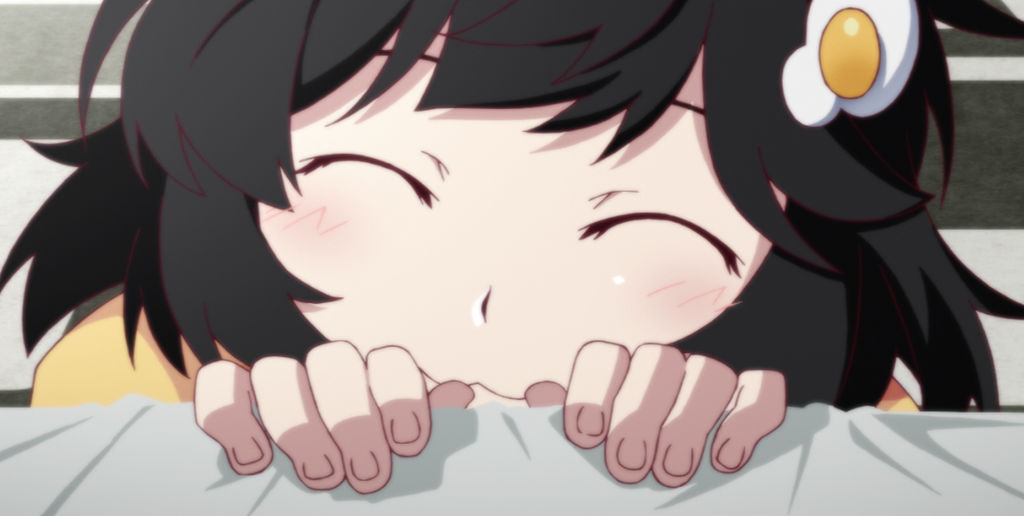
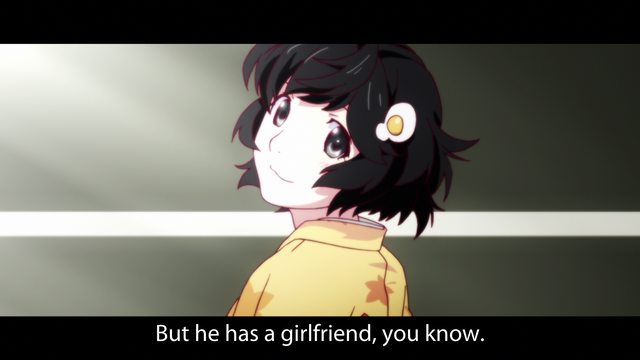
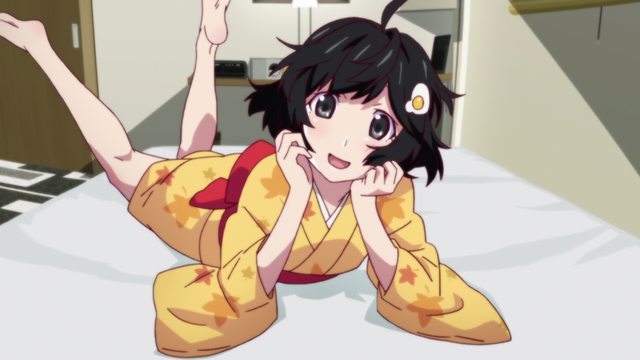
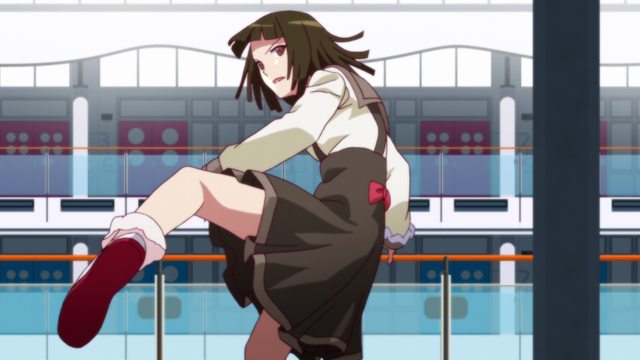
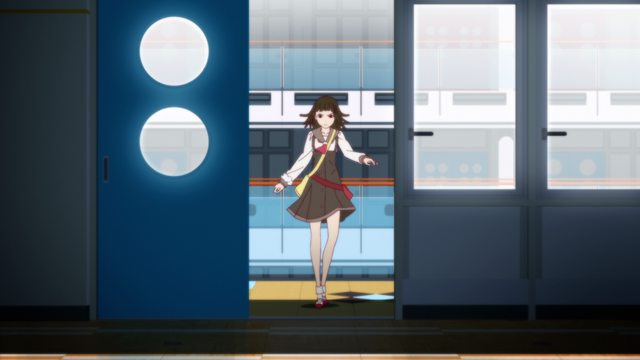
Otorimonogatari has been the most savage breakdown of the kuudere-esque unrequited lover type I've seen in anime thus far.
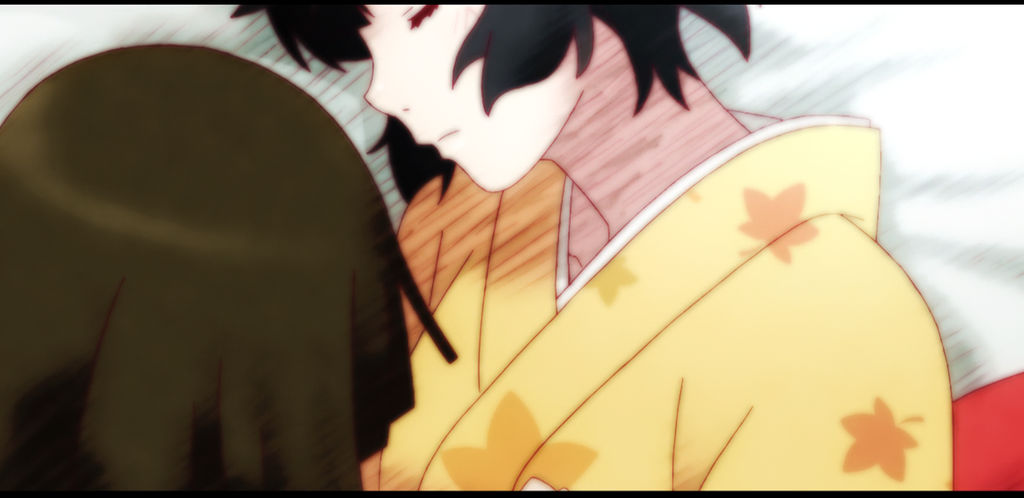
In some ways, Sengoku's scenario feels similar to Hanekawa, where they put on a facade to protect their true feelings. They try to create an image for themselves to coast through life, but while Hanekawa pretends to be an upstanding citizen, Sengoku attempts to sneak under everyone's notice, lending to the abundant snake metaphors. Sengoku seemingly wants to remain in love with Araragi, never being more or less than that. She doesn't really know much about him, yet holds him at such a high pedestal, creating a false ideal of what he is in her mind.
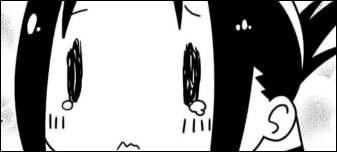
I get Tsukihi's criticism, where if Sengoku was serious about confessing to Araragi or dueling Senjougahara, Tsukihi would be rooting for her. However, since Sengoku has no such intentions, Tsukihi wanted to end the nonsense by removing Sengoku's mask: her bangs. They metaphorically and literally hid her face, which, come to think of it, is a running theme from all the times she hides her face with hats and stuff. Her eyes are also almost always in shadows during the Renai Circulation and Mousou Express openings, and she's always following close by Araragi, but shown in alternate colors or walking in opposite directions.
I guess she's afraid of rejection, but she's apparently had these feelings since they were kids. Rather, I guess she doesn't want to put in the effort to actually be in love, which is how she casually rejects all the boys from her school. Again, she seems like Hanekawa for how distant and aloof she appears, but unlike Hanekawa, Sengoku's repression is potentially more destructive.
Hanekawa initially thought herself to be a heroine meeting her supernaturally-powered prince, but she didn't have the ability to express her emotions, much less confess her feelings to Araragi. She purposefully expelled her emotions to try and maintain her image, creating her own Oddities. With Sengoku, she never had the intent to confess to Araragi, and was content on always making him worry, but without engaging any further. And, in order to maintain that status quo, Sengoku was content with constantly tempting Araragi, but then act aloof and pretend nothing happened.
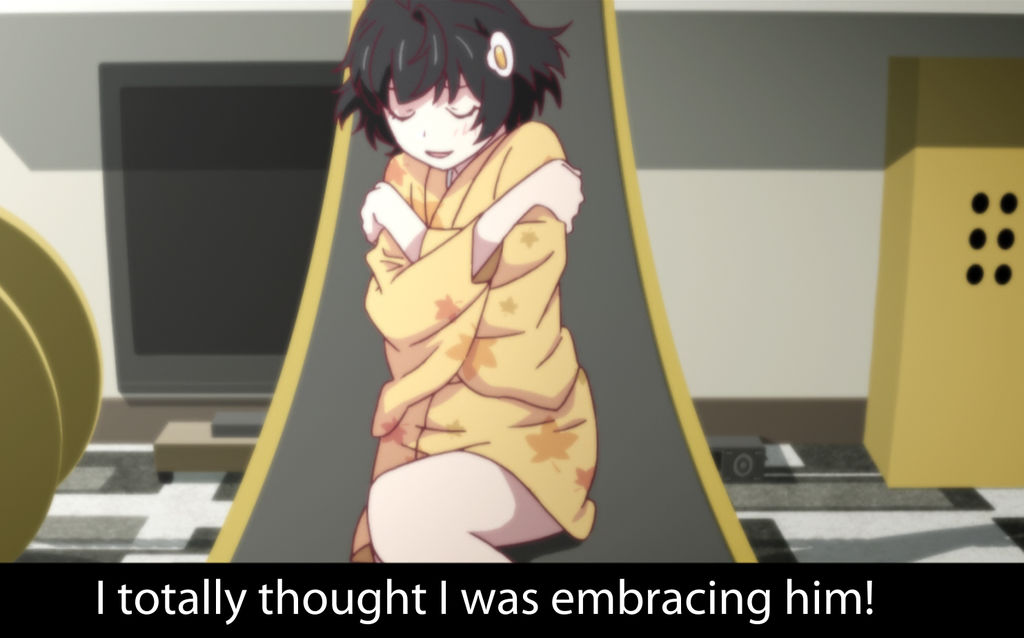
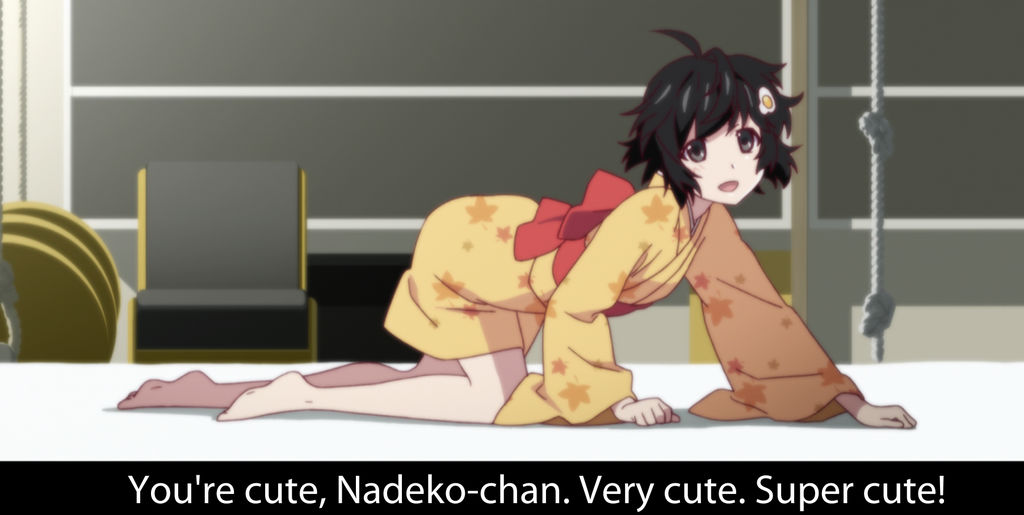
I can see the reason for Ougi's monologue on people playing aggressor/victim, Shinobu's comment on Sengoku being privileged with cuteness, and Tsukihi's bluntness over Sengoku retreating with apologies to break away from a bad conversation. Sengoku plays the victim to garner Araragi's attention, uses her cuteness to keep him around, then quickly ends their interaction before things get too real. This is a pretty brutal assessment of the shrinking violet archetype, holy crap.
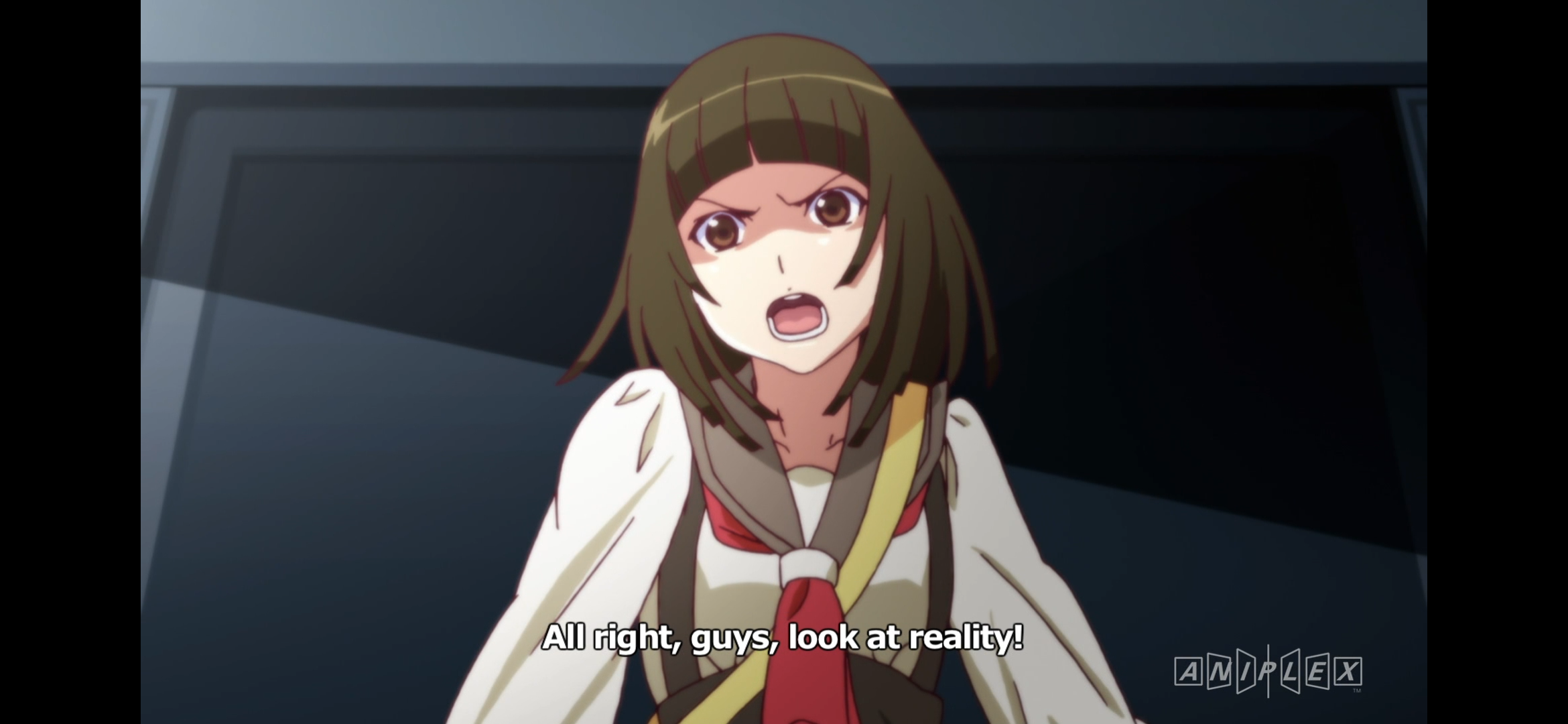
Oh, and I'm surprised at that rant Sengoku gave. Rather than being a collection of random outbursts and curses, she made explicit points about her teacher forcing his problems onto her, as well as classmates wasting time being awkward and distrustful of each other. Her anger was justified, her points are sensible, and her mannerisms were amazingly delinquent-like, most likely leveraging on the gap between her maintained image and her now exposed vulgar demeanor. In an average show, Sengoku would have just yelled at everyone randomly, broke stuff, and left. Here, she yelled at everyone while giving reasonable arguments regarding their ridiculous behavior, then broke stuff and left. Okay Monogatari, I'm impressed.
Edit: Also, I swear this better not be pulling some biblical snake-tempting-Eve and dooming Adam nonsense. The "fruit of knowledge" Sengoku is apparently attaining is the full awareness of her actions, as well as the liberation of her own mental constructs and societal expectations. It would be way too obvious to go down this route, but with all the imagery, especially that cutaway scene with Sengoku eating fruit during the Shinobu conversation. |