Alternative TitlesSynonyms: Паприка Japanese: パプリカ
Information
Type: Movie
Episodes: 1
Status: Finished Airing
Aired: Aug 2006
Duration:
1 hr. 30 min. Rating:
R - 17+ (violence & profanity)
L represents licensing company
StatisticsScore: 8.191 (scored by 11047 users)
Ranked: #2142
Popularity: #218
Members: 16,634
Favorites: 208 1 indicates a weighted score
My Info
Popular Tags
fantasy horror mystery psychological sci-fi |
SynopsisIn the near future, a revolutionary new psychotherapy treatment called PT has been invented. Through a device called the "DC Mini" it is able to act as a "dream detective" to enter into people's dreams and explore their unconscious thoughts. Before the government can pass a bill authorizing the use of such advanced psychiatric technology, one of the prototypes is stolen, sending the research facility into an uproar. In the wrong hands, the potential misuse of the device could be devastating, allowing the user to completely annihilate a dreamer's personality while they are asleep. Renowned scientist, Dr. Atsuko Chiba, enters the dream world under her exotic alter-ego, code name "PAPRIKA," in an attempt to discover who is behind the plot to undermine the new invention.
from ann |
Related AnimeAdaptation: Paprika
Characters & Voice Actors
Staff
Reviews
|
|
Washi
66 of 88 people found this review helpful
|
1 episodes
|
| Overall |

9 |
| Story |
9 |
| Animation |
8 |
| Sound |
6 |
| Character |
7 |
| Enjoyment |
9 |
Paprika, Satoshi Kon’s (Perfect Blue, Millennium Actress, Tokyo Godfathers) latest movie, is a whimsical and imaginative journey into the concept of dreaming. As with each of his productions, Paprika is a distinctly unique and fresh film, while also retaining tones of Satoshi Kon’s usual quirkiness and style. While this is a film that revolves around exploration into the farthest reaches of human subconscious, it has traded the introverted and claustrophobic psychological tension seen in Perfect Blue for a decidedly free and open approach to the human mind, fitting with the theme of the limitless expanse of dreaming. This gives it a more relaxed and fun feel, whilst also retaining its depth and profoundness. In quite the same way as Tokyo Godfathers was, paradoxically, a light-hearted melodrama, this film is an accomplished juxtaposition of emotion, as the dark themes of jealousy and hatred are played out in the hallucinatory escapism of the dreamscape.
Dreams as a concept have always captivated me, and never before have I seen such a well-done representation of dreams in any form of media. Movies usually treat them as either being pointlessly strange, or pointedly symbolic, but Paprika captures their essence to fascinating effect. Dreams are as much about flow and direction as they are about the immediate situation, and this is something very apparent when watching Paprika, as the dreams flow and change fascinatingly with mundane illogic, moving from one setting to another with only a thematic thread between them. Looking back at my own dreams and how they shift from setting to setting based on the emotional context, and I see that Paprika portrays this perfectly. I can see that the dream sequences were thoughtfully brought to life, and were not just crazy for the sake of crazy. But through all its fanciful imagery and creativity unbound from realism, Paprika has a story behind it that deals with very strong human emotions, and it excellently weaves this emotional content throughout the films, particularly in the dream sequences, where the subconscious expresses the truth behind each character’s external, day-to-day personality.
The way it tells this story is simultaneously a strength and a flaw of the film; on the one hand I am inclined to say that it was obfuscatory in the way it obscured the plot from the viewer. While watching this movie I felt like I was trying to get my head around a particularly long riddle. As I followed it, the only understanding I really got of what was actually going on was in retrospect, and while some may call this clever, I found that not having an idea of the direction of the plot was a detriment. However, given that the movie revolves around the theme of dream analysis, it is also a fitting method of storytelling: the audience itself has to engage in the movie as though it were analysing a dream, and hence can only be understood when looking back at it. However, my advice to anyone planning to watch the movie: pay close attention to the dialogue and symbology of the dreams, because it is all too easy to get caught up in the zany fun of the dream sequences and lose track of the plot.
When it comes to the plot itself, I’m not so enthusiastic. Nor am I so aflame with praise when it comes to the characterisation. Both of these factors are the reasons why I am hesitant to label it as my favourite Satoshi Kon film; Tokyo Godfathers had excellent characterisation, and a simple yet powerful story; and Perfect Blue, with its introverted character study, delivered a great emotional impact. It may well be impossible to create a perfect film, but if these factors had been better incorporated into Paprika, then it would be among my favourite anime films, possibly my very favourite. It is a shame that Satoshi Kon’s vision and creativity is let down by a lack of depth in his characters and stories now, after his consistent accomplishments in the past. I think the main problem was that the movie tried to involve a too larger cast, to whom it could not provide ample depth in its limited feature-length time-frame. The other problem was that there was very little attention given to delivering a sense of conflict, a crucial element to any story. Perfect Blue had the internal conflict of the subconscious and the conscious; Tokyo Godfathers had conflict between its characters and society; and this movie tries to incorporate an antagonist-protagonist conflict, almost as an afterthought, with neither party given enough profundity to their perspectives to make the conflict intense. There was mention of their different ideology when it comes to the exploration of dreams, and a subplot of jealousy, but little more. So the story lacks the optimal ‘beginning -> conflict -> end’ structure, meaning it felt like it just went on and on until it finished, as entertaining as it was.
I have little to say about the technical achievements behind this film, other than the fact that it was fantastic in almost all aspects, with only the score music lacking. It is clear he used the same musical producer behind Paranoia Agent’s score track, and I simply cannot find his style of music appealing; it feels immature and cannot contribute effectively to the mood of the movie. Much better was the use of music in Perfect Blue, the score of which really sold the hauntingly intense atmosphere. The visuals are much better; this is his best looking film yet, with vivid animation and, as expected, brilliant direction.
It was not given enough weight, but I liked the message that dreams are the final sanctity of the human mind, which should not be intruded upon. This movie beautifies dreams, and attaches importance to them (as seen in Atsuko’s acknowledgement of her feelings for Dr. Torataro through her subconscious), and the suggestion that veil between them and reality is sacred really spoke to me, even if it came from the mouth of the antagonist. Paprika is a thoroughly enjoyable, visually captivating movie, which does overwhelming justice to its theme of dreaming, but which has flaws in its plot and characters that prevent it from being a great achievement as a film. read more
|
|
kiriska
31 of 44 people found this review helpful
|
1 of 1 episodes seen
|
| Overall |
8 |
| Story |
7 |
| Animation |
10 |
| Sound |
9 |
| Character |
8 |
| Enjoyment |
9 |
While Paprika is very typical of Satoshi Kon's work and thus a tad predictable at times, it's still a fun, entertaining movie that does boast a few innovations.
STORY - The merging of reality and fantasy seems to be one of the most popular themes in anime, allowing it to span over many genres and to be addressed in many different ways. The theme seems to be especially favored by director Satoshi Kon though, and many of his past works reflect this seeming obsession, including Millennium Actress and Paranoia Agent. Rather than fantasy through movies or hallucinations though, Paprika grapples with the concept of dreams and how they might be utilized to better understand the human subconscious for psychological therapy. Still nothing particularly groundbreaking, and even without being familiar with Kon's other works, some aspects of the story were predictable -- such as the identity of the "true" antagonist and the idea that injuries obtained in fantasy translate into injuries in reality.
Still, while not completely original, Kon sets up the stage for his story very, very well (as expected, I suppose), and if there is to be an example for a film with this kind of theme, then certainly Paprika could be it. The realistic and modern city setting contrasts greatly with the psychedelic dream world that's presented, which really helps drive home the theme of needing to separate and distinguish the two. The viewpoints presented by characters are believable and logic, allowing the audience to easily identify with them. Everything is perfectly paced, with events accumulating in an increasingly dramatic way towards the climax and final confrontation. Admittedly, for me, that final confrontation fell a bit short of expectations, but it was a fun ride all the same.
Paprika also has a lovely number of subtle side-stories woven into its central plot, mostly concerning character relationships and personal development. I especially enjoyed these as they seemed to emphasize the idea of "reality" and relationships within reality, as opposed to those in the fantasy world. This may tie more into the character section, but story-wise, it's always nice to have some lesser plots that actually do still contribute to the main idea.
CHARACTERS - For the most part, Paprika's characters were very well done. Or to be more specific, Paprika's protagonists were all very well done, while its antagonists left much to be desired. Dr. Chiba and her alternate dream personality, Paprika, are excellent foils of each other and it's very interesting to see them both develop as characters, especially when the situations force them to work together. Although they are already essentially two sides of the same coin, both personalities have a depth to them that makes them even more complex while still retaining the ties to each other. That's incredibly impressive. Think of it this way, if one normal character can be considered "3-dimensional" when it obtains the right level of depth and Chiba/Paprika are actually the same person while each achieving that 3d level, then does that mean they can be considered a 6-dimensional character in the end?
Tokita and Konakawa are also both fun characters with a good amount of personality to them. Though both may seem a little stereotypical at first glance, the situations and subsequent personality quirks are quickly explored. Both go through an introspective journey throughout the course of the movie and have intriguing relationships with Dr. Chiba (and/or Paprika), providing for uniquely entertaining interactions.
The further we move from the main cast, however, the less depth of character there seems to be. While this is probably normal, the low number of total characters in the movie makes it a little annoying when the antagonists fall so flat. Dr. Shima is a fun little guy, but is generally a very predictable support character. Worse off though, are the Chairman and Dr. Osanai, who should not have been as easy to figure out as they were. From the moment they were each introduced, both had vibes screaming that they would eventually be revealed to the working against our protagonists. Osanai's jealousy and infatuation was difficult to sympathize with, and while the Chairman's ideas were reasonable to some extent, his crazed personality lost him credibility, making his entire plot seem cheap and cliche.
ARTSTYLE & ANIMATION - Paprika is a beautiful movie. There's no disputing it. The colors are lively and vibrant, and the animation is slick and smooth. The real world is rendered perfectly with ridiculously detailed backgrounds and even more ridiculously detailed animated elements. The fantasy world is breathtaking, with even more insane details and unique elements. And when reality and fantasy come together? It's crazy just how fantastic everything looks. All the little ways they came up with to integrate to two realms was incredibly impressive -- Paprika's ability to travel through pictures on walls and televisions made for some very awesome sequences. The only real drawback to all of this is the information overload. With so many bright colors and so much movement, your eyes will probably be burning a bit when it's all over with.
MUSIC - Paprika's score is also excellent. The theme playing at the beginning of the movie as Paprika is dancing through traffic is very trance-inducing and hypnotic, thus fitting very well with the movie's themes. The parade music for the dream sequences is also very catchy and appropriately reminiscent of real parades and circuses. There aren't very many other recognizable background themes, but those that are there are effective for the scenes they're used for, such as the haunting melodies used as the characters enter an abandoned/unknown area.
VOICE ACTING - Though I've seen the movie several times on DVD, it's always been subbed, so I can't comment on the dub. In our original Japanese, Megumi Hayashibara is our title character and she does an awesome job giving both Dr. Chiba and Paprika distinguishable voices that are fitting to their separate personalities. The rest of the cast does not particularly stand out (probably because Hayashibara does such an amazing job), but they all play their roles well enough (to the extent that I wonder if they were merely typecasted).
OVERALL - All in all, despite not being anything really new and despite the presence of a few annoying predictabilities, Paprika is a very well done movie that I think both newcomers and long-time fans of Kon's work can enjoy, especially if you're a fan of the whole fantasy/reality theme like me. :3 read more
Recommendations
|
|
Deeply Psychological, excellent and creative action, same studio.
Both Paranoia Agent and Paprika probe the power of man made illusions and how these affect reality to the point of merging with it. Paranoia Agent contradicts linear modes of story telling as the series progresses while Paprika is deliberately oneiric from the start. The artwork is similar and Satoshi Kon's trademarks are very visible in the way PA and Paprika push the limits of animation in general. Image surpasses the role of medium and becomes an experimental endeavour of psychological valence: PA and Paprika offer this autonomy of imagery without compromising a highly complex exploration of what it is that shapes and defines reality.
Another one of Satoshi Kon's masterpieces that uses a lot of the same animation style as Paprika!
Both are directed by Satoshi Kon, both can mess with your mind.
Same man behind the anime's and they're both psychological. Lots of jaw dropping moments where u'll think "What the HELLLL???!!" but in a good mind flexing way
In both delusions merge with reality
|
|
|
Where does the virtual world end and the real world begins?
Both very obscure with dark technopunk themes.
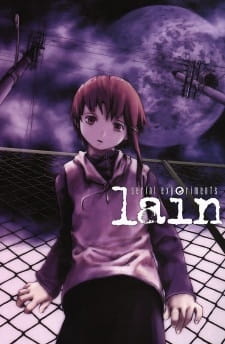
At first glance Lain and Paprika might not seem very similar, Lain being very slow paced for the most part and Paprika being such a riot of energy. Yet both challenge the meaning of reality and the role of perspective. In Lain and Paprika technology has permitted man to dismantle experience, uncovering a deeply disturbing world that deconstructs certainty in a fluid nexus of ambivalence. Lain's stress falls more on existential questions while Paprika deals more directly with the distorting power of dreams but both break the barrier of physical limitations as they capitalize the potential of anime to create truly bizarre and rewarding experiences
The hallucinatory vividness of SEL is similar to that of Paprika, but much darker.
|
Opening Theme"Mediational Field" by Susumu Hirasawa
Ending Theme 白虎野の娘 (Byakkoya no Musume) by Hirasawa Susumu "Byakkoya (白虎野)" by Susumu Hirasawa
| No posts for this board were found |
Fansubbing Groups
Which fansubbers do you like the best? Click + to approve of their subs for this show. Click - if you don't think they did such a great job.
Related ClubsAnime in Blu-ray, Hirasawa Susumu Fanclub, Surreal Anime, hardcore violence and gore, Mindfuck-Anime-Club, Anime MILFs & Mature Women Fan Club, Unusual is Better, Boston Anime Club, Satoshi Kon Fans, anime obsession, Animetr, Battle of Anime, ~~~sleeping awake~~~~, *** My bookmarks, links, winamp skins ***, Anime Movie Club, MadHouse, Claim a Soundtrack Club!, Saiyuki: Journey to the West, ***Legend of Anime***, Split Personality Fan ClubThe Pothead, Scooter Girls, seinen & josei, Anime with Well-Developed Female Characters and Relationships!, Get Your Quota! For MAL Claims Clubs, Susumu Hirasawa Fans, SKYclub ~ SKY Animes, ManuMission, Psychological Love see all
Recently Watched By|
5 hours ago |
6 hours ago |
7 hours ago |
7 hours ago |
9 hours ago | |
10 hours ago |
10 hours ago |
11 hours ago |
Yesterday, 11:47 AM |
Yesterday, 11:39 AM |
|
|