
New
Apr 25, 2022 12:13 PM
#1

Anime Guild - Winter 2022 Review Event How long has it been since Anime Guild has not touch this significant milestone event, only for it to falter (even before I came into the picture)? No worries, because this is back by a person's demand (I won't tell who heheh) and see what people thought of the seasonals through their extensive reviews (mine included)! Any errors please tag me and I'll get on with the changes, thankyewies :) Fall 2021 ↳€Ϝ†⊙✓€☈∫ Kimetsu no Yaiba: Yuukaku-hen / Demon Slayer: Kimetsu no Yaiba - Entertainment District Arc 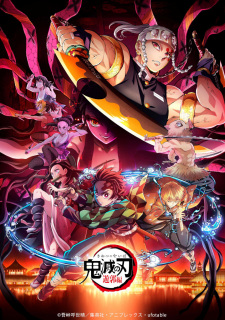 Studio Ufotable has KNOCKED IT OUT OF THE PARK again with the cinematic-like quality of the animation in this season of Demon Slayer, surpassing its predecessors for sure in that front. Many episodes felt like a movie. Pure enjoyment value is very high up there, but does animation and soundtrack alone erase what was the lacklustre plot? For many people, I'm sure it did, but for me, I only wish they focused on things other than the flashy fight scenes, which were the highlight of this season for sure, and some fo the best animation in the medium. My grading criteria: Story: /25 Art: /10 Music: /10 Characters: /20 Enjoyment /15 Thematic Execution /20 *Spoilers below STORY: 12.5/25 The story begins where it left off from the Mugen Train arc, and facing the death of Rengoku, Tanjiro and his companions Nezuko, Inosuke, and Zenitsu grieve for their Hashira "mentor", but soon find themselves on another journey to the Entertainment District. Initially, when they arrive, the main characters go "undercover" into three courtesan Houses to find the Sound Hashira Tengen Uzui's three wives. Then they expose the darkness within each house and find a demon, Daki, residing in one of them. Yeah, and then for the rest of the show, everyone engages in a long fight to the end of the season. The story started out as very promising, and I thought there'd be some mystery in finding what the darkness behind the Houses was, but it got resolved all too quickly, and became a long fight scene of a good half of the series, which is great and all, but a bit underwhelming, plot wise. The characters that were at the start of the series, like the children in the Houses, the staff as well, don't play a role at all in the latter half of the season, which was rather disappointing as well. Everyone knows there are plot conveniences, and a whole lot of them. Injuries have virtually no consequences, and new powers come out of nowhere. Zenitsu somehow stays asleep for most of the fighting, Inosuke can just shift his organs to prevent severe injury. There are NO STAKES, even though they advertise it to be a high stakes narrative. ART: 10/10 PRAISE UFOTABLE! I give full credit to them for such beautiful and immersive fight scenes, with wonderful colour, angles, just a full-blown master-class of animation, and potentially the best I've seen in this medium. MUSIC: 9.4/10 Opening and ending themes are pretty good this season as well, and their soundtrack overall was very enjoyable for me as well. CHARACTERS: 9.5/20 That sour feeling when the villains were developed better in one episode than the protagonists got developed in the entire 11 episode run... Most of our beloved protagonists felt like stock characters compared to the first season and Mugen Train, though I'll give credit to them being funny and likeable, but that was middling to say the least. ENJOYMENT: 13/15 At heart, I still enjoy my battle shounens, and I'll never say I didn't enjoy this show, even with all its flaws. THEMATIC EXECUTION: 11.5/20 The battle and demonic themes were executed very well, but don't you find it the least bit annoying when they crack a joke at a serious point, like a character on the verge of death, or in the middle of a hype fight scene? That would be the thing that really took away my immersion at some points. OVERALL: 6.59/10 With all its simplicity and accessibility, I can see why this show has become popular, it's able to satisfy many watchers, and it's not really anything niche, it's just like the superhero cinema we've grown to love, but we also don't remember a lot of the little details. While production value was insane, and the animation was out of this world, surpassing previous seasons, the story and characterization virtually disappeared. I do hope this improves in future seasons of this series, and my final thing to say would be, enjoy the wonderful experience, but don't get too high on the flashiness! I'll start be going through non-spoilers and will then get into spoilers in the full review underneath. --NON-SPOILERS-- Demon Slayer had a lot of hype coming into its official 2nd season (considering Mugen Train was just a movie after all), and it did not disappoint in the slightest. The Demon Slayer Corps were in dire need to get a victory over Muzan and his subordinates. After an arguably slow first episode, Tanjiro and crew join Tengen Uzui, the Sound Hashira on a mission to go find and rescue his 3 wives (yes you read that right) in the Entertainment District. However, when they arrive, the team knows that something is off. UFO Table knocked this arc out of the park with one of the best openings in the Winter 2022 season, insanely good OST's, and some of the best SFX that anime has to offer. UFO Table is always known for incredible artwork and crisp animation, but somehow it seems like they got even better in this season. The characters all take a giant leap forward with some great power-ups, great character development, and more realizations. I've always knocked on Demon Slayer not having the greatest of stories when compared to some of the top dogs of shonen story telling like One Piece and Naruto, but they actually stepped it up this season with some great backstory, great twists, and amazing cliff hangers from episode-to-episode! So many things wen't right in this season, that I can call it a definite worth your watch. If you watched Season 1 and Mugen Train, there is no reason why you shouldn't watch this. If you haven't watched any of Demon Slayer yet, and were waiting to see if Season 2 could live up to the hype that Season 1 and Mugen Train left it with, then I would highly recommend you start watching. Season 3 is already confirmed, so you might as well hop on the hype train now rather than later! -SPOILERS- Mugen Train left me sad, yet excited for where the show was headed. The show wasn't afraid to kill people off, and that makes every moment tense within this season. I'm gonna be real, I thought Uzui was gonna die, I thought Zenitsu was gonna die, I thought little Piggy-boi was for sure dead after he got stabbed in the chest...hell I actually had a thought for a second that they might actually kill off Tanjiro and we get a mid-series main character shift. Because of the risk that was taken in Mugen Train, it sets up the rest of the show to be dangerous at every encounter. No one is safe, your emotions aren't safe. Let's hop into the breakdown. Story (8/10) I still think that the story is the weakest part of Demon Slayer, but that is not a knock on Demon Slayer at all, it's just that everything else is so insanely good. The story really took off in this season, giving us great backstories into Uzui and his wives, and even backstory into Daki and Gyuutarou. I'm not gonna lie, I wasn't expecting the backstory on the Upper 6, but they really did it well. I also think they did a really good job of not making the show feel super slow except for that first episode, but let's be honest, it was necessary for them to go through all of that detail in the first episode. I was fearful that we weren't gonna get to any fighting until episode 7 or 8, but they get into the fighting fairy early, and they make the fights intense. Tanjiro's first fight with Daki, and then Zenitsu and Inosuke fighting with the wives down below. I think they also did some major respect to Uzui in how he fought to his last breath against Gyuutarou and how he protected Tanjiro even if it was going to kill him. I'm so thankful that they didn't kill him off, although how much will we really see him in the show from this point forward since he is out of commission? They also handled Nezuko's transformation well, but man I wish we got to see her fight a little longer. Story wise it makes sense, but that can't stop me from wishing that Nezuko would get a chance to curb stomp Gyuutarou. Also, I just have to say that the plot twist that Daki wasn't the 'real' upper 6 was so well done and so amazing. One of the best reveals I can think of off the top of my head in anime. When I think about what they changed from Season 1 to now, the one thing I can think of is how dark the story got. People dying all around them, a whole town getting demolished, hashira dying, main characters being on the verge of death. It got dark, and it's benefited from it. Art (10/10) UFO Table...enough said. No in reality though, the animation is incredible. The fire during some of the final fights threw me off because of just how realistic it looked compared to normal animation. The fact that you can actually see the swings clearly from Uzui and Gyuutarou in their final fight, the movement across buildings, The crisp colors and effects on each breathing technique. It is just incredible to see what paying animators their worth can really do to your show (*cough* *cough* 7 Deadly Sins). Sound (10/10) The opening is up on the ranks for one of the best openings the Winter 2022 season offered up. It fits the environment of the entertainment district, and just gets you hyped for the episode. The OST's are just as good as season 1 and Mugen Train's. And the Sound Effects, holy crap the sound effects are just amazing. Each sword clash sounds natural and impactful. The sound design team on this season really did a great job to encapsulate powerful and fitting sounds for each thing. Character (9/10) I love the way that each character had some development from Mugen Train to now. Zenitsu is no longer only a scardy cat. He still fights at his best when he is asleep, but man he has stepped it up! Inosuke has learned how to trust and work with teammates, he no longer just charges into battle on his own, he can strategize a bit. Nezuko has learned how to refine her demon abilities even more, although she did reach her limit where if she had not been stopped, she would have fully turned into a demon, so she still has some work to do. And Tanjiro, holy shit Tanjiro!!! Sun-fucking breathing. He's gotta learn how to endure the power a bit longer, because he is going to need it to face an upper rank on his own, but this was one of the largest power-ups I have seen in an instant since Naruto and his Baryon Mode power-up. This crew also just seems so much closer than they did even in Mugen Train. The way they joke around together, celebrate victory together, and even their chemistry fighting together has gone way up. I'm excited to see how far this squad can rise together. Enjoyment (9/10) I'll keep this section short, because it's a lot of reiteration. Fights...incredibly fun and intense. Comedy...well timed and hilarious. Pacing...other than the first episode, well done! This season was a lot of fun to watch. -CONCLUDING THOUGHTS- (9/10) I enjoyed this show so much, and I cannot wait for Season 3. Spoilers for the future, but apparently we only have 2 more arcs remaining in the show. I don't know how Tanjiro is going to get the that point to take on Muzan, but I'm along for the ride! 86 (2nd Split-Cour) 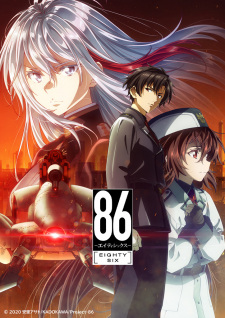 Before we can try to assess whether or not 86 is a good anime or not, we should first make sure we understand what is even the target audience of 86. Eighty-Six started out as a light novel under the Dengeki Bunko imprint. What this effectively means is that the story is written for older teens – young adults as the primary target audience and is thus a steppingstone towards ‘full’ adult fiction. Key characteristics of these works are such as: having a lighter arc structure that fits in under 300 pages each, usually having less nuanced writing, using simpler vocabulary, featuring a large amount of tropes. It’s literature that is no longer ‘kid’s literature’ but still lacks that real seriousness of adult fiction, relying on simple techniques to pull audiences and a rigid arc structure. Eighty-Six is without a doubt one of the most popular serializations these days and acts as a strong introductory work into the medium. At the same time, however, it is a work written with terribly shallow view on its own subject manner and complete inability to properly ‘read the room’, flipping between highly emotional moments and trope comedy. Part 1 of the 86 adaptation adapted the first volume of the series, which was an entirely self-contained story that lent itself well as a prequel to the ‘main’ story. It was a story that could stand entirely on its own and was, in fact, quite solid. Thus the anime adaptation also held up substantially well. It did still feature the largest flaw of this entire series – extremely shallow and boiled down commentary on extremely serious issues. World War 2 references are galore in this work, yet are presented with little nuance, often ignoring critical additional historical aspects which completely change the perception of the stories referenced. Part 2 of the adaptation, stepping into the second volume of the series, however, fairs much worse, with the start of the second biggest problem of the entire work – the tropes and sharply swinging moods with little regard for the burden on the audience’s ability to flip between heavy and light-hearted moments. With the introduction of a certain 10 year old character, the story told in part 2 tries to ‘lighten the mood’ by zig-zagging highly dramatic moments of characters trying to come to grips with death, meaning of life and their own trauma and a walking trope shouting idiocy at them for comic relief. Make no mistake, this is just a symptom of a larger problem – the original author Asato Asato attempts to increase the effect of emotional scenes in the story by working in a rollercoaster of light moments and heavy moments. This however, when done without care to the degree it is done in 86 ends up jarring and making it extremely difficult to take characters seriously. Emotional moments are ruined by the sudden jokes, making future emotional moments have less impact, because investing into the story becomes harder and harder. How is a reader meant to suspend their disbelief if in one moment a character is talking about their own inability to escape death and another little girls are tripping on the ground screaming. This sort of shallow and immature approach to story telling is one that CAN work for an immature audience, however becomes increasingly impossible to pull off with older audiences. Given the story’s target audience, one may excuse many of these flaws, yet one must also point out that Asato Asato clearly intended to write ‘one of the more serious light novels’. In this regard, 86 is a severe overreach. A light novel trying to pretend it can be a real adult novel. Plenty of light novels have been written in the past that were far more refined in their execution while trying to push for just that little extra depth over a conventional light novel. The existence of these works highlights 86’s subpar execution. With that out of the way, 86 Part 2 is a wonderful anime production. Considering the seasons’ competition, the show manages to stand out well as one with relatively good animation and sound quality, yet with absolutely fantastic directing on both the visual and audio sides. Toshimasa Ishii does an incredible job as the lead director, managing to orchestrate flawless visual execution and presentation of serious moments in the show, using visual motifs in just the right places, while the sound directing accompanies the work greatly, with proper use of music and silence in all the right moments. 86 looks fantastic and is an extremely aesthetically pleasing production. The dark tones are captured succinctly and without feeling fake or shallow in the slightest for as much as the source material allows it. One of the industry fan favorites – Hiroyuki Sawano helmed a great score for the show, which while still retaining the ‘classic’ Sawano tune which hampers it in feeling ‘samey’ if the audience has seen any of his past works, still has its moments of novelty and accompanies the show well. The adaptation, however, had light mishandling with the epilogue, trying to stretch scenes which were short in the original, possibly to fit in a full cour for a story which really only needed 9 or so episodes. This stretching can ruin the ending all by itself, by making the epilogue feel fatiguing and almost make one go ‘oh get it over with already’. The voice castings, leave much to be desired, for the casting of Misaki Kuno for the character Frederica only further severely elevated one of the primary issues in the original, creating too strong of a contrast between lighthearted and emotional moments. The production staff had an opportunity to lessen the blow of Asato’s overly sharp tonal shifts but went the other way around and only further exasperated the issue to the show’s own detriment. Lastly, the battle scenes, which should have been one of the primary highlights of 86, still using CGI for for most the animation moments leaves a fair bit to be desired given the show’s focuses. While the CGI was serviceable, none of the fights truly gave any sense of wonder, featuring hardly any noteworthy sakuga. It was never bad, but it was never ‘excellent’. Overall, 86 part 2 is a 6/10 story, with an 8/10 production, featuring writing that is passable, but severely overreaching with plenty of flaws and some of the strongest visual direction in 2021. If the viewer can suspend their disbelief and honestly invest into the characters, there is a lot to like here, but as a work for teens and young adults, it pretends to be something much more, which it really isn’t. Now I'm going to find it quite difficult writing a review for 86, as my thoughts and opinions differ from not only the majority but also fact itself, and it's hard to put my thoughts and opinions into review format without requiring the reader to have my exact opinions and experiences, which isn't something I can guarantee for most people. So instead, I will be writing what I know is objectively done well or correctly in the series, and reflect on why it didn't work for me, because it's one of those situations where you know damn well it's a good show, but you just could not care any less about it. The writing in 86, to put simply, is just good, foreshadow, reason, rhyme, logic, all included when other shows don't, which is especially good for this show considering this was by the same studio that animated Darling in the FranXX and The Promised Neverland, and we all know how that studio changed shit up, so to see a show up to this quality being released on by A-1 Pictures, seems more like a redemption arc for the studio than a redemption arc for the main character in my own opinion, seeming more like an apology for creating Darling in the FranXX the way they did than it's own separate entity, also keeping into consideration the many similarities between the two shows. So good on you A-1 for not changing anything like you've so notoriously done before. Coming from someone who hated Darling in the FranXX's change and The Promised Neverland Season 2, you get someone who understands that 86 isn't bad and can notice and respect the quality and detail put into the show despite lack of following it or understanding, which I feel is more like a me problem than an actual problem considering my point for this paragraph, I couldn't follow it. Something about this show felt so unengaging for me which I know for a fact is a me problem considering the amount of praise and analytical videos on the series, and how much people seem to understand the show, so when I say it was uninteresting and hard to follow, I mean that for me it was, which justifies and summarizes my lower score for the series than what I feel deserves maybe a 9 or even a 10 for people who could connect with it. For a brief summary, 86 is a good show and definitely shows the recovery of A-1 Pictures from their atrocities, and doesn't neglect the detail and feels, but lacks the connection to viewers such as myself who fail to care about shows which are really just better written successors to older shows like Darling in the FranXX. Many of times, shows that get derailed by production and scheduling issues end up having poor or rushed endings. We’ve seen this with Wonder Egg Priority, and The Promised Neverland Season 2, both of which got massively rushed due to poor production. I’m glad that this second cour of 86 did not fall into that hell, despite the huge delay before the last two episodes. The high quality did not falter throughout, and we as fans can all appreciate such a thing. My grading criteria: Story: /25 Art: /10 Music: /10 Characters: /20 Enjoyment /15 Thematic Execution /20 STORY: 21.5/25 This takes all the good war themes from Part 1 and expands upon them. This time, there are in fact, scenes outside just simple fighting, as our characters attempt to reintegrate themselves into society. A lot of the narrative is realistic, as the characters struggle with war memories, the rush of fighting, and the feeling of not being on the battlefield. There isn’t much to be said here, the narrative continues to be as solid as ever, and while there are spots that were a little boring for me personally, the story is able to suck you into a world of war and many other things as well, and of course, what I can say about the emotional reunion of Spearhead and Handler One? ART: 9.4/10 An improvement to part 1. Fight scenes are spectacular, background shots are spectacular, just great. MUSIC: 9.3/10 Sawano’s soundtrack continues to impress, even if it’s much of the same. Opening and ending themes really set the stage and ended episodes on an emotional note. CHARACTERS: 16.0/20 With a smaller cast of characters this cour, it felt easier to keep up and allow the characters to leave a stronger impression on me. Shin continues to struggle with being “The Undertaker”, breaking as many of his companions have left him behind, which is a very gripping thing to watch, and it’s great to see the development. We also have a new addition to the cast, Frederica, and she compliments the cast pretty well. She’s lightens the mood a bit, keeps Shin in check, and has her own set of problems that plague her. The other characters have their moments, but give off much of the same vibe we have seen throughout the series, and continue to be enjoyable to watch. ENJOYMENT: 12/15 Despite the delay in between, my immersion was not broken severely, and I found myself right back to enjoying the show after the long break. THEMATIC EXECUTION: 17/20 The wartime theme is executed in a brilliant manner, on and off the battlefield. It’s gripping, realistic, painful to watch, and emotional. The dialogue is great, and the world of 86 is great. OVERALL: 85.2/100 It was definitely a shame that there were many interruptions in between the show, but the quality remained very good throughout. As was the same with Part 1 for me, some spots did feel a bit repeated or long-winded, especially as Shin’s struggles are portrayed to us, but regardless of that, there is simply a lot of good in this show, and if you enjoyed Part 1, chances are Part 2 will be even more immersive! For almost a year I followed 86, looking for something better in this new decadent age of anime. Still, anyone who's followed my content, the tiny amount who are out there, know that I have been on the frontlines as a critic of it. Not for the sake of it, but the reasons that follow: Season 1 showed me, as painful as it was to see, one of the worst first episodes I ever saw. The legion are an ocean of copy paste, hideous CGI robots that lack any kind of originality in how lazy they are designed. They are hollow with no depth besides being evil in an aimless manner. I still have so many questions. If the robot designs had any creativity behind them, I would not get constantly confused between who is on which side. All this copy paste ruined any chance the CGI had to be decent. The first half of this first season was so painfully boring. Yes, it did "get better" halfway. Regardless, the terrible start ruined it. It reminds me that every series I ever came to really enjoy had a strong first episode. I can only take so many slide show, flapping mouth infested still frames scenes, and fake out deaths that felt annoying in how often they happened. Not even Sawano's brilliant music can salvage it, not to mention he oftentimes lacks creativity and sounds the same too much of the time. A simple example is the similarity between "Ego" from Gundam Unicorn and "Avid" from this series. The politics in this so called political series is laughable compared to those that did it right like Legend of the Galactic Heroes and Mobile Suit Gundam. Even the elementary politics of Code Geass is better than this. Milize is so painfully politically naïve and still has not grown much at all. Considering she was rebelling in class and trying to radicalize her peers, why didn't the government try to assassinate her? It only makes sense to weed out her type. No, girls doing cute things isn't enough in an anime to sway me if they lack good writing. Season 2 failed and did worse were season 1 fell apart. I get it. The 86 are broken individuals used to only war and the misery that maybe one day me and you will come to experience. I didn't need this force fed into me time and time again. Amongst this depressive tone, boring slice of life episodes made their way in. The problem with the 86 is that Shin is the only one that really matters and who has any kind of real development. The rest have been reduced to background characters. They are just there. One of the biggest problems with season 2 is that Milize, the best character in my opinion, was nearly absent the entire time. The 86 could not hold the anime without her, Shin lost all his development from the last season for a long time, and it continued with boring slide show execution. I thought a series like this would have better production values. I could tell the delay was coming far before it got announced because it was obvious the production was already struggling beforehand. Yet, if there is some hope that laid anywhere in this second season, it's the last two episodes. No, I did not forget how bad this second season had been after the long absence to know that I wouldn't be deceived by one good episode. The payoff here is deceiving. The last episode also did well. Out of two seasons, at least this series had two strong episodes. Why couldn't this level of quality be had throughout every episode? They were emotional, and yet I felt nothing really meaningful behind it. Just because you cried doesn't make an anime good if there is no real meaning and good writing behind it. Maybe the cast has grown on me, and yet I feel as if they have grown on me on a hollow and not so meaningful way. They lack any depth and feel as if they are just something I got used to that feels familiar. To make matters worse, an annoying little girl was introduced, who's screeching and obnoxious voice ruined any hope I had left at the time. As I witnessed the constant decline this series took among the viewers, at least it ended strong. That won't be enough to salvage it, and though I tried to be nice, I cant deny that 90% of these two seasons were trash, to put it as nicely as I can. |
KANLen09Jul 26, 2022 2:41 AM
 |
Reply Disabled for Non-Club Members
Apr 25, 2022 12:14 PM
#2
Akebi-chan no Sailor-fuku / Akebi's Sailor Uniform 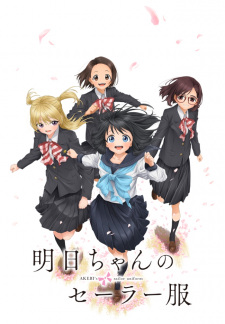 How could you ever love something as flat as 'cute girls doing cute things'? I don't know at all, if I’m being honest, but now it appears 'cute girls doing cute things' is no longer flat, but a lot more interesting than you may initially think. Akebi-chan no Sailor-fuku, or Akebi for the sake of convenience, is just as I stated in the introduction of this review, cute girls doing cute things, but it's executed in this show in such a way where you may just forget the show is just that, and actually think more about how Akebi is in her new environment, and the happenings that have gotten her to where she is by the end of the show. Personally, I didn't find much interest in the show, as something with little drama or teachings really interests me, but again that's a personal opinion, I see myself as smart enough to know that this show is very well executed and true to its overall theme. Considering my personal opinion on this show is a weak one, I have little things to say about it other than before, however another thing I can comment on, writing wise, this show is that, this show has a truck-load lot of personality. Not only does the show differ from other things that have aired as of late, but it also differs in its writing style and becomes something more iconic than other recent shows like World's End Harem, for when you watch it, you can definitely find yourself saying "Ah, classic Akebi", rather than being able to directly compare it to any show you might have watched. Finally, we get the main bait to watch the show, the absolutely stunning visuals. While this show may not be much with shounen entertainment, this show can definitely leave any demographic awe struck at its breath taking visuals, done clearly by the same people who created the visuals of Wonder Egg Priority, and huge props to the author for creating such literate availability for the show to execute this well with the atmosphere the writing had created. So, while Akebi may not be for everyone, I feel everyone should at least be able to appreciate how well it executes it's goal, or at bare minimum, appreciate the visuals and character design. Akebi-chan no Sailor-fuku is pretty, wholesome, and genuinely heartwarming. It is a rather simple story, one that consists of cloying moments from time to time, but its characters are very endearing with properly fleshed out personalities. Komichi Akebi, the titular character of the story, has always wanted to wear a sailor uniform. Naturally, she becomes ecstatic when she gets the chance do just that by attending Roubai Academy -- but she soon finds out that they no longer use sailor uniforms as their dress code. Even so, the principal of the school makes an exception to Akebi and allows her to wear her sailor uniform, which unsurprisingly elates her. Reinvigorated, Akebi begins her new school life and beriends many disparate girls along the way. It goes without saying that Sailor-fuku has a very simplistic premise, but the series actually benefits from it in the long run. Slice-of-life shows like this oftentimes need to have a plain premise so that the characters can flourish, and it is the same with Sailor-fuku as well. Admittedly, the events that lead up to the focal point of the story are very contrived, but if you look past that, the creators have actually taken a clever and careful approach while setting up the plot and the characters. Additionally, there is a rather well-executed underlying theme that runs throughout the anime's narrative, which I will be talking about in a bit. One of the best points of Sailor-fuku is that every single character has a well-defined personality, even despite the fact that there are more than a dozen of them. Focusing on these many characters would be an overwhelming task to accomplish in any other one-cour series, but it works remarkably well for Sailor-fuku specifically because of the simple premise, the school setting, and primarily the main character, Akebi -- something which many people may not have thought about or considered. Let me elaborate what I'm trying to say. The storyline of Saikor-fuku sort of plays out in an episodic format -- in the sense that most of the episodes revolve around different characters learning to deal with their problems with Akebi's help. The scenarios that these characters face are rather simple and straightforward, but they are always believable. Furthermore, although the tone and structure are essentially the same in all of the episodes, the themes are surprisingly distinct and well-executed -- especially because of the girls' unique and likeable personalities. There is a variety of compelling characters such as: • Kei, a studious girl at the top of her class who is willing to pursue other hobbies, but is unsure about what she really likes or wants to do • Touko, who seems all carefree and even annoying to some extent, but later turns out to be a far more likeable and thoughtful person • Minoru, who has always been fascinated by nature and loves observing it, but does not have any friends to share this hobby with • Oshizu, who is very passionate about playing guitar, but lacks self-confidence and worries that her efforts will go to waste Such an array of colorful and dynamic personalities ensures that the plot is not repetitive or mundane -- but rather diverse and even exciting to watch it progress. What's more, the girls' characterization isn't just limited to their individual arc; they receive a considerable amount of screentime in other episodes too. Particularly because of this, you can easily empathize with the characters and connect to their respective problems. Erika is probably the most engaging of the bunch excluding Akebi, even despite her strange introduction, as the series dedicates the second most screentime to her. Akebi herself seems like the quintessential "genki girl" character with no considerable flaws or unique characteristics of her own, but that is not true at all. In fact, she also develops alongside the characters she comes in contact with -- albeit her change is shown a lot more subtly. The key thing to note is that Akebi didn't have any friends before she entered Roubai Academy, which explains why she is so resolved to make friends and cherishes her classmates so much. This particular detail, which appears random and insignificant at first glance, actually serves as a basis of her character and provides considerable depth to her. Akebi is also the prime reason why I find the narrative to be cleverly constructed. Like I said earlier, she plays a central role in the plot of each episode as she helps her classmates tackle their problems, but luckily, she is never too intervening and doesn't take the spotlight for all herself. Her intentions of helping others are completely earnest, and not unrealistic either given her past circumstances and wholehearted personality. Also for this reason, her interactions with others always flow naturally, no matter how far apart their personalities are. Other than her classmates, Akebi's family plays an important role in the anime. Although only briefly touched upon, the portrayal of Akebi's relationship with her father feels very genuine, and the same is true for her relationship with her mother as well. Lastly, Akebi's younger sister Kao is adorable to say the least. You could say that she is the smaller version of Akebi, and I mean that in a good way of course. In particular, how she interacts with her big sister and tries to imitate her has never failed to make me smile. One of the biggest issues that people have with Sailor-fuku is its fanservice; but trust me, it doesn't cross the line. There are some suggestive scenes which include the Akebi sisters taking baths together, as well as the camera randomly focusing on girls' questionable body parts, but to downright say that the show sexualizes its characters would be a gross exaggeration. While it is reasonable to question what purpose they serve, the said camera angles are luckily few in number and limited to just that -- being random chest and thigh shots. So, unless you are someone who considers anything mildly suggestive as morally reprehensible, the fanservice in Sailor-fuku shouldn't offend you that much, if at all. Concerning the technical side, Sailor-fuku is easily one of the most well-produced shows this season, boasting completely fluid animation that manages to look even picturesque in some occasions. The sound is handled with a lot of care too; the music choices are always nice and fitting, and the voice acting is spectacular. What stand out the most are Manatsu Murakami's performance as Akebi and the theme sequences -- particularly the ending song "Baton" sung by Manatsu, which perfectly reflects the atmosphere of the anime (and it is also an extraordinary song in its own right). Honestly, I ended up liking Sailor-fuku a lot more than I initially thought I would, and for many good reasons. It is rare to find a slice-of-life anime set in school that dedicates this much time to developing its characters, while maintaining its quality both visually and thematically all throughout its runtime. I believe this show also encapsulates the essence of the SoL genre and why I enjoy it so much, which is what makes it an easy and solid recommendation to any SoL fan out there. Saturdays are what I call the “Cloverworks Flex Day”, with two of their shows airing thirty minutes apart from each other. This show was definitely overshadowed by the massively popular show My Dress Up Darling (which by the way I have just released the review for), the aforementioned show that airs just thirty minutes earlier, but in my opinion, both shows have their charms, but Akebi’s Sailor Uniform shines as the comfy, slice of life show that we can enjoy, and boy is the animation stunning! My episodic grading scale: Story: /10 Art: /10 Music: /10 Characters: /25 Enjoyment: /15 Thematic Execution: /30 STORY: 6.4/10 As we usually see with slice of life shows, there isn’t much of a general direction with the story. The gist of what goes on is that Akebi Komichi, our main character has loved sailor uniforms since she was little, and wears one her mother makes for her to her new school, even though the new school no longer uses sailor uniforms as their dress code. Despite that, she dons said uniform, and makes lots of friends using the bubbly personality she has. It’s honestly a lot of fun. ART: 9.6/10 This show is what I call a “wallpaper feast”. So many beautiful shots can be seen with the wonderful attention to detail in its animation. This kind of reminds me of the animation we saw in Violet Evergarden, with the bright and vibrant colours on display here. MUSIC: 7.8/10 Pretty solid soundtrack, but nothing out of the ordinary. Opening and endings are fun to listen to. CHARACTERS: 16.5/25 The characters are pleasant and fun to watch. I don’t think anyone would dislike Akebi, with her vibrant and cheerful personality that could bring a smile to anyone’s face. Unfortunately, she’s probably the only memorable character here. The other characters are good friends, and each have their little quirks, but aren’t all that interesting to me. Well, one other character does actually stand out to me, and that would Akebi’s little sister, Kao. She’s definitely a fan favourite for her cuteness, and no one is refuting that fact. ENJOYMENT: 10.3/15 Decently enjoyable, though I do wish there was a little more to the story. THEMATIC EXECUTION: 21.5/30 The slice of life elements are generally done well, but there are some distractions to the comfiness that could honestly be toned down a bit, especially the shots of the characters’ feet, the author of this really was showing a bit of perverseness there, and I found that a bit out of place, but it’s nothing egregious so I can still enjoy the simple slice of life themes. OVERALL: 72.1/100 A decent slice of life show that proved to be one of my top shows of the season that I would recommend if you enjoy slice of life, because it’s pretty comfy, and a nice start to the weekend. The animation is to be admired, and that’s probably the number one selling point of the show. Well done Cloverworks, these twelve weeks have been enjoyable! Arifureta Shokugyou de Sekai Saikyou / Arifureta: From Commonplace to World's Strongest (Season 2) 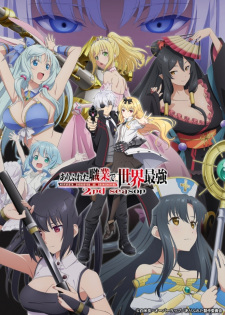 So...after the massive disappointment that is Season 1 back in Summer 2019 that's rife with production woes, novelist Ryo Shirakome's storywriting that while is highly praised in the LN, was such a misnomer in the anime adaptation due to plot pointers that was glossed over in favour of the rushed pacing that's directed by the now-deceased Season 1 director Kinji Yoshimoto, is Arifureta still the same trash-worthy Isekai as it was back when it released? For good or worse, it's still quite mixed. For the sequel that's led by Corpse Party director Akira Iwanaga, the story is (obviously) continued from the events of Season 1 that ended with Volume 4 of the LN, and the continuation that's heralded between the leftovers of Volume 4 to Volume 6 of the LN, which is in my mind, a huge improvement from the last that doesn't feel rushed for the viewers. Everything is where it should be with no excuses of cut content, just full on trash enjoyment values, which I really breathe a sigh of relief after watching the horrendous prequel 2.5 years back. Unsurprisingly, Hajime and his harem gang are back (and yes, including his class of heroes which I thought are always brain-dead niceties), and they get a fair bit more action in the sequel continuation. The difference is now with new characters like the mer-folk/dagon-type demi-humans and the whole Demon Army side of things, where only now it gets frenetic with stakes at hand. The young mer-folk Myu is a new addition to Hajime's gang at the tail-end of Season 1, but her inclusion this season does provide some resting moments, other than always being in peril with their lives on the line in the situations that they face in the Grand Guen Volcano, to back home in Myu's birthplace of Erisen. Of course, what's left to say more than the eventual conflict of Hajime and the Demon Army of both demons and classmates being evil, that's a thing. As to be expected, everyone will bite back at the overall presentation, and this still feels like ass, though not as bad as how much Season 1 was effed upside down with the last-minute production changes. Studio asread. is still here, albeit with yet another studio's help: studio MOTHER, replacing the intended White Fox in the 3DCG department. It honestly doesn't feel bad to finally see Arifureta adapted in decency, though this is still a far cry from its potential. Though I'm quite saddened to say that the OST wasn't as strong as Season 1, but who I am kidding myself since it was pretty much the same as before, except for the theme songs obviously. Void_Chords set an insanely high bar with their banger of an OP 2.5 years ago (and is still a fantastic song to this day), and though MindaRyn is beginning to build her reputation as an esteemed Anisong artist, it just feels night and day when compared between the two. Even with DracoVirgo's kinda lackluster ED for Season 1, though FantasticYouth did a better job, both songs just aren't really my taste and sound quite average. Even as a "restart / reboot" to the series by doing the usual adaptation practices right, Ryo Shirakome's Arifureta as a whole, just is not a good Isekai, and even if Season 1 was heaps of terribad with some good points to it, Season 2...just felt like there wasn't any "fun" injected into it with its overall serious tone that it would carry from start to finish. I am glad that the sequel fixed up the vast majority of the glaring issues of the prequel, though at the expense of feeling numb to watch any more of Arifureta. Take this sequel on your own risk if you think that this series still has some value to you that's worth the continuation. Dolls' Frontline / Girls' Frontline 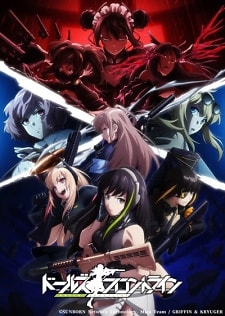 Game adaptations work for various ways, but it's main objective would always get you to try out the game, which is its biggest selling point. And it's by no small means that MICA Team's KanColle-inspired crew of anthropomorphized firearm moe waifus is a small franchise, OH NO. Girls' Frontline is a massively popular mobage RPG that's insanely loved by its fans ever since its release in China in 2016, that year after year, expanded to more territories, and gradually released to English and Japanese players in 2018 as Dolls' Frontline due to trademark constraints. So, think of this as the equivalent to Yostar's Azur Lane and DMM Games' KanColle. Usually, game adaptations will have their own story and plot that's conceived by the writing staff team in the anime's production, but you would be surprised to know that this adaptation is adapted straight from the manga version. Which as a non-GFL player, I feel that while fans have every right to criticize this move, at least there is but only one direction, and that is straightforward, which IMO does service the plot decently, even if it feels thin and slow on the pacing side of things. And as hardcore fans would say, to truly experience the game franchise at its best, the mobage would always be the superior version against the anime adaptation, and it's for this reason that this feels same same, yet different. The anime adaptation follows the set of rigils: the common "good vs. evil" of the side of the Griffins vs Sangvis, the team of focus (which is AR Team: comprising of M4A1 (M4), ST AR-15 (AR15), M4 SOPMOD II (SOPII) and M16A1 (M16)) and their newbie Commander Gentiane. To hardcore GFL fans, this is already a red flag that the anime adaptation packs a side story that even then, under the watchful eye of wonky Asahi Production in-house director Shigeru Ueda, which if last season's travesity of a mess with last Summer's Peach Boy Riverside's adaptation is of concern, can be frightening. But somehow with the backlash that IDK if Shigeru Ueda have heard of laments after that entire ordeal, thankfully he chose to just make things simple and at least followed the narrative of the source material (albeit a different version of it) to the T. Good riddance Shigeru Ueda, because this should be a lesson as a director not to unnecessarily tamper with what's already given, plus adding things that break the flow whatsoever. Even if the story was kinda of a fluke, the characters I'd say didn't felt polished as compared to reading the manga version of it (which I only discovered episodes in). In the manga version, at least most of the T-Dolls, given Griffin's or Sangvis's, they do at least exemplify their personality in whatever ridiculous ways possible with some infused comedy to even out the nearly-serious tone of the story. But while the tone is kept subtly in the anime, it mostly went too overboard with the seriousness of the situation of a sub-intended "World War III" between moe combat androids, so much so that the almost 25-minute runtime (plus OST) feels like a chore to sit through. Don't get me wrong, I love the insane battles here, but somewhere along the line, things doesn't seem to match up with the overall feel, and for better or for worse, makes or breaks the entire flow of the anime. And that leads me to the entire production of Girls'/Dolls' Frontline. Asahi Production for one is a subpar studio, and they only make about 2 to 3 shows per year, so this shouldn't be a problem all things considered. And what this studio has done for this show, it's technically one of the better action-heavy shows ever produced, and it has stakes to make it feel that way. And for some happy reason, I must really give props to the team whom did the OP credits, because that is ingenious, almost game-like excellent quality MV right there, that is definitely a first for me to see this kind of disparity between the OP and the rest of the show (which sadly just drops quality bombshells like the obvious). But again, this is a double-edged sword to see such a MV that's so well-crafted that made me think that this was ripped off from the actual mobage OP montage, and the final production being a mediocre attempt. The fantastic OP MV is backed by yet another fantastic OP song sung by former Little Glee Monster member Sakamoto Yuka, who's now a soloist and is currently known by her stage name yukaDD(;´∀`). Honestly, if the final product can match what the OP production is made off, then I will be even more happier. But obviously it wasn't meant to be, and with the mediocre production, came inconsistent BGMs, and especially those gunshots in battle, because it triggered me more than one occasion that I actually thought that they were ripped from other gunfight shows of the similar kind. Team Shachi's ED...felt like the stereotypical early 2010s songs when idol music was just starting to bloom in Japan, and though was a song fit for the occasion, it just couldn't match the insane values of the OP. In the end, a game adaptation is a game adaptation, its objective unchanging and the shallow storytelling will always be its Achilles' Heel. But I praise Dolls' Frontline for actually doing something different (like a manga adaptation of the game), that while it doesn't shatter my thoughts of game adaptations being so bad at almost everything, the experience just mildly improved by a tad bit. It's definitely watchable, and not as bad as your typical shoe-horned game adaptation of few plans and many loopholes. |
|
Apr 25, 2022 12:14 PM
#3
Fantasy Bishoujo Juniku Ojisan to / Life with an Ordinary Guy Who Reincarnated into a Total Fantasy Knockout  Dear Yuu Tsurusaki (the author of this show), I really wanted to like your work that features a gender-bender Isekai about two men being summoned into an Isekai world, and that the unpopular one is turned into a peerless, beautiful girl just because of the Goddess's mischief to see both genders hooked up together for a not-so-gay relationship before the world is destroyed by the Demon Lord. It's just that I have a problem. And that is that I've experienced this before, but way better. Of course, I'm talking about Tsukimichi: Moonlit Fantasy. This Winter season on Tuesdays, we are presented with 2 gender-bender Isekai: mangaka Yuu Tsurusaki's Fantasy Bishoujo a.k.a FabiNiku, and novelist Hirotsugu Ryuusen's Kenja no Deshi. Obivously with the tipping Scales of Justice, there will be one good and one bad show, and this is the good one that can be easily recommended. The reason for mine however, is that Tsukimichi (aside from KonoSuba) tops Isekai parody comedy in the finest of ways that set a bar too high to ever see other series work the way they did. But, of course, there's merits and flaws to be seen in every work, and let's see what makes Fantasy Bishoujo a lil' different. This is the case of the classic "I'm popular, you're not popular" sorta childish argument that existed during the youth of our days, and both MCs Tsukasa Jinguuji and Hinata Tachibana stem their relationship in this way. Both guys are childhood friends, and while Jinguuji has always been the popular boy growing up, being fawned by classmates, girls/women and co-workers alike due to his good looks, he has a quirk: he never shows any interest in the opposite sex. As you would expect, Tachibana's the total polar opposite of Jinguuji, all he ever wanted in life was to get a girlfriend. And boom, therein sets the plot that this Goddess of Love and Beauty "heard" his wish, decimates both Jinguuji and Tachibana while in their drunk capacity to reincarnate them into another world. And if you think the problem is settled there, oh no. This blatant mischief of a Goddess, on top of the "be heroes, defeat Demon Lord/King, save the world and what-have-you" generic treatment, curses Hinata to gender-swap him into a pretty girl that literally forces Jinguuji to be tempted to Tachibana's Unparalleled Beauty until the world is saved, or will the infatuation take over forever. Yeah, literally taking the "bros before hoes" phrase into context. From there, it's nothing but absolute hilarity as wherever Hinata goes, she (from a he) becomes the fragrance marker of every men in the vicinity, good or bad, all in the viable attempt to be as popular as Jinguuji, and she got all the publicity that she wanted. The problem is, now that Tachibana is in a girl's body, she sees Jinguuji as a girl too, and those aren't just mere friendship hijinks anymore, but relationship woes as well. And given the power system in the fantasy world, since Jinguuji's the popular kid, he is made OP while Tachibana has to start from scratch, and that sets as the journey forward as both male and female wander the distant lands to come across kingdoms and people...with a bit of eccentricities that add to that hilarity. The first they encountered is this weird, boorish, extravagantly "beautiful" lady of an elf chieftess, Telolilo Lilili Lu, and their guardian who's been killed just for food since it harassed them in the first place. She acts like a Tsundere when praised, and acts the total opposite of being a nuisance when she isn't given her "rightful" treatment. And honestly, she is kinda of a throwaway character meant to clash with the male and female since it's their first time in another world. But the next character is easily the most parody-worth hilariousness, and that's the dark swordsman Kirito...er, I mean, Schwartz von Liechtenstein Lohengramm, even with the sword to match and his boisterous claim that he too like Jinguuji and Tachibana was summoned to be a hero worthy to fight the Demon Lord. He is easily the reason why I continue to stick to Fantasy Bishoujo, because he has all the hallmarks of being a joker: a knock-off, discount, German version of the SAO lookalike, one that's very heavy on the Chuunibyou that never ceases to make me laugh like mad. Really though, I've never seen a Kirito parody THIS GOOD, and props to Yuu Tsurusaki for inputting this balls-off-the-wall character to add immense,yet enjoyable hilarity. Alas, all the other side characters feel like side cheddar that only added a pinch of salt into the mix, and honestly I could let go of one or two of them. It's a surprise that OLM's Team Yoshioka is producing this, but take note that it's not the same staff team from Odd Taxi, aside from in-house director Sayaka Yamai whom's once the episode director, return as director of Fantasy Bishoujo. And I have to say that they did a good job retaining Yuu Tsurusaki's quality that's a 1-to-1 replication of the manga. And yes, the pacing of the episodes may feel rushed because of the short length of the manga chapters, though I can assure you that this adaptation is very faithful to the source material. A few things changed here and there, but it isn't enough to break the enjoyment of the anime. Sadly, I find that the music here is quite on the average side. No offense to renouned music artist Yoshiki Fukuyama of JAM Project who's been composing theme songs for the Macross 7 series, but from this OP to the last work he's ever worked on, it's been a full decade ever since. Though he was once a legendary singer, his best days are probably behind him, but, I'd like to at least give props for Yoshiki Fukuyama, inching a single after being MIA for so long. Luce Twinkle Wink☆'s ED on the other hand...it's not so good, and sounds quite repetitive. It's definitely a noticeable drop from their last ED song for last Winter's Tatoeba Last Dungeon (which I really love to bits). Just...really kinda meh for this. When you see a comedy show like this, it's easy not to take this seriously, because it's meant to poke fun in the most mild of things, and indeed Fantasy Bishoujo has done all that. Is it a watch though...that's up for debate, because while the comedy here can become stale somewhat, it switches tactics so that it doesn't disguise the viewer to expect what's to come. That's the literacy of a comedy work, and for all the right reasons, Fantasy Bishoujo is a good show to watch and just have a fun time for the Average Joe. I could've enjoyed this as much as Tsukimichi, but the gags of the latter were more fluent than this, and so, gets a good pass from me. And as I always say, if it looks good to you, why not try it out, you just might have some fun with it. Very good fun and quality entertainment and comedy with a unique twist to the isekai trope and a strong satirical tone to the genre it’s in. The characters are all fun and bounce off each other well in a typical straight man- funny man manner. The plot movement from the circumstance of the characters are pretty typical (Demon Lord destroying the world and need to stop him) but they have some slight differences for the reason to defeat the Demon Lord and it is pretty damn wacky. The designs are simple but have a certain style and distinction to them. Music wasn’t too memorable; but the voice acting was reflective of the characters’ feelings and was done well. Overall a good show that focuses a bit less on the fantasy setting and a lot more on the comedy and interesting dynamics between an old guy and another genderbent old guy. This series is essentially what it says it is at the start. A romantic comedy between an old guy and someone who used to be. Tachibana and Jinguuji are two best friends who aren't very honest with each other despite them being decent models in human society. They suddenly get placed in an absurd situation where they get sent to a different world by a troublesome goddess. Tachibana gets turned into a woman and a curse gets placed on them as well. As a result, they are forced to critically look at their friendship and resist trying to fall in love with each other by trying to defeat the demon lord and break the curse. As they go on they struggle with the dangers of this new world. Maybe they think it's a curse, and maybe they are both acting out on natural urges because Tachibana is a "fantasy knockout" now, but it's clear what they really appreciate are each other's personalities and journey of being together since they met. Slowly, they start opening up to each other due to these strange circumstances. This "boys love" type series was made and drawn by an actual married couple. That explains the sincerity behind it. It wouldn't surprise me at all if this is a sort of autobiographical representation of their own feeling for each other placed into an anime. What surprised me is that this has become my favorite isekai. And honestly, that's not saying much about that genre. It doesn't take itself seriously at all, and it comes out funny as a result. Still, the comedy in this series is great. Lots of jokes are thrown everywhere, and it's easy to miss many of them. Despite it's full of generic looking characters, their personalities more than make up for it. Most notably is Schwartz von Liechtenstein Lohengramm: A bland Isekai main character looking man who despite that, is so funny and sincere with himself it more than makes up for the way he looks. From the start, I really enjoyed the opening sequence song and it has stuck with me since. What can be expected here is a lot of teasing and tension in that regard. Jinguuji is ridiculously overpowered, though it isn't as easy as it looks. Tachibana seems useless but has a nearly unbeatable ability to charm. In this fantasy world, They run into what you'd typically see. There's a cast of elves, bizarre monsters, a joke of a kingdom, and religious cults among other things. The tension in this series goes over the top. Tachibana and Jinguuji try their best to fight their urges for each other in often comical ways, or try to take advantage of it to have the edge over the other. Maybe the animation isn't the best, but it does excel in telling an entertaining story with memorable characters. Satoshi Hino's voice makes Jinguuji's character several folds better. It's an amazing performance. The ending of this series is notable as one of the most honest moments I've ever seen between two people. I was worried about this series halfway thru, but it kept me laughing and on board it's rollercoaster of emotions between the two main lead characters. I'll definitely miss it. Futsal Boys!!!!!  I'd never think to state that in this Winter season, Sunday is the day where conspicuously bad anime all converge to meet up together, save for the BL-centric Sasaki to Miyano that's the actual opposite of being a masterpiece work when compared to the others on the day's schedule: the laughable fully-3DCG made that is Sabiiro no Armor, the dumbfounding waste of a potentially good adaptation that is Baraou no Souretsu, and now Futsal Boys!!!!!, and yes that's with 5 exclamation marks. Who's doing this horrendous title to think that this would sell to fans in Japan? Bandai Namco, that's who. Mixed-media adaptations are equally as bad as game adaptations, though getting into the lore of the franchise is better as a benefit from more sources like movies or mobages. But the first notation is that if the anime is outright bad, then don't bother selling potential fans to your franchise, and this is what Futsal Boys!!!!! did in its total "throw your brain out of the window" whack. Being the first Futsal-related anime, this is easily 100 times worse than "Puraore! Pride of Orange" for exchanging the CGDCT with the CBDHT (Cute Boys Doing Handsome Things). And both series were pioneers in recognizing the sport in anime form, which baffles my mind to think that it could've been at least decent, but the final product was just an exercise in frustration. I'm not even gonna try to review this one in much detail, because this anime obfuscated and insulted my intelligence too much. And since I've already been spoiled by Sabiiro no Armor quite a fair bit, here's yet another lightning round for you: - Story is unoriginal. Comprised by series composer Shouji Yonemura (who's also currently doing the the same staff role for the Shaman King reboot), this "story" if you can call it that, is just the copy-paste of many successful sports shows done before, just made sheepishly bad for all the wrong reasons. - Characters, all very unlikeable (except for the side characters). And to think that the main Koyo School team of boys are just so mind-numbingly muted both in tone and narrative, I guess this should come as no surprise. Also, who does a story that "I cannot kick a ball to you because of my trauma, just because I don't trust you, and my capable leg is suffering from some blatant stupid excuse of a "disease"" for the entirely of the show? That's one of the lamest excuses of a garbage character development story. Also, why give your shots "superpower"-like names? Because it's not funny nor inspiring at all, dunces. - Diomedea's animation is decent, though it's done absurdly poor with consistent repeat frames, that just nice, fits with the overall tone of the garbage show! Great. - Songs aren't good at all, they sound like character-motivated songs that just inspire about the best of the worst as they could. And even for STEREO DIVE FOUNDATION's standard when it comes to songs, I guess I can say that I like the ED a fair bit, but not too much. The only one good thing that they did was to get the futsal positions (such as Pivot, Fixo, Ala and Goleiro) right, but that's about the only praise that this one gets. What remains is just lazy, boring and uninspired storytelling, and characters that I would desperately pray tell for the side characters to be MCs, just because they have more personality than the MC team. Ugh. Hey Bandai Namco, if you're listening, please just forget about fixing the mobage game due to quality concerns and dump it into the trashbin, because the anime is about the best representation as it could get for your new IP franchise. And even for PR marketing, this anime is just plain bad, and so should your mobage be that way as well. I'm not cursing your game, it's just that it's so effing bad that I wanna switch off minutes into this dumpster fire of an anime. For everyone else, just steer clear of this show. This message is plain and simple, and so should your understanding be. Genjitsu Shugi Yuusha no Oukoku Saikenki / How a Realist Hero Rebuilt the Kingdom (2nd Split-Cour)  The father of modern political philosophy and science, 15th Century-borne Niccolò Machiavelli, is a very influential figure for his unscrupulous acts that are proclaimed in his most famous (or infamous rather) work on The Prince (Il Principe), being heralded as the instruction guide for new princes and royals, accepting that the aims, such as glory and survival, can justify the use of immoral means to achieve those ends. But as is with this very controversial work that's debated for centuries after his death, there was one consensus that was generally agreed on, and it's innovation, partly because like many other prose works of the time, it was written in Italian Vernacular, giving rise to the popularity of literature in the Renaissance Period. The Prince's aim was to teach that the "effectual" truth was to be taken as more important than any abstract ideal. And novelist Dojyomaru took and transformed that ideal into an Isekai where a modern person of intelligence and conceit was summoned to a fantasy world where the kingdom he was summoned was facing political and social pressure, and needed to be reformed before it could be lost to potential rivals typical of the kingdom wars and takeover and what-have-yous. And since this is the continuation of that series from last Summer, to say that Realist Hero wasn't for me would be a sore understatement. I do love shows covering politics and the like (a la Log Horizon) because it gives me reason to jog my brain, but after bearing through yet another season of this, I have but only one answer to it, and that's by some quotes: "I imagine that the intelligent people are the ones so intelligent that they don't even need or want to look 'intelligent' anymore.” ― Criss Jami, author of Killosophy “Whenever a theory appears to you as the only possible one, take this as a sign that you have neither understood the theory nor the problem which it was intended to solve.” ― Karl Popper “It doesn't matter how beautiful your theory is, it doesn't matter how smart you are. If it doesn't agree with experiment, it's wrong.” ― Richard P. Feynman And this quote might just be the best answer to sum this series as a whole, short and sweet: “Absurdity is the ecstasy of intellectualism.” ― Criss Jami, author of Salomé: In Every Inch In Every Mile It's no surprise that deep within the reaches of Realist Hero, nothing stands but generic Isekai and with a harem to match, because what else could you try to match sophisticated intelligence like Machiavelli's to make it "realistic". It's like cooking something but adding sugar instead of salt (or MSG rather) to make the taste balance topsy turvy, and yet still, manage to fail in every regard. I like references when done right and that the general audience understands why the context is used, but Realist Hero just quotes them like "It's the definition of law and order, written in black and white" to appease the people whom didn't understand one fair bit, yet continue to trust that the same people will understand the motives of the one in charge and trust that whatever the hero's doing, he's doing it for the best intentions of the kingdom. Whether frenemies or strangers that he comes by, he does it by the book to ensure that everyone is treated equally, which in an imperfect world, would sound almost to the point of narcissism. That's why it's labelled fiction, a imagination of a "what-if" situation if past Centuries' kingdoms would've been led by modern-day civilization, and for that it's fine, but doesn't harness any realism values at all. Everything else is just the same, just nothing to note about. At least Inori Minase's OP is better by a wee bit, and the ED got an upgrade to not being PowerPoint-worthy half-assed lazy material with Aimi's ED to boot. If you love it, you definitely will love it, and vice versa. I can't imagine anyone with common sense will like this one since it's just constant quotes to signify a brand new age, and it's still the same utter convoluted nothingness as the 1st Cour that came before it. This series is just too smart for its own good, and that "playing smart" is its Achilles' Heel, for better or for worse. Meanwhile, just watch Tensai Ouji no Akaji Kokka Saisei Jutsu a.k.a The Genius Prince's Guide to Raising a Nation Out of Debt, that one is far less liberal on the socio-political aspect and more comedic that's a better representation of being a more realistic Realist Hero. Gensou Sangokushi: Tengen Reishinki / Fantasia Sango: Realm of Legends  If there was a significant thing to say about this anime, it's that even as a Southeast Asian, I have NEVER heard of this series before, and that's saying something. Gensou Sangokushi, translated as Fantasia Sango, is a series that was developed by Taiwanese company UserJoy Technology and ONLY exclusively released in its home country, which I don't quite understand how that would ever translate to popularity outside of Taiwan, since the game is quite popular over there. And apparently someone at Geek Toys must've realized that this game exists, so an anime is commissioned to spread the name over to other regions, which for the life of me, I don't understand why is there a need for this. So get this, an anime adaptation of a very obscure game, exclusively broadcasted in an obscure Japanese TV station (BS12 Twellv World Hi-Vision Channel), and being the first new anime in the channel's newly launched late-night anime programming block. The result is just one: faded into obscurity. Nonetheless, since no one watches this show, I'll just make this review speakeasy: it's based on the Romance of the Three Kingdoms, the only difference is adding an evil element to it. You can either read the MAL Rewrite or Wikipedia's version for it, both will be the same informative synopsis. Add a ragtag team of people to hunt down evil spirits known as the Wangliang, and that's just it. It's dull, boring, even to the point of being a sleeping fest, and it's even a miracle that I've followed this from start to finish. It honestly feels a waste when something good is used for an obscure show like this, and it lies with the OST. Machico's OP "ENISHI" and LACCO TOWER's ED "Uso" are honestly songs worthy to be listened to on its own. It's just that the use case here, I can't fathom the belief that such great songs are used for an obscure anime in this state. Just take my advice: watch any other show, even if it's good or bad trash, and forget that this show ever existed. Hakozume: Kouban Joshi no Gyakushuu / Police in a Pod  After graduating from high school, Mai Kawai's priority was to find a job with a stable income. But the only institute she was accepted in was the police academy, which she reluctantly joined. Now, she's a police officer who's unexpectedly treated and criticised harshly by the citizens. Disheartened, she decides to leave the job after only few moths of appointment until she meets Seiko Fuji, her new senior and decides to give this job a second chance. Story: The plotline is intriguing. The execution is decent. The pacing is perfect. However, the humours didn't hit the right spot at all. It has a comedy tag but in no way made me laugh. If not for the Slice of Life content and the last case, this aspect would have got an even lower rating from me. Characters: There's nothing much to say about the characters. All of there are quite one dimensional and character development is almost negligible. There was a potential in Kawai's character which was wasted. The character dynamics remained same throughout the series without showing any changes. Pretty boring in this aspect. Music and Voice-Acting: The opening track is good while the ending track is decent but neither of them has that x-factor to keep me hooked which is highly expected from a series of this genre. The bgm is decent. The voice actors did a very good job. Animation and Artwork: The Artwork was good and was well enhanced by the animation. It was fluid and visually attractive. Especially the chasing sequences were fun to watch. The best part of this series, one can say. Police in a Pod is a one time watch at best. Its main lacking is the absence of good comedy even though it has a comedy tag. When I started watching it, I had a much higher expectation, so it disappointed me. However, it has its good parts, and one may give it a try if they are looking for a quick, light hearted watch. Of all the series starting off the new year of a very dry Winter season, mangaka Miko Yasu's Hakozume a.k.a Police in a Pod definitely stood out for being one of the most interesting works ever made. A manga that clinched a win in the 66th Shogakukan Manga Awards in the Best General Manga category, alongside Inio Asano's Dead Dead Demon's Dededede Destruction last year (which is now finally getting an anime adaptation), it's no secret that this work is truly something special, and it all had to do with the fact that Miko Yasu herself, was once an ex-cop working in Japan's kouban (a.k.a police box) police force. Before I go further, I would like to elaborate specificially that the police culture of the East and the West are vastly different, and that has lead to some unnecessary triggering of comparisons made that could extend itself into a hate rant (I'm looking at you ANN), so please do not snare up any hateful rants here as well. Back to the main topic, Hakozume's main episodic stories and arcs are based off of Miko Yasu's personal real-life experiences working in the police force for approximately 10 years, but was saddened by Japan's culture of overwork, and this manga was her way to spread understanding about the profession to encourage public support. She joined the police force in her local kouban as a low-level officer doing crime prevention publicity campaigns, her inspiration for joining being that she felt empathy for families of crime victims, but ultimately left when the officer that filled her role when she took her childcare leave, died of overwork. Being the victim of someone's death can instill emotional guilt, and as best as Miko Yasu tried to cope with the trauma and rallied recruitment efforts, there is yet another turning point of disheartenment to see that the younger generation wasn't all that interested in being a police officer. One boy whom she asked, said that he expressed interest but had some skepticism of the profession, claiming that it was too high of an order for someone like him whom struggled to take care of himself. It was this reason that Miko Yasu decided to convey the message that police officers aren't necessarily upright and honourable people, just regular human beings doing their best on the job. And being a low-level officer herself, it was easy to pitch to publishing companies like Kodansha's Morning magazine to get her work serialized, but although she had experience drawing portraits during her time in the police force, it's because of her inexperience drawing manga that forced her to quit the profession and focus on refining her art to be suitable for serialization. So, to see all the effort finally getting an anime adaptation produced by Madhouse under Kaiji director Yuuzou Satou (aside from last year's Nippon TV live-action drama), everything has come around full circle. This story is supported by the fact that the main female police officer Mai Kawai, serves as a fictional person of the mangaka herself, who's all but done from the police force. Kawai joined the force to earn a stable income, unlike her crude father that ended up on the opposite end of the spectrum. Being a fresh graduate from the Police Academy, she wasn't treated all that well when she was transferred to the local Machiyama Police Box, being hurled hurting remarks that are spokesbeing of the culture and the reception of the outside people. These issues are serious enough for Kawai to throw her letter of resignation, but that was stopped when a new instructor steps in: Seiko Fuji, a once detective chief that got demoted to a sergeant and transferred out for harassing her junior. And man, is Seiko-chan such a ruthless woman to stand her grounda amidst pressure, guiding the almost-resigned Kawai into comedic antics from the usual rank-and-file cases ranging from burglary to assault. And every single one of these chapters has a purpose, referencing back to how Miko Yasu had seen and heard the exact same issues in her police lifetime. To edge the profession ever further, there's the Astro Brothers of Sergeant Seiji Minamoto and his detective sidekick helper Takeshi Yamada. Like Seiko-chan, Minamoto has an eerily similar personality to Fuji, so much so that they tend to clash a lot, putting both Kawai and Yamada as their juniors to shudder in fear. And since everyone knows each other from Police Academy, it's easy to say that both Fuji and Minamoto were in loggerheads with one another, brought to the real work life where the troubles never end. But as much as these two are tutors to their junior counterparts, they do act the role as superiors when life matters most in the fight against crime, solo or syndicate. The Machiyama Police Box has also Miwa Makitaka as a backup force, mainly dealing with stalkers and sex crimes, but with a drawback that her entire world was surrounded with girls and not being accustomed to men. Despite this, she's an iron-fist clad of a woman to stand her ground against the criminals oppressing her, and male-centric divisions like Criminal Affairs will step in if she needs help to handle the most difficult of men. Overall, to bring similar figures that Miko Yasu has known in her 10-year cycle in the police force be replicated to the manga, it really shows how much the audience can really mistake police control in the horrid ways of the real world, though depending on where you live, police brutality will always be the the central taboo. It's glad to have Madhouse produce more shows outside of their comfort zone, now with the studio's recent revival and dabbing into other genres. Along with last season's vampire comedy show Kyuuketsuki Sugu Shinu a.k.a The Vampire Dies in No Time, Madhouse is chosen to adapt yet another comedy series, albeit one that's focusing more on the police force, and I think like the many recent works Madhouse still has that unmistakable quality that's instantly recognizable. The elephant in the room is with director Yuuzou Satou, of which I've mentioned that he is famous for the Kaiji series. He hasn't had a breakout work since Kaiji Season 2 a decade ago, and finally found his stride with this show. It'll be a long while before he comes back with another work, so for now, enjoy while you can Satou-san. Music is pretty decent too with Riko Azuna and nonoc at the helm. I'd think that I gravitate more towards nonoc's ED "Change" because of famous Vocaloid composer DECO*27, and I know this because DECO*27 composes really good songs that I've heard before, so the standard is there. Works like this are rare to find, even one that's worth the inspiration to be adapted into anime, and I thank mangaka Miko Yasu for being a source of inspiration to draw and illustrate what was once her life's job into manga form, that you can't really find anywhere else. And because this is the AniManga industry, I hope that you don't carry over the overwork culture from your police days to drawing manga. Nonetheless, regardless of where you live in the world, try and see this show from a different perspective, and you might find something to like about it. Since I have a biased hatred for the police, it will affect this, and there is no point in hiding it. This series did not deviate much from what I thought about it in the first episode. A cute and funny, mediocre, slideshow presentation tier, police propaganda series. It's an episodic series about two police women and the rest of their coworkers. They go on to battle crime in Japan with a story written by a former police officer. As a result, there a lot of interesting insight into what it's like working for the Japanese police. It amazes me that amount of hand holding that happens here seeing as though where I live the police will usually shoot first and ask questions later, and have a rotten history in general that leaves no room for respectability. I've had my own experiences with psychopathic police officers who nearly shot me in the head over a simple misunderstanding. I've been stopped and told "your kind don't belong around here," behind police sirens of officers that most likely have white sheets in their closets. As a result, this series can make me feel uncomfortable at times. Kawaii is a coward who recently joined up and met Fuji, a psychopath that shows her the ropes with her cunning experience. The series takes an episodic approach. As a result, it's your usual hit and miss episodes back and forth since it's more difficult to write great standalone episodes back to back where the plot often goes nowhere. Fuji tends to figure things out quickly, though it feels ridiculous at times. Kawai is usually clueless as usual. The dynamic between Kawaii, the very weak person, and the sinister Fuji, is nowhere near the greatness of duos like Kei and Yuri from Dirty Pair that even make bad episodes better with their own dynamic. Kawaii is a quitter who lacks self-confidence, and became a police officer more by accident than because she really wanted to. Fuji got transferred because she was bullying another officer. They start to become close as the series goes, and Fuji becomes protective as well. Towards the end, they went for a grand finale type of story that went on for more than 1 episode. Honestly, they should have wrapped it up sooner as it was easily among the weakest parts of the series. The author tries to at times show the reality of what being an officer is like. As a result, one moment you can be laughing, the next horrified after a suicide attempt or the sight of a mangled baby. Kawai's ant like growth and development is nearly nonexistent as she often lacks any kind of real courage throughout most of the show. It's still adorable to watch how innocent she is in her career. The two eventually meet Minamoto and Yamada. Though they try to go out and have fun on their time off, they tend to get called a lot and can never really escape. There's a lot of focus on how much police officers get overworked here. I think the author had a coworker that passed away that way if I remember correctly. Now over, this was mostly forgettable. It didn't help that the animation looked pretty but was very lazy. There's something scary about their eyes. The constant slideshows were annoying. None of the music was memorable, but the opening and closing sequences were nice. Right from the start, the viewers get police butt shoved in their face. The only thing it had going for me was the occasional really funny joke. Hanyou no Yashahime: Sengoku Otogizoushi - Ni no Shou / Yashahime: Princess Half-Demon: The Second Act (Season 2)  Well, well, well. I'd guess my review of Season 1 did some harsh numbers for everyone to stop watching Yashahime after the awful blender that was the resurgence of the new-generation Boruto flak that now the Inuyasha franchise has literally and unfortunately carved its name in, but what do I know. And that's where Season 2 comes in, and rightaway it solves all the problems of its preceding season...by having an ending and a resolution. That's just it. Most of the problems in Season 1 were just the foundation for Season 2 to solve, and even going back a bit to scour the cliffhanger (since this sequel is a continuation after all), I'd say that it still suffers the same writing issues as Inuyasha, and for a lack of better words, is the core theme of the series as a whole: seemingly unconnected stories that connect to a large-scale operation to defeat demons. The character dynamics really improved as the series pads on, and going back to my Season 1 review, for example: where Moroha was a sitting duck in the presence of Towa and Setsuna's sisterhood and family problems, she is more grounded this time to help them both, aside from standing out (which she does even less this episode, thank goodness). The idea about Season 2 is just one word: reunion, reconciliation. And bringing back the OG cast in and of itself does the servitude well to re-connect the children with their parents, and this is easily one of the highlights of the sequel to both good and evil. It feels more grounded and less like a modern Inuyasha on reboot and repeat, you wouldn't want to watch the same thing more than once nowadays. But otherwise, this is Sunrise's very last work as the animation studio is transitioning in the Bandai Namco parent company as Bandai Namco Filmworks while the Sunrise name will be withdrawn solely for IP creation. You will be missed, Sunrise, and you did good for close to 50 years of animation since 1972. We will miss you. OST is just as decent, and yeah, it's kinda expected though Season 1 was the high for me. Yashahime, the "bastardized" child of the Inuyasha series, has finally hit a stride on Season 2, though its conclusion was one long awaited for hardcore fans. But please Sunrise (or Bandai Namco), no more, just no more. We've had enough more than Gundam offshoots, so just let the Inuyasha franchise rest in peace of what it managed to achieve, thank you. |
|
Apr 25, 2022 12:15 PM
#4
Kaijin Kaihatsu-bu no Kuroitsu-san / Miss Kuroitsu from the Monster Development Department  The most ambitious and cleverly written series of the season with unique humor came from the dark corner of the 2022 Spring anime season. Nobody around me watched Miss Kuroitsu from the Monster Development Department, and the discussions were low and barely had. Right from the start I felt this was going to be my personal anime of the season and I was right for once. Uniquely, the story revolves around the villains rather than the heroes. Agastia is a secret evil organization that specializes in creating monsters to take over the world. Because of the harsh and rather ridiculous corporate politics taking place behind the scenes, the monsters they create are often laughable and defective. Trying to make this realistic in a series is clever in that it becomes comically absurd. Even though they are evil, they have high morals when making decisions, because this series does not take itself seriously at all and makes fun of everything in it that it can. Off the clock, these are decent people. From absurdly long episode titles, awkward timing between scenes done on purpose, ridiculously cheese hero lines and moments, random jokes thrown all over the place, a giant cast of characters with many based on real life local heroes from Japan, an android with an absurdly overexaggerated robotic voice, it's impressive how creative this series is and how it all blends in. My only real complaint is that the animation implodes and falls apart in the last two episodes. That doesn't take away the fact it had a great grand finale and more. Agastia is going up against Blader, the comically overpowered hero that stands in their way. As schedules run tight, budgets run low, and bugs and glitches emerge during production, Miss Koroitsu tries her best to create the right monster to defeat him. At the same time, her attitude towards this makes it look as if she isn't very serious about it and failure feels like something she just gets used to. As a result, a wide cast of colorful monsters appear. My favorite is Cannon. A monster that during development had a fearsome giant design with all sorts of horrifying powers. However, after some help from the clumsy Leader with strict budget limitations taken into account, the final product ends up being a big goofy bird with a scouter and handgun. Just writing about this still makes me laugh. This series treats it's characters well, and even minor characters come full circle and become relevant. As comical as this series is, and as huge as it's ocean of corny hero lines are, this can still feel inspirational with it's messages of defying evil, refusing to lose, and carrying out your destiny with an unshakable will. The cast's job of creating monsters can be difficult, lots of obstacles get in the way, and the amount of overtime can be exhausting, but they don't give up and keep going. Combined with this is a great soundtrack, one of my favorite Ending Sequences, and clever humor I cannot get enough of. At first it seems Blader and Kuroitsu are just fighting a simple war. Then it's shown there is much more to them off the clock, as they are much closer than they think. This goes along with the ridiculous plot twists in this series that usually had me laughing. Megistus is definitely my favorite character. He is the mind of the organization and chief strategist. His character is interesting in that despite the organization being evil, his code of conduct is very honorable, and his treatment of his subordinates is comically compassionate. He's serious, but feels as if he is just messing with everyone with the politics of his organization. It's funny to see him be the most professional of professional and ideal boss of an evil monster developing organization wanting to take over the world. After a very satisfying ending, it surprised me that I was not even close to being the target audience for this, and missed a barrage of references. Still, I can't deny this one was special, and worth the watch. Karakai Jouzu no Takagi-san / Teasing Master Takagi-san (Season 3) 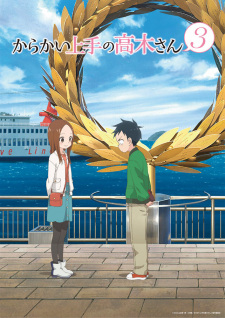 Oh lordie...Takagi-san, Takagi-san, Takagi-san. Once is just about enough, but two's a company and three's a crowd...or in this case: 3rd time's the charm. The correct way to sum the entire series which started out the greatness of mangaka Souichirou Yamamoto's manga can be described like this: - Season 1 was the base foundation, an introduction / prologue if you will, into the couple that is the teasing master Takagi-san and her "boyfriend" Nishikata, along with the Ashita wa Doyoubi girls Mina, Sanae and Yukari as a side story; - Season 2 is more of the same, but with hints of romantic progression between the two leads, and last but not least; - Season 3 is the pinnacle and epilogue of the parent series with character development being the central focus thus far, adding their other classmates that we've already known but being couples now (Mano X Nagai, Hojo X Hamaguchi). And for diehard Takagi fans (like myself), the VERY FIRST introduction of Chi, and I'm not gonna spoil this to anime-onlies since it plays a huge part in this mangaka's world of Takagi-san as a whole. Not to mention that literally 2022 is Souichirou Yamamoto's year of getting 3 simultaneous adaptations in a row, 3! Consisting of this wrapped-up Season 3, Spring's Kunoichi Tsubaki no Mune no Uchi a.k.a In the Heart of Kunoichi Tsubaki by CloverWorks, and Summer's Soredemo Ayumu wa Yosete Kuru a.k.a When Will Ayumu Make His Move? by Silver Link. Add in the movie/film that was just announced hastily for June, and I can tell you that this is a lot to take in, and Souichirou Yamamoto is really raking it rich with his works that are adored by many. All we're left is WHEN will we eventually get the (Moto) spin-off adapted, now that will be the greatest thing ever. As for Season 3, TL;DR, if you've watched both Seasons 1 and 2, expect the very same thing here, but with the romance stakes pushed up higher as both Takagi and Nishikata get baby steps closer to each other...well, that's if the awfully dense Nishikata ever will get a hint. More original stories that aren't from the manga are added in for more romantic spice, and add in the oh-so-remembered Yuiko Oohara and Rie Takahashi differential songs line-up of an OST, and all in all, this is the Takagi-san that we all know and love since its inception. Takagi-san has always been great since Day 1, who can really fault it? No one it seems. Sequels are driven by nostalgia, and sometimes that sense of nostalgia that we have diminishes as more seasons of a show come out, and it gets boring. Thankfully, the third season of Takagi-San uses all its nostalgia and themes from its first two seasons, and builds upon them effectively. The quality was as good and consistent as the first two seasons, and the characters are starting to get a bit more development. Now, if I may not be so formal for a second, let me just say that AHHH THIS IS SO SWEET! Ok, and there was my scream about how pleasant this show is. Alright, let's get on with the review. My episodic grading scale: Story: /10 Art: /10 Music: /10 Characters: /25 Enjoyment: /15 Thematic Execution: /30 STORY: 6.9/10 Much like previous seasons, this show is very episodic, filled with various skits that build up to a conclusion. I will admit that the earlier portion of the show was a bit of a drag, but the latter portion of the show was great! The narrative more or less stays the same, and the endgame is obvious, and many plot points are predictable, as I predicted two big scenes to happen as soon as I saw what they were trying to do. It's pleasant for sure. ART: 9/10 I enjoy the simple, yet beautiful art style. The composition of shots is good, and direction overall was well executed. MUSIC: 8.4/10 Probably my least favourite set of openings and endings, but that's not to say they don't fit the direction of the story. CHARACTERS: 21.5/25 Pure sweetness! I noticed quickly that in this season, Takagi says way more bold things to Nishikata, and that's a sign of development. Nishikata, while still incredibly dense, at least figures some things out, and he got more exciting to watch as the narrative went along, and sometimes got me all up in my emotions (yes I cried by the way). A common gripe I'm sure some of you have is the side characters. That continues to be my complaint as well, but I think they handled the side characters well and used them more effectively than before, which is a step in the right direction. ENJOYMENT: 14.2/15 Probably the show I enjoyed the most out of everything this season, it's just very wholesome and gets you emotional sometimes. THEMATIC EXECUTION: 24.5/30 The romance theme here was flushed out very effectively, and it made the story all the more enjoyable. The comedy isn't that great, but it functions well enough. Overall, a definite improvement in emphasizing the thematic elements of the show than any of the first two seasons. OVERALL: 84.5/100 This was fun to watch, no doubt about it. Story slowed down in the first half, but the latter half made it all worth it. The ending to each season always knocks it out of the park, and for this season, there was no exception. The movie is coming soon, and you bet I'll be ready for that when the time comes! Kenja no Deshi wo Nanoru Kenja / She Professed Herself Pupil of the Wise Man 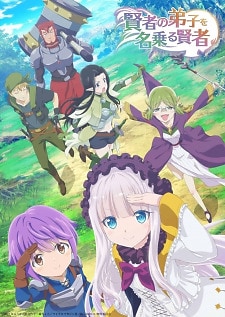 The show where the "old man transforms into a loli" story plot becomes a reality, and all that nuttiness...amounts to nothing. Tuesdays in the Winter 2022 season are allocated to gender-bender Isekai (well, except for Tensai Ouji) shows, and having 2 series go head-to-head against each other and airing one after the next, was a real treat: Fantasy Bishoujo a.k.a FabiNiku vs. Kenja no Deshi wo Nanoru Kenja a.k.a She Professed Herself Pupil of the Wise Man. While FabiNiku ultimately won the battle being the better executed show, Kenja no Deshi lost the war badly by being a somewhat worse adaptation of the source material, and it's not for lack of trying consider the staff behind this. The story in a nutshell, is that if you take the SAO narrative, pureed it in a similar fashion to this season's Shikkakumon no Saikyou Kenja a.k.a The Strongest Sage with the Weakest Crest, gave it a makeover similar to Leadale no Daichi nite a.k.a In the Land of Leadale, and mash them all to make this show. And for one, you might think that novelist Hirotsugu Ryuusen took notes and copied ideas from similar series to make it his own, only 2 out of 3 "inspirational" works made it here (SAO and Leadale) since those works came before Kenja no Deshi started its publication in Syosetu in April 2012. This source is easily a decade old, and it seems that an anime adaptation of this was really in no hurry to come out...until now, and somehow it flopped even harder than the source material which is decent to say the least. With the world's setting done, let's introduce the characters...or rather, the only one character that really matters. The MC is Danblf Gandagore (a pun on names derived from Lord of the Rings's Gandalf and Harry Potter's Dumbledore), one of the 9 Wise Men of the kingdom in a yet-similar SAO rip-off VRMMORPG. He is respected as the strongest Wise Man magical sorcerer hero, helping out a similar friend: Solomon, whom like Danblf, is a player and king whom created the in-game kingdom together with the Wise Man. For some strange programming reason, Danblf uses a cash item in his inventory, only to be transformed into a silver-haired, blue-eyes-blue, cute and petite girl, that to add some nonchalance to it, the retainment of his powers. Obviously, anyone whom has relations to the original Danblf will instantly recognize the OP powers, so she has no choice but to profess herself as the pupil of the Wise Man while taking on an alias name: Mira (which is a derivative of the the real-world player's family name, which means mirror). All that is fine and all, but the series really has one overbearing "fanservice" in common: and that's the peeing scenes. In a strange twist, for all the work that Danblf has built during his time, in every crevice there exists a toilet that Mira can use, or even doing the deed outdoors. Like, why is this a thing? Sad to say that I can not give two flying fishes about the other characters, they're just very basic and work as what would be expected of them to do. Any work that Studio A-CAT tries to do, there is but only one word that rhymes with all of the production: mediocrity. It's safe to say that quality was never the word when it comes to the studio's mission and vision, because it just looks like crap that's indicted because of the crappy CGI and a hefty amount of still shots. Director Keitarou Motonaga can be a chad when he does things right, but as an in-house studio director, this really is the lowest of the bottom of efforts given as the show is butchered of its source content right from the get-go, that it feels like the show is literally D.O.A. I kinda wished the music segment can hold up, but it's the same story with the rest of the anime. Don't get me wrong, Asaka CAN create good songs (as evidenced from series like Yuru Camp), it's just that for this show, while "Ready Set Go!!" is a good song I'd like to listen to more on its own, there's just this feeling that the back of my mind, isn't the same Asaka-like quality that I've come to expect. Idol group Erabareshi has been around for more than a decade, though their roles in anime are less than desired, and it's no wonder that it feels like a throwback when they did the ED for Hajimete no Gal back in Summer 2017, like damn. They're very forgettable, as well as the totally lazy ED visuals of just a simplistic PowerPoint-like video. I never doubted that works done by studios with bad reputations will be avoided by most people, and Kenja no Deshi happens to be that anime whom got the boot to working people whom didn't care about the source material at all, making significant changes that only degrade the anime to be the inferior version. Take my word that there's absolutely nothing unique about Kenja no Deshi, it's just tropes copy-pasted, spliced and re-hashed again and again. But I guess you can say that if you like being baited or catfished by a loli, then by all means, enjoy this "Isekai" for what it's worth. A good way to judge the quality of a show is seeing how many characters or plot points you can name off the top of your head. The fact that the only character I remember is Mira, and I don’t remember any plot points except the utter abomination of the first episode speaks volumes about how forgettable this series was to me. The first episode of any series is an extremely important one, you hit it, the watcher will be hooked, but if you miss it, the watcher will either leave, or continue with less enthusiasm. I would be someone in that latter category. I was so put off by the back half of the first episode that the sour taste it left lingered on throughout the rest of the show, but even if I overlooked the first episode, there’s not much to praise about the show. The jokes don’t land, the characters are bland, the world is boring, and there isn’t much to be excited about. My grading criteria: Story: /25 Art: /10 Music: /10 Characters: /20 Enjoyment /15 Thematic Execution /20 STORY: 3.8/25 Now we’ve seen this formula before, someone gets reincarnated as an overpowered character in a game, but in this case, Danblf, which is definitely not a lazy renaming of Gandalf, one of the nine wise men, becomes a little girl named Mira, who inherits most of Danblf’s abilities and shines in the world she lives in, solving any and all problems the world throws at her. There isn’t much to the story at all, and its fundamental problem is introducing all these plot points up, like the Soul Howl, the nine wise men, the Chimera Clausen, plus a lot of other filler, and not really resolving much of it well. Otherwise, there are no details I remember from the story at all, as the finer bits and pieces are just too forgettable. ART: 1/10 Deplorable use of CGI, and poorly executed action scenes really detracted from the immersion. Most of the action scenes took place in stills, which really isn’t all that interesting. MUSIC: 6.3/10 Brownie points for music because I’m a sucker for any anime music to give it a bad score. Pretty generic music for a fantasy. CHARACTERS: 3.5/25 The characters besides Mira really added nothing to the story, King Solomon was just there to spout random facts about the world. For the rest of the characters, let me spout some names for you: Luminaria, Zeph, Tact, Fricka, Leticia, Emera, Asval, Frone. Could you tell me who was who in this story without looking it up? Probably not, and that goes to show how interesting they were. Out of those characters I listed, you might remember who Fricka is, yes, that glasses girl whose only gag was being overly obsessed with Mira. Speaking of gags, the comedy was just so mind-numbingly bad that the main character’s only comedic bit was that she apparently needs to pee a lot (don’t we all?), which was just so… off to me. The only half decent character was Mariana, Danblf’s aide, because there was that emotional moment between Mira and Mariana that was probably the only good part of the show. ENJOYMENT: 2.7/15 I checked out pretty early here, but I got through it. THEMATIC EXECUTION: 5.5/20 A typical power fantasy theme that at points were pleasant, but it was mostly boring. The world-building was dealt with using too much dialogue, a case of telling instead of showing, and that really didn’t help building the fantasy theme up. OVERALL: 22.8/100 I’m sure most of you are just going to criticize the animation, and use that as your main complaint, but there is basically nothing good about this show besides that even. It is generic, boring, and just not funny. Just a forgettable show with not much going for it. However, except for the animation, there’s not much honestly that is inherently “wrong” with it, it’s just not an enjoyable experience overall, it was a project adapted so awkwardly I don’t really have much to say, except that there are a whole lot more better isekai out there. Koroshi Ai / Love of Kill 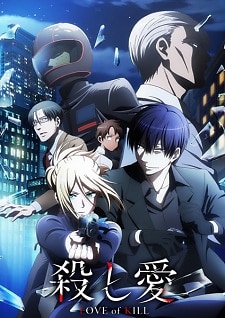 It's been a long while since we've ever had a Josei adaptation, which are works targeted at adult women, the last of which was Chihayafuru which wrapped up Season 3 back in Fall 2019. And come this Winter, mangaka Fe's Koroshi no Ai a.k.a Love of Kill (the Japanese title connotation pun for killing each other) is silently a low-key combination of "Kaguya-sama: Love is War" in terms of romance and more like Mr and Mrs. Smith's version of "Spy X Family" in terms of mystery and suspense in the making (before the actual thing coming next season) as a stopgap measure. And for better or worse, the anime adaptation kinda faltered when compared to the manga of the same name. How Koroshi Ai was penned by mangaka Fe, it's actually quite a surprise to say the least. Originally published on Pixiv in October 2012 under a very long title (which is quite the mouthful), it gained a huge following so much as to spawn a sequel, then combine them both under Media Factory's Shoujo manga magazine Monthly Comic Gene for serialization, and that's how the series which depicted an assassin couple in love came about. And sure enough, it is the meeting between two assassins: a male and a female. Of course, who am I kidding. The bounty hunter Chateau Dankworth and professional hitman Song Ryang-ha, both meeting coincidentally due to the professions of their missions, and being assassins they attempt to erase the other in a swift and fast action, to which the latter won. But instead of killing her, he decides to have fun by tagging along with her, even to the point of bounty hunter assassintion missions just to get her attention, to which she constantly rejects his romantic advances. To add things into the mix, Chateau's agency, Ritzland Support, soon finds themselves tasked with taking down a hitman who's wanted across many organizations for single-handledly taking down the Hong Kong Triads, and this hitman is no other than Song Ryang-ha. This, at the very beginning, is where the "show, don't tell" practice comes into play, as we follow both Chateau and Ryang-ha seemingly delving into lots of the practical assassination plots, to only then pick up with the constant flashbacks where both man and woman's past reveal a hideous truth that changes the game's playing field and lets the viewers see how everything from their past comes to haunt them in their present day. It's a very slow burn for sure, and it'll take lots of romantic teasing and deaths by revenge and summons just to reach to that point. The real meat is in the details, and I'm not gonna spoil it here as the central story is what makes Koroshi Ai such a good read from the manga, and the anime adaptation kept it very faithfully, albeit with the constant recaps just to fill in for padding the runtime, which is annoying to say the least. The female lead, Chateau Dankworth, feels simpler in design. She is somewhat similar to Saber from Fate visually, and being very quiet, stoic, cute, and all the more for not understanding it or caring about romance. But since this is a Josei work, the focus is squarely on the male lead, Song Ryang-ha. If you've noticed a little about his character design, fox eyes are a rare, important feature, since they are essentially like a façade that hides their true colours. In case you didn't know, fox-like characters are impenetrably smiley most of the time, playful, socially adept, and seemingly eager to serve...until they show their eyes, and you know that shit has become real. And for a professional hitman-cum-romanticist, Song Ryang-ha fits the description to a T: he has a murderous identity, he is the nine-tailed fox in the room you have to ignore to appreciate this work, actually. Furthermore, Ryang-ha is like a small sadistic predator, serving tortured bodies as gifts to the female lead (Chateau) and resides in rundown buildings. He mellows pretty fast, always attracts the view, being smooth, sleek, functional, and ever so casually stylish. A low-key dangerous Ikemen because he is for the most part, very natural, and therefore classy as heck if he wants to be glamorous. The other characters do serve as plot movers, though of one particular interest is with Ritzland Support's secretary Indian, or Jim is as called in the anime. His real identity is a mystery, though he is an immigrant from India. And if you're thinking why doesn't Jim have a mouth, it's not because you're seeing it wrong, as the manga is also drawn this way, it's intentional. Most of the cast derives from Ryang-ha's past such as the spiderweb cheek tattoo Hou to the mastermind that is Donald "Donny" Bachman, and this syndicate forms the basis of the tumultuous downward spiral of which both Chateau and Ryang-ha are involved in. It's a deadly race of revenge and time, and time will only tell how these 2 are connected to one another as the series progresses, which amps the mystery and suspense quite decently. Some will have issues with the ways and styles of Platinum Vision's visuals as a studio, and this is a problem that I've encountered in a similar show: Devil's Line, back in Spring 2018, also produced by the same studio as one of their first works. The premise and setting of the 2 are almost like one another: dark, gritty and almost at times, condescending. While it gives the sense of mute-ness, it isn't as quite polished as I would've like, and the visuals are almost to the point of being a disappointing adaptation at best given its tense atmosphere. That said, if this was handled by a studio and staff team that understands the literacy of the work, then it could've been better, but this is what we got, and it's frankly kinda mediocre. On the upside of things, the music really fits the tone and mood of the show, to a T, and yes, that includes the credit visuals. Seiyuu Toshiki Masuda may have a long and extensive discography of his works, but this is the first time that he's going solo, and his debut OP song "Midnight Dancer" is such a dance of a bop that really doesn't disappoint. The one that truly surprised me was Aika Kobayashi with her ED song "Makoto Period", because her past songs were all very cheerful, vibrant and uplifting, and this was a stark contrast with dark and dreary but melancholic tones that had the feels going for it. I might say that this song is really her best effort and foot forward so far, and at times, left me fearful in a claustrophobic manner for what's about to come, in a good way of course. One of the best EDs of the season IMO bar none, and props to sound director Hajime Takakuwa for laying down that atmosphere which has been an integral part of the moving plot. Even as a straight guy, I can say that Koroshi Ai is an interesting Josei work that you just don't hear quite a lot. Sadly with the somewhat subpar anime adaptation, and with a work like this that demands your fullest attention (because if you blink, you'll miss it), some will love it, others will hate it. But hey, in a niche demographic like this, I have to judge everything the same, and this is a fine (as in decent) adaptation when all is said and done. I think I will gear to the manga more to continue where the anime left off, and you might have a better experience that way as well. From possibly one of the most overhyped seasons of the decade, with shows like My Dress-Up Darling and 86 Part 2 coming out, we get something underhyped, and a JOSEI of all demographics, a typical women's television romance turning out to not actually be so typical after a few episodes, and really evolving from its initial form into becoming something truly admirable. First comment I have to make before getting into the review is that this show has a criminal lack of viewers, which you can blame on the demographic turning most people off. we all have family members who watch anime, and 99% of the time you'll find that your mum isn't one of them, and this is normal throughout even the likes of Japan, rarely has there ever been any demand for older women's anime and therefore not much attention to the shows quality have been placed and have commonly been looked down upon as 'bound to be bad', which is the killing detail bringing down the ratings and viewership in Koroshi Ai, a show which I know damn well isn't getting a second season, so I bid my wallet a farewell and await the manga to arrive on my front doorstep. Koroshi Ai is one of the few shows which you can find that not only reach out further than its initial premise, but manages to do it in such an innovative and memorable way that as the story progresses, so does your attention progress further into the show as you slowly sink into the character's developments and turns, watching each characters decisions as though they were your own, and coming to know the characters as though they were your own friends. Having me constantly at the edge of my seat every episode wanting to know the outcome of their controversial actions and moves, Koroshi Ai manages to not only appeal to you with its climactic visuals and animation (which is also debatably poor at times), but also with its excellent displays of spite, trauma, and wit, coming together under two characters to bring the story of the world towards them and to not only be invested in the show but in the characters themselves. This about Koroshi Ai I love, as each of the characters decisions take me aback, and take my mind on a thought provoking journey recalling each action leading up to the present result of their actions and past happenings. Lastly, the character development, from such an unpopular story in manga you'd expect it to not be anything noteworthy or AT LEAST well executed, but what I got was yet again the opposite of this, leaving me astounded at each episode as the character Chateau progressed and became better as a human and coming to recognize who she is and accepting it, and coming to know and accept her past as it is, the same can also be said for Song, who went from very vibrant and easy-going, to recognizing the importance of other people’s lives and their repercussions, as the series progressed, we saw 2 characters go from as opposite as you can get, even in their careers, to slowly but surely becoming a like and recognizing each other for who they are and getting to know one another. This show is easily one of the single most underrated shows I have ever watched and I am proud to say that I can understand the appreciate the amazing writing within the show, portrayed in it's extremely well done developing and concept writing, and there most certainly is nothing worth speech that I can say is bad about the show, maybe I can at a later point, but right now I am happy staying ignorant about the show and to view it as character perfection. Koroshi Ai had such an unsatisfying ending and looked like a simple ad for the manga that tells you "this is a bad adaptation. We know. Just go read the manga for the answers." There was no payoff were it looked there was going to be after it all. It is an anime that feels like the source material is good but was cursed by this adaptation. The premise is very interesting and had me hooked despite the majority issues. I can't deny I liked this and loved the story's potential among all the discussions cursing it and hating it. It's a romantic mystery story about two people with a connected past. Chateau is an incompetent bounty hunter that can't do anything right. She's awkward and angry much at the time while putting up with a man that reminds her of "something." Song Ryang-ha is a competent assassin of great skill who takes an interest in her. He makes the show. He's a great character and can be both funny and horrifying. Maybe it's just the terrible way the adaptation executes it, but many times when he kills someone I laughed at how they portrayed it. No matter how much she tries to push him away, smack him, and overall try to avoid and turn him down, he always comes back around to try and woo her. She's too innocent to realize what she really has. Even though I could easily score this so much lower, I did enjoy it. And yet, this makes it even more frustrating because the manga must be so much better than this. Song felt too goofy in his portrayal in this adaptation. It feels like he should have come off as more sinister, and I am sure the manga does this. After a rough start, the mystery aspect starts to kick in, and this at least made it much more better and interesting. During the later half, their pasts get explored, and their connection gets somewhat explained. For the most part, Song's past is catching up to him, and Chateau gets dragged into it. Still, no matter how much Chateau turns him down and overall sees him as a roach, he protects her and seems sincere about caring about her. Chateau, because she's clueless, oblivious, and has the personality of a lamp post, doesn't get it. Yet, there is a charm to this that made me look forward to each episode despite that the coloring in this anime is ugly. The only character I didn't like is Jim. Why won't they draw his mouth? that kept annoying me throughout. The animation isn't even strong or that good to begin with. At least the music seemed good with it's piano and mystery tracks. By the end, I'm internally yelling at Chateau who is much too clueless about what Song wants. At least this shameless ad converted me. I do want to read the manga and see where this goes. A season 2 sounds like a mistake, but I'd shamelessly watch it and continue supporting it. Leadale no Daichi nite / In the Land of Leadale 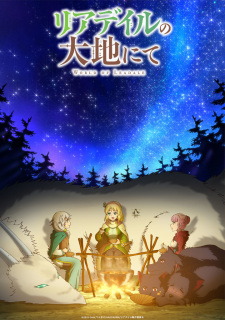 The genre of Slice-of-Life in anime is often utilized to create normal, mundane, every-day activities, have appeal, in order to create a sense of relatability within the film or show it is used in. There are many good examples of Slice of Life in anime being used to it's fullest to create something simple yet engaging and relatable, yet In The Land of Leadale, despite production value, fails to do any of this. The main genres listed for the show 'In The Land of Leadale' are adventure and fantasy, while these genres are apparent when watching, it's commonly debated that the show executes a strong sense of Slice-of-Life as well, which I agree is the case. However this doesn't mean Leadale did this properly. The writer of Leadale, Ceez, has a very apparent history of writing just by watching this show, as his only published novel on any site I can find is Leadale. Probably the one of the worst case of beginners luck, having their first work praised and even adapted to an anime, to support this kind of writing, which lacks progression, and proper execution of genre; While I definitely agree action is NOT needed to create an engaging work, or even a Shounen, it doesn't mean you can't do a bad job at executing something that doesn't have action. This form of Slice-of-Life is painfully lacklustre and pointless, with no engaging or new elements, in-fact, this show removes one of the only good factors of Slice-of-Life, which is relatability, as the main character is a piece of shit character who cares about no one despite how clear it is people care about them, and the writing goes off and makes the main character the good guy in all aspect. The lack of engagement in this show, in both forms of interesting action, and relatable Slice-of-Life, feeds to the show being one of the most boring shows I think I have ever sat through, each episode feeling like a chore, just to continuously give it a chance to improve, and it just doesn't. In addition, the amount of generic, disposable, isekai tropes used in this show are innumerable, only emphasizing the blandness of the show, things such as the main character spawning in with no prior development, with overpowered abilities, being extremely old but looking like a teenager, medieval RPG setting, magic magic, MP, more magic, monsters, players, game tropes, and more magic. I think the only good comment I can make out of this is that even if the writer tried to do something new with it, it wouldn't go well or combine well no matter what they did, as they already has a terrible story plot to begin with, no amount of world building or art can make up for a boring story. In conclusion, while I think Slice-of-Life as a genre has a lot of potential, and can definitely be engaging when executed correctly, like March Comes in like a Lion, or even mixed with action, Violet Evergarden, it is used to it's minimum in this show, and turns the Slice-of-Life genre into everything that the Slice-of-Life haters have come to know. Here we go, yet another isekai, and there’s not much to say about this one, aside from the fact that I’ve played the ED theme for this show like a hundred times, it’s a generic plot line of “Person dies because of this reason, and is completely overpowered in another world”. It’s a slice of life isekai more so than action, and is just ok. Wish they expanded on the game mechanics and why Leadale shut down in the first place a bit more. My grading criteria: Story: /25 Art: /10 Music: /10 Characters: /20 Enjoyment /15 Thematic Execution /20 STORY: 10/25 The story is basic and inoffensive, but rather uninteresting. Cayna is reincarnated in another world and goes on an adventure, helping people, having fun times with her quirky family, and meeting a whole bunch of people. Again, I wished they went more in depth about the game mechanics and why the game shut down in a more in depth way as well. There was much more they could have done with the story for sure. ART: 7.3/10 Fine art, nothing much to say here. The creatures lot a bit ugly, but the fights are alright, and it’s ok to look at. MUSIC: 8/10 The ED is awesome! One of my favourites of the season! Soundtrack otherwise is fine. CHARACTERS: 9.7/20 Quite forgettable, but pleasant. We have Cayna, our pleasant overpowered MC that’s probably pretty old inside the world of Leadale, we have her kids, and her grandkids, and they’re kinda quirky and provide comedic relief. If anything, the comedic aspect of these characters were enjoyable at times, but forgettable at most. ENJOYMENT: 9/15 It was decently enjoyable most of the time, the characters were fun to watch. THEMATIC EXECUTION: 10.5/20 The theme is a bit muddled, is it a slice of life, or action? I suppose it’s both, but to me, the slice of life elements were handled well. Wish there was more world-building to create the fantasy atmosphere in a more interesting way. OVERALL: 54.5/100 A simple generic isekai that was bland, but fine to watch. In a weaker anime season, this is definitely not the worst show, but also this is far from the best. Watch it if you want some nice comedy and simplistic story! Wish Lytt showed up more… |
|
Apr 25, 2022 12:15 PM
#5
Orient 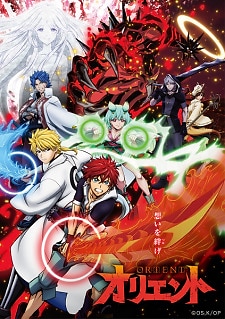 If I have to sum Orient in one sentence, it would be this: A prolific mangaka's fall from grace, and what worse than karma to make a horrible adaptation out of it. If you have absolutely no idea who mangaka Shinobu Ohtaka is, go do yourself a service to read and watch Magi: The Labyrinth of Magic series. For anyone whom has even heard and/or seen Magi (yours truly included), most of them would consider the series to be the her crème de la crème, pièce de résistance of a work, and to think that it has been almost 10 years (as of this review) with Magi's anime adaptation starting in 2012, wow, life must feel so long. And let's not forget her first series of Sumomomo, Momomo in the mid-2000s, that only now exists as a footnote in her biography work that's completely overshadowed by Magi. Come this year, and we have her newest series: Orient, which started in 2018, and features the same Shonen tropes as per similar counterparts like Hiroyuki Takei's Shaman King (which the recent complete adaptation of a reboot is more rushed and boring than the unfaithful-but-better 2001 adaptation) and Yuki Tabata's Black Clover (which I admit that it has the same problems as Orient at the very beginning), all with the same unchanging beautiful art style. Except...let's repeat Black Clover's problems with Pierrot and make it "double the trouble" with outdated studio A.C.G.T which produced the horrible, lambasting and lamentable Dies Irae done from 2017-2018! For such a dated studio whose work on the Freezing! series during the early 2010s is the best that it could muster, that says quite a lot. But let's not speedrun our way through Orient. There's gotta be a place to start, and that's with the ludicrous story that is just a copy-paste from Black Clover, change some things here and there to make it look more Magi-like, and why not incorporating stuff like a motorcycle to make it feel modern at least! Honestly, reading this in manga form just felt so awkward, and finally watching it in anime form only solidified the fact that for such a series to have a bad start, this to me, just feels like Black Clover all over again. I mean, for a story set in the Sengoku period with demons/Oni called "Kishin" and samurai called Bushi that travel in groups called Bushi bands lead by leaders with their family names on display, it's pure expected typical Shonen that rests on its execution to deliver, and oh boy, the execution...let's just say that it doesn't exist at all. Even when the anime is following the manga's first few volumes to adapt, which is really a rough start for investment values because of time constraints, I'd say that Black Clover has the edge overall from broadcasting in the same TV station (TV Tokyo) but on the more suitable Shonen dinner timeslot that everyone can watch (6~7 p.m.) as opposed to airing this at midnight in Japan, much less working with only 12 episodes to boot. The characters feel so dated, and that's not for the lack of trying. The worst offender of MC protag-kun Musashi feels like Asta but doesn't have the likability of Aladdin, Kojiro Kanemaki is a more depressed and downcast version of Alibaba, and Tsugumi Hattori like Morigana, is cheerful and forgiving, but has severe personality issues when faced with adversity. Couldn't even bother to name the other characters because they are so one-note-ish, and taking Tsugumi's oppressor Hideo Kosameda for example, he's leading his Kosameda Band of what looks like a population of retirees with children, only to be a manipuative asshole to the people serving under him, including Tsugumi to instill fear within the people that both Musashi and Kojiro would ultimately save them from his fear of oppression. Sorry for the spoilers there, but I could not for the life of me, fathom how shallow the character writing has gotten to this stage, and to experience it TWICE from reading the manga and now watching the inferior anime adaptation, that's kinda of a low-blow. I've already gushed how absymal the animation is, heck, I'd rather read the crappy story and experience it with Shinobu Ohtaka's amazing art style, which is something that she is very consistent in the manga. But to think that High School DxD and Seireitsukai no Blade Dance a.k.a Blade Dance of the Elementalers director Tetsuya Yanagisawa is directing this adaptation, that honestly cuts the knife deeper for me to see that how did such an esteemed director like him could go off the rails THIS BAD. Honest to god, I'd expect at least he would do some changes being in a directorial position, but he didn't do much to save this god-awful adaptation. Even with series composer Mariko Kunisawa whom did a fantastic job with Honzuki no Gekokujou a.k.a Ascendance of a Bookworm, she did some things that made the watching experience better, even if by a tad bit. What in the world... The music fares no better either. J-Pop boy band Da-iCE isn't a remarkable group to say the least, and their Oricon singles charts since their debut in 2014 only peaked best at No. 2 since then. Even so, their OP here is just typical Shonen one pony hat-trick fanfare, it gets old really fast, and I REALLY mean it. Also, it's weird how Wataru Hatano's ED song just doesn't fit at all, being yet again like a song meant for disposition use when nothing works. Don't get me wrong, I love it as a standalone song, but incorporating together with the anime just...felt so strange and off-putting, not to mention the RGB influence on a PowerPoint slide show of a lazily-put ED. Not every Shonen anime these days needs to come close to Demon Slayer or even Jujutsu Kaisen levels of treatment for enjoyment, just a better execution and a better staff team (not to mention a better animation studio) could've just worked things right. And sadly for Orient, as much as I would want to say that Shinobu Ohtaka kinda shot herself on the foot for the basis of her new manga, it just feels so out of touch with the modern Shonen juggernauts these days, and I would like to have you believe that her best days are certainly behind her. Even as a work just to earn enough for a rice bowl, it'll only take another season for Orient to really show off what it's capable of, and this prologue just didn't cut it at all. Magi, until the absurd final moments, at least it was a good ride. But for Orient, you could have been a good post-Magi effort...but this is what we got. Just an immeasurable disappointment that could've been much better being in the hands of capable people. See you again in Summer with the The Battle of Awaji Island arc. 150 years ago, the the demons, called Oni, attacked humanity and started ruling over them. While some worship them as Gods while others see them for what they are: devils tormenting humans. They fight against these otherworldly beings for the sake of humanities. These brave soldiers are known as Bushi. Inspired by his father, Kojirou, and his friend Musashi went on a journey to forming the strongest Bushi band ever known, but their path is not smooth and easy. Follow them on this journey as they cross the hurdles in their way. Story: The story follows the general action Shounen trait, with nothing new to add as such. The begining of the anime was weak and didn't look much promising. The pacing was somewhat irregular, becoming another drawback of this show. However, towards the end, in the last few episodes, it become interesting. Still, the build up of the anime was bluntly boring for me. Characters: Musashi is the common action Shounen protagonist, with a sad backstory, full of dreams of becoming great, believing in the power of friendship, however, still fun to watch. The character of Kojirou is also nothing extraordinary. Tsugumi is a cute and strong girl but a one dimensional character. The character dynamics are fun to watch. Shirou is the type of antagonist I like, so one may say from this show, he's my favourite. Overall, the characters are nothing new, follows the same pattern, but fun to watch. Music and Voice-Acting: The opening track is appealing and goes with the series. The bgm used is apt and cleverly used. The voice actors did a good job. Artwork and Animation: The character artwork is impressive except the artwork of the Onis. They look too funny, to build up any tension. The animation is irregular and though the last few episodes were visually great, the first part of the show again fails. Orient is a good one time watch if you want to experience the general Action Shounen Experiences. The story isn't too deep or the plot twists aren't that much unpredictable. Though Kojirou's father's past is a bit of mystery still but judging from the story so far, it won't be something too breathtaking. The second season is coming in Summer 2022. Hope the series get better in that, or atleast match the standard of the last few episodes. Ousama Ranking / Ranking of Kings 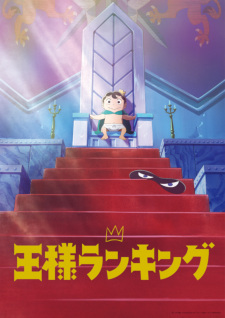 The following review has a single spoiler heavy section which is marked start to finish. If you feel your eyes won't wander, you can skip the section and still get a great deal out of the review, otherwise skip the review entirely if you have not finished the show! Ousama Ranking is a show that from the very first few episodes I felt could be a masterpiece. A gamechanger in the medium which there are so few of. With the industry having settled down on mostly producing the same genres with the same tropes, having a show which actually wants to push boundaries is rare. Even more so, when you can feel the love and passion oozing out in each scene from the people who made it. It has been 3 years since the last time I felt a true masterpiece had been created, yet there has been a plethora of shows that have been amazing since, but none that really managed to hit that ‘near perfect’ status. To spoil the entire review, Ousama Ranking is a show that is just inches away from being a masterpiece yet has a single glaring flaw which completely hampers its potential, eliminating it from any conversation of being one of the greats. Paradoxically, the flaw I speak of is not even a flaw. It is a decision that makes sense yet is the saddest decision ever. The Short version is this: Ousama Ranking attempts to be both a children’s fairy tale and an adult epic, trying to mimic western animation and by playing both sides, but ends up being neither. It is too adult to be a children’s fairy tale, yet too childish to be an adult epic. The Long version: Many of the most famous pieces of animation in the west are those that are designed for children, yet are entertaining for adults. Examples such as Ice Age, Spongebob, Courage The Cowardly Dog, The Simpsons to name some of the older ones, are shows that have a primitive plot, lovable characters, yet hides a great deal of detail, innuendos, hidden ideas which adults can catch and enjoy, while the ideas fly over the kids’ heads. It’s one of the primary reasons these are the greats, they are enjoyed by multiple generations at once. Anime has never really been like this. I’m sure it’s cultural, but the matter of the fact is that shows have laser focused audiences. You have shows for teen boys, shows for teen girls, shows for adults etc etc. There are very few anime which are enjoyable by both kids and adults alike, for many of the adult-centric shows feature elements that are just not fit for kids. You’re not going to watch Berserk with your kids, not happening. Ousama Ranking is a show heavily inspired by western fairy tales and in doing so seems to also attempt to take inspiration in the style of writing too: to present simple narratives, which kids can watch and enjoy, being able to cheer for the loveable characters at ease, while the adults can capture a plethora of deeper elements which make the show feel much more complex. You don’t need such complex characterization as in this show if it was only a kid’s show. Yet it’s there. However, the show ends up under-delivering in both sides: for kids, this show is truly way too dark. Simba getting thrown off the cliff was a famous scene in western animation which Ousama Ranking has the parallel for, but the much more extreme were the constant battles ending with characters being tortured to near-death by the blows, blood oozing everywhere, betrayal being constant, grand narratives building on extremely complex foundations like class wars. The show is just really, really, dang dark even if it features cute childish glee every few scenes. There is a heavy contrast created here between the wholesome young naivete and the grueling reality. A contrast that fairy tales generally do not force. Yet at the same time, the show has. Absolutely. No. Stakes. The only important character to die in this entire story was the character that had already died as part of the entire premise. Every single other moment of drama in this show ended up fizzling out and being resolved with the power of deus ex. It was done to such an absurdist degree, that it felt at times that the production staff itself was making a joke out of it. (Let’s just spam some mana potions and heal everyone!). This sort of execution is perfectly fine for a fairy tale, young viewers will ‘buy’ the suspense every time, yet for adults this is a hand that gets called instantly. I believe the turning point of this show where it branched out from a masterpiece to just a great show is episode 13. Hiling should have died this episode. The setup was all there: you had the perfect trap that she walked into, the character had already achieved full fleshing out, with her own full redemption from the initial outlook of being an evil character, all the main connections had been cleared up. All that was left is to now kill her off to create extreme consequences on Bojji (revenge), Daida (revenge) and Apeas (guilt). The only reason the show could play off Miranjo being forgiven by everyone is that she didn’t actually kill anyone. Bojji would have had far greater trouble forgiving her if he had known she effectively executed his step mom. That episode playing up the suspense and eventually chickening out is exactly the symptom of this primary focus of the show’s writing to not want to really deal with death in such a ‘real’ way, which would make it impossible to see it as a simple children’s fairy tale anymore. It goes without question that in a story such as this, once you create the perfect setup to finish off a character, but end up not doing so, the adult viewer will become aware that this is ‘not that type of story’ and will no longer feel any suspense for any of the future scenes, for ‘everything will be all fine by the end’ So it makes me question: who is this show really for? If you won’t deliver fully on either direction, no one will end up being truly satisfied. I just spent over 1000 words going over why I think this show is a 9/10 and not a 10/10 due to one single flaw. It is a fundamental flaw, thus it carries great weight. But it’s really the only issue. Now on to the good. I think Ousama Ranking is one of the best-produced and tightly written shows of the past few years. Starting with the production, the lightning work on this show is honestly unbelievably, making its extremely unique artstyle, which tries to mimic old western fairy tales, feel modern and like real eye candy. The motion is fluid, with great care put into the smallest of details, to make the characters all seem just that little bit more real and relatable. The watercolor painting landscapes for some scenes mixed with highly detailed shots for others form an incredibly vibrant and constantly dynamic view of the show. It feels alive and briming with emotion. You can only achieve this sort of animation by pouring you soul into it, to that end I applaud the studio’s work tremendously. It’s fantastic. The sound design matches it perfectly, with each action having crisp audio feedback (the scene of Bojji kicking the firewood into the fireplace in one of the earlier episodes is honestly unbelievable). The sound directing was spectacular, with great sense for when silence is best and when to use bombastic or somber tones, really elevating the emotional impact of the scenes. The music itself, however, I think was rather uninspired. It followed the classic fairy tale themes you would expect in this sort of show, but none of the tracks were really mindblowing. It didn’t have that ‘my god, this music is incredible’ moment. It accompanied the show greatly, but it didn’t elevate it past its own potential. Moving to writing, the episode directing was fantastic, most episodes had extremely clear themes they wanted to focus on (motherhood, friendship, death, regrets among many others) with most of the scenes having extremely clear intent to contribute towards that focus and explore the themes. The emotional backstory episodes were straight up 10/10s by themselves while the humorous episodes were all tasteful and without relying on tropes. The worldbuilding is fantastic, with an extremely focused plot while still managing to create great mystique about the world as a whole, making the viewer desire to learn more. The main narrative is executed well, being an amalgamation of many famous western fairy tales, capturing the essence of most of them flawlessly. The character writing is extremely tight, with most characters having realistic reactions to their environment and showing proper human emotion that you would expect. There is a bit of a bias towards having everyone cry, which at times starts to border on taking you out of the experience, but the show seems to desire to put emphasis that ‘everyone cries, its ok’ which is fine. The only character I have reservation about is Bojji himself because I believe the show did not do as great of a job highlighting his motivations for becoming a King, in general keeping his ‘macro’ mentality towards others rather unclear. One may try to argue that this is by design, given that he can’t communicate clearly, but I would argue that some aspects are critical to good characterization to prevent the character from feeling like a caricature. Bojji did start to border caricature status at times. Overall, the show ends up having 10/10 art, 9/10 sound and 9/10 writing with the flaw I spoke of being that single great bane that stops it. It was down to just a few decisions for handling which branches would be taken in the story to truly push it one way or the other, but, alas, that lack of commitment to a side ended up hampering it. Ousama Ranking is an incredible show that everyone should watch but if you are an adult looking for an epic, be prepared for some disappointment and if you are looking for a fairy tale, this show might be a bit too large to swallow. 9/10 From a classic folktale (The Emperor's New Clothes) to an allegory that's worth more than a thousand words, absolutely NO ONE ever could've fathomed that mangaka Sosuke Toka's work would become more than just a classic underdog story. And instead, it took us the audience to new foundations and heights that really stand amongst the best of the best in the only way that this relative unknown author could've done, teaching us cases of human charateristics in morality, friendship, sacrifice and so much more that we just underestimated how grand everything just naturally works in every step of the way. Simply, wow, and I mean, WOW. The thing that makes Ousama Ranking a.k.a Ranking of Kings work feels childish (or childlike rather) and tomfoolery, but trust me, it just simply works and exudes nothing but quality and quantity as the series progresses with each mysterious step into pure whimsical fantasy as one could get. And for a show that really is this coming-of-age story that's set in medieval times about a deaf boy becoming king and his Shadow companio escaping the treaches of malign, I'd thought that I was watching the game "A Boy and His Blob" come to life, and it is THAT engrossing to seal the deal about the protagonist Bojji and his companion Kage about their own life journeys. But what Sousuke Toka did to elevate a simple story, to simply say that we weren't prepared for what's to come, is truly an understatement to how this is a classic case of subverting tropes and naturally glossing them together to make a plot so life-manipulatively magnificent to knock our socks away. It's a tactic building upon tactics that just warrants you to pay VERY CLOSE attention every minute and every second, because one blink, and you'd miss a beat (unlike SOME people who just chooses to be ignorant and remain full of bias). Case in point, I would've never thought that the generic clash of "good vs. evil" will have that many metaphors built right into it, and Ousama Ranking is without a doubt, the new master in knowing what makes the core theme work without having to fall behind to tropes (y'know, just like all shows out there being so generically contagious). This adventure fantasy feels tight, slick, filled with all of the feelings and emotions that would wreck any viewer (plus yours truly), and above all, shines best in its own right that there's no equal out there that could match the likes of Ousama Ranking. To wedge the knife cutting deep into the heartstrings, how does one manage to do character writing so deep and rich in philosophical humanity that there's always answers for every question? Only Sousuke Toka can do that, and for all the basis of watching Ousama Ranking in these past 6 months, I have felt nothing but happiness, love, sadness, anger, and the most important of all: the fear factor that continues to shake as the series progresses. Every character is not just a cardboard cut-out, because each and every one of them has a purpose to carry their own dreams and ambitions to the extreme points of sacrilegious lamentation, even going as far to the point of pursuing infighting when things go south. I don't wanna go too deep with the characters here, because that would make for an absurdly long essay that could match the likes of Wikipedia (and technically spoil the series for what's to come). But, make no mistake that from the simplest (Bojji and Kage) to the most complex (kings Desha and Bosse) of characters, nothing says more than rareified exquisity when human beings (plus a shadow) can very naturally be their imperfect versions of themselves the way they see others too, topping up with the mysteries of their own backstories that filled with tremendous amounts of weight that is both heartfelt and relatable. This is to the point where I can finally mention the currently famous meme out loud: *smack slipper on the floor* "E-M-O-T-I-O-N-A-L D-A-M-A-G-E"! And boy, Ousama Ranking is truly an emotionally damaging series for all the right reasons, which are layers upon layers of what defines perfect, yet imperfect humans, with no-nonsense "padding" drama. Author Sousuke Toka's manga art style isn't the best and feels rough, and that's where Wit Studio under the guidance of debut director Yousuke Hatta comes in, and it truly elevated this unknown manga that has gone without an English translation right until the anime came out. Speaking about Wit Studio first, the animation studio is obviously going through a transition phase that's leaning away from the days of Attack on Titan and (hopefully not) Vinland Saga. And what came out of it is a totally brand new Wit Studio that is once again ready to experiment on shows of other formats like Great Pretender, Vivy: Fluorite Eye's Song and the upcoming season's Spy × Family collab with CloverWorks, all while retaining the same quality that the studio has garnered the notoriety from all these years. And I still have to say that ANY Wit Studio production will never ever miss the mark when it comes to strikingly beautiful visuals and breathtaking animation, and Ousama Ranking is no different in that regard. Being a childlike fantasy that meanders close to Studio Ghibli's stories, and filled with an action-packed adventure that can rival studios like Ufotable and Studio Bind (because Mushoku Tensei really set the bar too high to insanity), Wit Studio always delivers, and delivers hard with passion and dedication to the craft that it's basically next to flawless at all. And what's a studio without the dedication and hard work of the staff team behind Ousama Ranking, most particularly debut director Yousuke Hatta. Having worked as episode director with high-profile people like Shingo Natsume (One Punch Man S1, Boogiepop 2019, ACCA: 13) and Yuzuru Tachikawa (Death Parade), it left more than enough experience for the newbie director to execute his own craft in Ousama Ranking, and it really shows considering the unique and vibrant aesthetics with distinctive art style with simplified faces and expressive animation that fits well, almost the point of paying an omage within the lineage of the directors who helmed Sonny Boy and Mob Psycho 100 respectively. The staff team under Yousuke Hatta also MUST be given props for going above and beyond to adapt the manga up to 11, because it could not be said enough that this was a team effort that's a match made in heaven. Most crucially, what's an anime without music, and while most cases the music always is anime's saving grace when everything else fails, but Ousama Ranking just clearly defies logic to present 2 sets of OSTs that just more than fits the theme and mood of the series. And while I prefer the 1st Cour's arrangement with King Gnu and yama, Vaundy and milet aren't slouch musical artists either, and all 4 songs are great in their own right. In the 1st Cour, the happy-go-lucky aesthetics served Bojji and Kage's journey well with King Gnu's OP song "BOY" which is one hell of a bop, and yama's ED song "Oz." that's a reference to The Prince of Oz to signify the symoblism of a not-so-simplistic fairytale journey. And when the 2nd Cour came in with Vaundy's "Hadaka no Yuusha", that's when all hell broke loose with a slow, but steady gung-ho song with the finest sakuga OP animation heralded by Jujutsu Kaisen's OP director Shingo Yamashita, it's yet another impressive work in the books and you can feel every inch of that influence. milet's ED "Flare" is a nice song to purposefully round things up as a whole, or should I say "People makes the world go round". To say that Ousama Ranking is perfection, more than subjectivity and the classic tale of what it means to be an underestimated underdog's rise to success, I'd think that there's a better way to sum this show as a whole, and that's starting and ending with metaphors. See, this show has laid the hidden meaning of "A chain is only as strong as its weakest link", and putting this in Ousama Ranking's context, realistically sums it up as: "You're as strong as your weakest link." There is NOT a single shred of doubt in my mind that Ousama Ranking will be remembered for months and years to come, and it's the new, modern classic of jaw-dropping, awe-inspiring motivation at its finest. Deceit in multiple forms, deceit in its appearance, deceit in its theming, deceit in its outcome, and deceit in this review as I start off positively but slowly devolve to reviewing a battle shounen. Upon viewing Ranking of Kings for the first time a little into its airing duration in November of last year, I had watched the show expecting to see something overrated and actually for kids, rated only by parents who want to distract their 5-year-old from poking a fork into an outlet, a series of short 5 minute arcs simply about a king baby. Despite prior made assumption by my very own ignorance, what I got was nothing short of a masterpiece, with beautiful writing, character arcs, theming, and above-all, reason. All the more reason to continue to watch the series and drop everything I am doing every Friday to watch each episode fold out in a chaotic, frightening, and surprisingly wholesome jam of intellectual writing, easy to follow for idiots and enjoyable by typical Rick and Morty fans who consider Platinum End to be the magnum opus of 2021 amines. The show Ranking of Kings for the rest of the first-cour was able to consistently shock me to my core and pull the tears from my tear ducts at every twist and turn of each episode, while giving reason and rhyme to each of the shows decisions and movements, making a show so simply intricate and well pieced together, managing to do what shows typically cannot do, and that's to really send a proper slap across the mind without the element of randomness involved, which more often than not results in baleful thoughts and rolling eyes. This show in particular has been able to break some people in a matter of episodes as I quote from YouTubers like RuffSenpai and the Prout Bothers, and for good reason; unlike most shows this show gives you some of the simplest concepts but in the most damaging and enlightening view making you rethink your perspective on shows you've overlooked due to concepts written by kindergarteners. A perfect example of how concept doesn't necessarily carry a show or give any sort of indication on its quality or potential, this show is about a little boy who wants to become king, it's as simple as that. During its second-cour, things take a rather curious turn, some could give the excuse that this is the product of Bojji's decision making, and other people could say that this was Sosuke Toka's way of bringing a new basic concept into the picture to make its purpose serve greater than before, but how I see it, and how I believe it is in reality, is the result of arrogance in writing. Familiar examples of what happened in the second-cour can be seen in the likes of Beastars, as a worst case scenario, where you rely on your beginning arc to carry the rest of the show for you and put no effort into creating anything memorable afterwards, which can be seen in the second-cour of Ranking of Kings but in a less extreme example, while there were definitely very amazing character arcs, stories being told within the second-cour, and terrifying displays of consequence, its arrogance that expected to keep the show at the top of its game had lead it down the path of a battle shounen, becoming nothing much more than fighting the overarching villain of the season. While I respect and adore an amazing build-up, the product of the build-up should reflect the elements given in the storytelling, in order to compliment the reasoning behind each action of the characters and turn the story makes, to create a good conclusion. Ranking of Kings may be one of the greatest displays of writing in later years; but is also one of the greatest displays of the arrogance of proficient writing. Do not let a show fall when you have reached heights you never expected, or you will never get that success ever again. This show is a huge mixed bag of everything to me. We had a potential fight scene of the year candidate, we had characters that cried A LOT (which isn’t all bad), we had a pretty unique narrative overall, and not to mention a BEST BOY candidate for a lot of you for sure, Bojji! I won’t deny that the show was a bit of an up and down one for me, but I did enjoy this. The great thing about this show is that it hooks you in early, with no hesitation, so even though the show is still quite under-watched, when someone does make the effort to start it, they’ll likely stick with it all the way through, since it had such a good start. All in all, a nice high quality show that should be watched more. *Very minor spoilers below My grading criteria: Story: /25 Art: /10 Music: /10 Characters: /20 Enjoyment /15 Thematic Execution /20 STORY: 18.6/25 Bojji’s adventures are indeed quite immersive and fun, and the show isn’t as simple as “Boy that can’t speak becomes a hero”, it’s that, but more. There’s a lot of emotion packed into it as Bojji realizes that actions do speak louder than words, and that people do care about him. His adventures in the small scope of the castle quickly evolve into a journey around the world, getting stronger with a teacher, and really making the most of his abilities. The first half is pretty great, with essentially the intro, and some incredible plot twists that got me really into the story. As I’m sure you have noticed, many people have said the second half kind of fell off, and I would agree. The pacing became incredibly slow, with entire episodes sometimes taking place in just one setting, and backstories being a little long-winded, but necessary in my opinion. As for the plot armour, it’s fine, doesn’t really help or hurt my immersion, so no complaints there. All in all, I’d say this is an above average story that just couldn’t keep its quality up for the entire series. ART: 9.4/10 Wit Studio doesn’t miss with their animation here. It looks like a kids show at first glance, with may have put some people off, but the action scenes are done spectacularly, very impressive. MUSIC: 9.4/10 Soundtrack is fitting, and solid, but the real stars of the music aspect have to be the two openings and two endings, because those four songs were just so incredible to listen to, again and again. CHARACTERS: 13.3/20 Now here is where the interesting takes start. Maybe you think I would bash on Bojji, but that’s it’s not him that’s problematic, that’s for sure. Let me just start by saying, the characters are written quite nicely, with very unique backstories and traits that are quite likeable. However, the problem here is that there are so many characters, but not much development on anyone except Bojji, Kage, and Miranjo, the latter being probably the most interesting character to watch. Everyone else, while I like most of them, are just… good, but they just do a couple cool things and then… exist. Some of them are integral to the story and its plot twists, but other than that one big twist or fight, that’s it. The score I gave the characters overall might not be that low considering all I’ve said, but don’t get me wrong, the characters are still unique and do a whole lot better than a lot of other action-themed shows in terms of their character writing. ENJOYMENT: 13.5/15 Most episodes were enjoyable to some extent, and I liked the series. THEMATIC EXECUTION: 17.3/20 The fantasy adventure theme is executed very nicely as the world building was done very well to make the narrative immersive. The combination of the music, art, and characters made for a well constructed atmosphere that’s fun to watch. OVERALL: 81.5/100 Definitely a high quality show that hooks you into its world early, and maintains a decent standard throughout the show. There are some moments that get a bit questionable, but in the end, it’s a good show that once again tells us, don’t judge a book by its cover. Honestly, by the end of Ousama Ranking, I felt disappointment. What a wonderful first half, and yet what a downgrade in the second. The drop in the series made me stop caring about a lot of what it built up in the early episodes. The fights sometimes reached Claymore tier levels of animation of characters nonsensically swinging their weapons. Slideshow execution reared it's head eventually after it had been animated so consistently good before. It was tragic to see what this used to be and what it lowered itself to towards the end overall. Ousama Ranking set the bar too high for itself in the first half and just couldn't deliver the same quality near as much after. And it shows depending who worked on each episode. Kage had a great and emotional introduction just to be reduced to a cheerleader that felt as if he was being used by the staff to annoyingly and constantly tell me how to feel. I could not relate in the end to the way Miranjo's character played out considering it all and how sudden it felt in the end. King Bosse is a strange individual with a quest for strength he loved the chase of more than achieving, while having a weird obsession with said Miranjo. At the same time, Miranjo also had a weird obsession with wanting to help him achieve great strength, though her ways for him to achieve this were not as satisfying for him. Daida, Despa, and Desher became 3 of my 4 favorite characters, and yet most of them were barely there. Daida to me showed the most growth as a character and for that I built a lot of respect for him. Despa is usually a funny character that is amusing to watch. Desher is an underworld king who feels fed up with a lot and yet can entertain with his abilities and often apathetic personality. For me, Hiling was the shining light of the series for her strong dedication towards being a true mother despite her harsh treatment of a younger Bojji. The only issue is the healing, and fake out deaths that can be annoying and take away the stakes, making me unable to take them seriously anymore. Then there's Bojji. I felt confused when Crunchyroll announced their embarrassing anime of the year awards by including him as so called "best boy." He had done nothing at that point. He appears mostly as a blabbering fool going through a bottom dog story that really only paid off in the end. The blabbering was really unnecessary and the way communication between him and the characters went felt absurd. I don't see much of an appeal to him besides bringing out emotions from viewers that can relate to him who had or have their own issues similar to him. Despite that, I didn't find him appealing as a protagonist out of his simplicity and the constant use of mostly emotions to build his character that felt less and less meaningful as it went. Ouken isn't a character I was very fond of. Despite that, I enjoyed the way the series used him. His sadistic and horrifying view of killing sets the often executed dark tone of the series. This series can get very bloody and gruesome despite not appearing to look that way at first. Despite his powers, it's horrifying what can still happen to him. There were times early on where the animation and emotional build ups moved me. I just can't deny that this series went downhill and never really resurfaced besides one of the last episodes: The surreal looking one everyone seemed to praise. All it really had was to use emotional scenes that felt empty to me to try to end strong. Disappointing. Platinum End 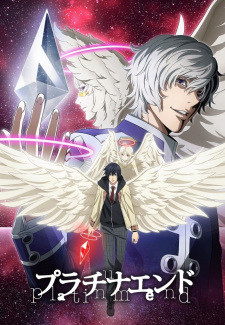 "nisi dominus frustra" meaning : without god, all is in vain - Psalm 127:1 - Story : The idea of the story is interesting but it was not executed properly for the audience. There are two things that should be taken notes of, the meaning of happiness and the concept of god. We can see that Platinum End tried to implement both things and how they are linked together. For the story, we have 13 people that have been granted abilities and compete for the position of god. The first half of the show is really basic since it is about pursuing their own definition of happiness. There is not much to say about the happiness because everyone has their own way of defining happiness. However, on the second half of the show, things started going downhill because of the way this show is trying define their own definition of god and make the story revolves around it just does not click with many people including me. In reality, we can see that there are multiple concepts of god. For example, some people believed that god existed before the universe while some believed that god existed after mankind. At the same time, some people think of god as a make believe just as a mean of casting away their doubt. From this show, we can see that the author is trying to justify the concept of god with logical thinking which is interesting but was not properly elaborated which made it look like nonsense. Furthermore, the last episode is terrible because of how anticlimactic it is even though they reach their end goal. I personally think that first half is better due to how simple it is. Character : For the main character, Kakehashi Mirai, his character seems cringy and out of place for the first half due to his mindset and how the show portray him but his character definitely improves to match the show in the second half. For the first antagonist, Metropoliman, he seems interesting due to how he manages to turn the show into a something like a shonen series. For the other god candidates, some of them definitely played their part properly to show the viewers what will happen if you happened to get abilities like them. For example, using that power to benefit others, atoning for past sin or chasing worldly matters. For the rest of the characters, most of them are kind of ruining the show even more. Art and Sound : The animation is a little inconsistent here and there but it is ok overall and some of the sound effects are great as they manage to make some scenes give more impact. Conclusion : Interesting idea for a story but poorly executed and the characters not exactly worth the screen time. **THIS REVIEW CONTAINS SPOILERS** Imagine you are watching Death Note, and you are experiencing the authenticity and flawless craft of each detail, with foreshadow and symbolism exploited to it's peak. What else do you think when you think 'Death Note'? Whatever it is and whatever I just said, is the opposite of Platinum End. From the creators of Death Note and Bakuman you are presented with a series of manga and a newly created series of anime based off the to-be-short-lived life of Kakehashi, a series with so much potential and creativity, ruined even more by the high expectations. The prior works of the writer setting expectations that are just too much for this series, as the only thing you can learn from Platinum End is that a good writer doesn't always make good stuff. Think the main character as Light, but then reverse the colours, mentally, Kakehashi is the most 1 dimensional character I have ever seen, held back by only his will to not kill anyone but himself, which is continued throughout the series with pretty much no excusable development, any development you can pick from this is an ass-pull or an unencouraged motivation from yet another horribly written character, Saki. Saki is probably the biggest mistake this series has to show off, along with Kakehashi's painful simplicity, Saki stop's the train from running any further than it already could have by being just another excuse for genre or plot development. An amazing example of this is how there are 13 candidates to become god and ALL just so happen to be in Japan, with a terrible excuse such as most suicides happen in Japan (seeing as all the God candidates were chosen amongst those who commited suicide), and not only this, Saki was one, and so was Kakehashi, who just so happened to SOMEHOW be close to Saki and HAVE a crush on her. IN WHAT WORLD is this an acceptable coincidence?! This cannot be properly recognized as anything more than an asspull. The final reason worth noting and speech, that Saki is the worst character in the series, is for one simple and GLEAMING reason. Horrible romance. These mother fuckers move in with Saki being a depressed ass 14 year old white girl with a pink bedroom, and they act like it's normal and make absolutely no deal out of it, there is zero proper romance development between the two and yet they sleep in the same bed, same room, same house, move in out of no where. Can someone also explain to me the fuck the parents at? I ain't seen no parents in this entire gosh damn series I swear to you. The series on it's own wouldn't be so bad if it weren't for it's OVERWHELMING disappointment factor, from the writer of Death Note and Bakuman! Even that wouldn't be so bad for disappointment, we already have examples of disappointing writing from other writers, even if I seriously genuinely expected something good out of it from their works. But you know what episode 1 did that, episode 1 had everything, strong concept, shock factor, back story, and a hook. But the very moment the opening in episode 2 had ended, it went right down the storm drain and far into the deep cracks off the earth only to be enjoyed by crack monsters and dung bugs. Finally the plot, while having an interesting concept, half rips off The Future Diary, and executes it in the most stupid, cliche, and boring way ever, with sad excuses for development and absolutely no outside of the box thought into the writing. The only thing I recall ever liking about the series, not including the opening, is the one scene with Mukaido making a wedding dress, and even that was an asspull and just a cheap excuse for emotion, even made me hate all the character's writing even more. In conclusion, Platinum End is the worst anime I have ever watched that takes itself seriously, anyone who enjoys this show needs to get their game out of the cliches and Vampire Diary type content and find something with background thought and process that makes sense, rather than thinking one-dimensionally and crying over a shitty character who died because they died. It seemed interesting, that’s the attitude I had towards Platinum End when I decided to watch this show. Now that’s it’s done, I’m probably better off to be honest. This had some promise early on, but quickly that sentiment left. Despite having a comparatively stronger second half, the ending does not make it worth it. Unfortunately, there isn’t much good to say about this show, so we’ll briefly go over it. By the way, were you expecting something as good as Death Note? Ha ha. My grading criteria: Story: /25 Art: /10 Music: /10 Characters: /20 Enjoyment /15 Thematic Execution /20 STORY: 2.5/25 The narrative started out pretty interestingly, but it quickly became very dry after that. If we’re talking about plot points, everyone probably expected most things to happen, and were correct. The things we didn’t expect to happen are plot points that just don’t make much sense. The entire God Selection process was not explained very well, as it seemed like they made a lot of things up on the spot for plot conveniences, and that does not sit well with any watcher. The pacing… let’s talk about that dumpster fire. In my opinion, this show could have been over and done with much quicker. Some episodes and fights last WAY TOO LONG, especially the one of Metropoliman near the end of the first half. We’d have entire episodes of fighting, then just get left at yet another cliffhanger. The numerous episodes of build up usually amount to not a whole lot, and that’s just tough to see. ART: 3.5/10 Some parts look good, but most look very below-average to me, the art style just isn’t very well done in general. MUSIC: 8.8/10 Practically the only thing I enjoyed was the music, especially the opening and the two endings, as those were nice high quality tracks. Yuu Miyashita’s ending was amazing and if you haven’t listened to it, go give it a listen. CHARACTERS: 2.6/20 I know everyone hates our main character Mirai, but he’s not even my least favourite character. I suppose I will talk about him first. Yes, he’s indecisive, has weird morals, talks and thinks for too long, but he doesn’t do anything inherently bad. It’s the inability of writing interesting characters in general that brings this show down. The female characters were especially poorly written, especially Saki and Yuri. I have no idea what Saki even did in the story except give doubt to Mirai’s every move, and exist as a cheerleader. The romance between Mirai and Saki felt so forced as well, as I couldn’t really pinpoint any reason behind it. Yuri was so annoying to watch, but relatable in the sense of some people, but the things she says… so tough to listen to. It’s not all bad though. The characters that were at least interesting to watch would be Mukaido and Yoneda. They have good ambitions and interesting dialogue, and kept my attention to the show at least a little bit. Their morals and goals at least kept this show watchable. The angels were fun to watch, but they didn’t have much of any solid dialogue to keep things interesting. ENJOYMENT: 2.5/15 Little ups, huge downs. At least the second half improved a bit. THEMATIC EXECUTION: 2/20 They called this a drama, psychological show? This show does those themes no justice, and I checked out very quickly because of that. OVERALL: 21.9/100 Probably one of the worst shows I’ve watched in 2021 and 2022, as it’s a poor showing of what a psychological anime (a genre which I usually enjoy a lot) should be like. Tough to recommend this one to people, I wouldn’t even say it’s so bad that it’s good. It’s just plain and simply not enjoyable. As terrible as Platinum End is overall, it did get very interesting much later before the ending and presented a lot of ideas worth discussing. Yet, I cannot deny that I could not stand Mirai at first. He successfully became one of the worst protagonists I'd ever seen out of how annoyingly naïve he is. There felt almost no point of him going to battle at times since he wouldn't do anything anyways. I could feel Mukaidou's pain as he tried desperately to make Mirai do something. Mirai's belief in pacifism is the problem. How did he expect to beat God candidates like Metropoliman? This belief of non-violence and to try to negotiate with the heart of an opponent who is heartless is useless. This pacifism of his assumes that they can move their opponent and change their mind. Still, in order for that to work, the opponent needs to have a conscious. Metropoliman has none. It doesn't work that way. All Mirai is doing by being a naïve pacifist is to allow his own slaughter. The irony here is that Mirai, by not killing these killers, allows them to continue their own killing. To a certain extent, Mirai is contributing here as part of the problem. The art of this series, at many times, looks lifeless and ugly. The fan service looks desperate at times. It's noticeably and annoyingly inconsistent. The fights try to be clever but at many times come off as something out of looney tunes. One of the main examples is the way the cast try to take care of a world ending virus. Sometimes the twists and planning ahead can be nice as the characters try to outsmart each other. As the first half rolled out, I was cheering for Metropoliman because the main cast made themselves almost unbearably insufferable in how foolish they were. This reminds me of that terrible series Peach Girl were they made the cast so annoying and ignorant I wanted the antagonist to win. The series eventually gets better with the introduction of that Kenpachi rip off, Yoneda. He questions God about how people can be overdependent on religion. I would agree with him that people should not place their entire wellbeing on religion. People should become strong based on their own feelings of confidence, resolve, and purpose in life. I can appreciate that he saved this series from becoming complete trash. Towards the end, the cast begins to finally come to some resolve, and then one of the most strangest endings occurred that is absolutely hated in the manga. This was a strange series best forgotten or never bothered with. You could say this did not even come close to the author's previous success with Death Note. You can also add that the directing in Death Note was incredible compared to the sad excuse of directing that occurred here. Princess Connect! Re:Dive (Season 2) 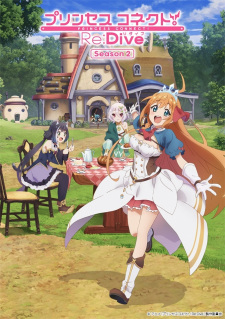 YABAI DESU NE!!! Princess Connect! Re:Dive a.k.a PriConne is back with a blast, and so too is Cygames with hemorraging sales and marketing from the massively popular mobage RPG that's now expanded to more territories since the anime aired in Spring 2020 to resounding success, being the first-ever (though) underrated premiere-tier game adaptation ever seen in anime. 2 years have passed since then and now that with the game's global release on January 2021, Season 2 has arrived to continue the story where Season 1 left off, and for the most part, it was as enjoyable as the prequel, if slightly worse off by a tidbit. And of course, being the newest fan of PriConne's anime back then before the global release, I have waited for a long while before I got the chance to sink into the actual game and daily-driving it since its inception. And boy, what an experience the actual mobage RPG was that I now feel content playing the game and knowing more about PriConne's world in much detail. Let's Re:Dive into Season 2! Since this is the anime version of PriConne, and though the game's lore is rich, opting to stay the same vibes as Season 1 is a sensible choice since we're practically left with Pecorine's backstory of realizing that she's the rightful Princess Eustiana von Astraea of Landosol. That, and with one of the Seven Crowns's inclusion as the frightening, fear-inducing antagonist Kaiser Insight stealing the throne and making use of Karyl to the best of her manipulation, Season 2 aims to finish this story plot off in the most bombastic manner while providing more easter eggs from the mobage. Together with the episodic stories of featuring more characters from the various guilds of PriConne that hasn't got spotlights on yet, this has always been a great way of to showcase fanservice since Day 1, and Season 2 emitted the same feelings as its prequel, albeit with someone new in the production team. We already know that KonoSuba director Takaomi Kanasaki is THE undisputable god when it comes to comedy, and he continues to outshine himself more...just on the sidelines as Chief Director. Instead, the directorial role is passed down to newbie director Yasuo Iwamoto, of which this is his debut doing an anime staff role (if you don't consider that weird ONA). At first, having a new staff join onboard at this stage of the plot (considering PriConne as a whole) was worrying because of the new directions that he would helm to take Season 2 forward, but after watching the entirety of the sequel season, I'd say that Takaomi Kanasaki really supervised Yasuo Iwamoto to understand how much lore can the new season be taken into context, while adding his own flare that you can't tell the difference whether is it really Kanasaki's or Iwamoto's. Case in point, the premiere episode of Season 2 with the same comedy gags featuring the hilariously derpy wolves to the rainbow vomit, and as great as Episode 1 is for a resounding return, I can't tell the difference between different episode directors because it was done just as well as it should be. There was even an episode that was purely dedicated to adapting an event from the mobage that was shrunk down for the episode with the details intact, and for an episodic series this was a gutsy risk, and I think it paid off well in terms of the overall story. So overall, not bad for a debut effort, though at times there's the feeling of disconnection that it should've been as good, if not on par with the prequel. It should come as no surprise that PriConne retains "Lost Princess" as the OP for the anime, because this is the main song theme for the franchise, and is such an iconic song within the PriConne fanbase that it'll not feel right not having one. I freaking love the song ever since the anime dropped 2 years ago, and this time they used the 2nd verse and chorus as a "replacement" for continuation purposes. The new ED in this case is even more comfy than Season 1's, and putting the sequel's content in context shows the difference in disparity. If it were up to me to judge which of the ED is better, I would take Season 2's over Season 1, but both are still very good songs in their own right. And what is PriConne without Cygames and their in-house studio CygamesPictures, which has been the de-facto deciding factor when it comes to pure sakuga insanity and enjoyment. From strength to strength, Season 2 looks even more polished than Season 1, but that's not to say that the prequel was bad. Season 1 knocked animation right out of the gate and delivered game-worthy pristine quality, putting a lot of game and mixed-media adaptations to shame. And Season 2 followed up with more of the same, but elevated up to 11, considering that this "rare" sequel is technically the end of the road for the anime, to send us the viewers into total fandom, because let's be honest, who doesn't like beautiful backgrounds, sceneries with high-octane animation to match? Game adaptations rarely get sequels, mostly because they're just promo material for the games, regardless if the anime did decently or flopped hard. And I might say that PriConne is the first ever franchise to do so that's worthy and akin to the typical high-profile Shonen shows of the modern day. The anime's road may end here, but let's not forget that PriConne was an unique experience all on its own. It's still THE gold standard for game adaptations to follow, and none will ever reach the amaze-balls feeling of awesomeness that is PriConne. If you haven't watched PriConne, now's the time to do so since both seasons have marked their end. And once you're done, hop onto the mobage to continue that story, because there's lots of investment values to be had. I never regretted putting down PriConne, and it's a lot of fun. |
|
Apr 25, 2022 12:16 PM
#6
Ryman's Club / Salaryman's Club 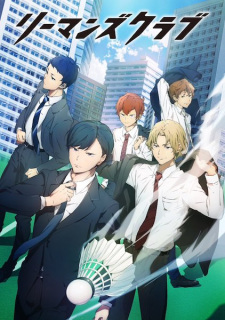 What do you think of when you put badminton and animation together? Do you get bad-ass badminton with fast-paced action and pristine quality at its best? If this is what you're thinking, then welcome onboard, because studio Liden Films is back at the badminton animation game once again with Ryman's Club a.k.a Salaryman's Club, a portmanteau of the corporate work life and the actual sports club that actually exists in Japanese culture. Combined with the impressive work of Liden Films that badminton is the ONLY sport that this studio does produce right. But in order to understand Ryman's Club, you have to first understand how it works. The Island of the Rising Sun is no short of unique things like these, and this is integrated in Japanese culture as the so-called "Club Badminton" that is in the same way, most of the club players are also employees (or salarymen in Japan's context) at the company they represent, so they'll be guaranteed lifetime employment after they retire from badminton. They would still be able to work for the club's sponsor company which is usually major companies (NTT East, Tonami, Nihon Unisys to name a few), they receive monthly salary just like all other employees in the company, which makes it different from pros in other parts of the world who mostly earn from prize money, sponsorship deals, endorsement, commercials, national caps salary etc. while Japanese players have stable income (salary from club company) on top of sponsorship deals, endorsements, national caps salary, commercials and prize money (while players from other countries could get most of their prize winning, Japanese players will receive theirs after a cut from the national badminton association). Some interesting tidbits worth sharing since the idea behind Ryman's Club is from one that has been existing for quite a long time in Japan. In Ryman's Club, we get 4 teams which are fictional portmanteaus of the real-life companies: - Sunlight Beverage (Suntory Beverage & Food); - Tomari Transport (Yamato Transport, only replace the two cats logo with a lion); - Unisics (Universal Music with their logo being inspired from Asics); and - Mitsuhoshi Bank (Mizuho Bank with their logo being inspired from both Mizuho and Mitsubishi). But the story itself is bog-standard that's conceptualized out of someone's performance boot and dark history that got him out of his former company, and right into a fresh new company whom recruited this same person to play on their team. This person is Mikoto Shiratori, a badminton prodigy with the ability of foresight, and someone whom went through his own dark episode from young times of playing doubles and causing his teammate to get injured, to playing for one of the top-ranked companies (Mitsuhoshi Bank) and only to get the boot because "failure is not an option". His next venture into Sunlight Beverage is a means for a re-start at getting his life together, but not before he'd meet his future partner: Tatsuru "the Badaryman" Miyazumi, his boss and doubles partner, whom had been drunk the day before his first official day at work, only to resurface his PTSD of his young badminton days when he was about to let go of his past behind. Being a relentless request from Tatsuru himself, Mikoto is introduced to the SunBev team of Coach Yasuomi Ono, Koki Takeda, the Saeki brothers Toya and Sota, and their formerly team ace Toru Usuyama of the East, and therein sets the journey to overcome past traumas and be a better team through teamwork. Believe me, it sounds simple, but it does the entry-level job application enough. Of course, how can you have protagonists without antagonists, and there are a fair few bit of players within the same reign of issues that they face. The only few people whom have a backstory to them are the doubles team of Mikoto and Tatsuru, along with Usuyama, and they exist from the strongest adversary team ever: Mitsuhoshi Bank. Mikoto's history with the team with the Bakugo-like character of Takuma Kirishima; Tatsuru's history of playing with Izumo Naohiro as a doubles team (before Mikoto made his entrance); and Usuyama of the East and Ibuki Sentaro of the West, the team singles aces which have an extensive history behind them to face off for years before the former would quit and sacrifice his badminton to focus on his work and family. Mikoto also has Tomari Transport's Azuma Tachibana as a former player of his young badminton team, whom is there to check up on Mikoto when he got back in the groove of playing badminton for another company's team. Other than that, the requirement of 6 players per company team creates the same derivative that you would expect of any sport that needs a minimum amount of players just to play ball. Again, simple story, backed by simple characters and intended motives, nothing to really complain if the execution is done decently. You know the drill: when it comes to sports shows, studios like Production I.G. and MAPPA have made a name for themselves adapting high-profile shows like Haikyuu! and Yuri!!! On Ice respectively. And Liden Films have also made a name for themselves when the studio produced Hanebado! back in Summer 2018, proving that they ARE the go-to studio for badminton anime adaptations turned into beautiful and striking sakuga animation. And 3.5 years later, we're seeing the same with Tokyo Revengers episode director Ami Yamauchi and Sarazanmai series composer Teruko Utsumi's work, which thankfully other than the missteps of Hanebado! in the story department, this works great and hand-in-hand with the overall package. If there's a strong department in this show, Liden Films has done it once again to deliver good performance. And what's a good series if it doesn't have good music, and this bumps the extra atmosphere with the show to good effect. Given Mafumafu's musical calibre, I don't really need to mention if you've heard a good 2 or 3 songs that this Vocaloid producer has produced, but it's Novelbright's OP that really slaps. A double thumbs up. Ryman's Club is what I like to call: simplicity at its finest. In every predictable twist and turn, there's the direction from Ami Yamauchi with the skills learnt from Tokyo Revengers to twist things on its own shuttlecock and racket, so going into this series being her debut directorial show, I'd say she accomplished a work well done to keep it simple, working and executed properly. This is a well-rounded show, all things considered. Sabiiro no Armor: Reimei / Rusted Armors 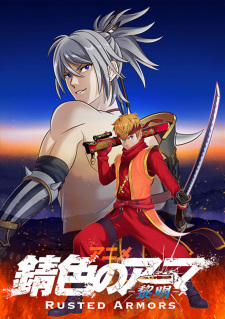 First, there was Summer 2020's Gibiate with its awful CGI done by 3rd-rate studios and a core staff that had MASSIVE talent to back up, but didn't translate well onto the small screen. Then there was that one CGI-esque show that broke everybody's water bags: EX-ARM, that did everything but nothing right as a numb nut paltry joke of an actually good story and a laughable "live-action" production translated into anime that has the anime community gone bonkers. You can count Tesla Note and Berserk 2016 for that as well as it also does the same thing, so it can be counted in the same category as well. But Sabiiro no Armor a.k.a Rusted Armors? This is repeating Gibiate levels of terribad once again, and I might say that if I had to choose between this and Gibiate, I would take the latter any day just to squeeze lemons on my eyes and make it sour so that I will not have a chance to watch legitimate trash shows like these. What the hell are you thinking, Japan? If this is a business model worth continuing, then please resign and go back to animation school, because this is clearly a joke. To convert a watchable 2.5D live-action stage play into a fully 3DCG (plus 2D static background) anime, when I first watched the PVs for this abomination, both you and I already know what to expect from this, and I shan't state the obvious enough. And because I can't be bothered to tell you in depth because I fell asleep until the end-episode CV moments, here's a lightning round for you: - Story is ass, about warriors attached to Oda Nobunaga, which he has a new name in this Sengoku period. They take up arms, flail them, go to onsen baths EVERY episode, fight emotionally and physically, wash, rinse and repeat. Bad storyline. - Characters are not likable, all of them. Even as a MC, Magoichi feels like a rugged boy whose experience doesn't define who's he like, and he needs constant pushing all the time. The cast are all neanderthal levels of nincompoop bad, acting like they're clowns (except for Oda Nobunaga of course, which he is named Saburo for some reason). Bad character development. - Animation? 1000% bad, like a cost-cutting measure of a guinea pig project meant for "future-proofing" if fully 3DCGI anime like this are worth all the trouble producing. Spoiler alert: it doesn't. Bad picture, effect and fight scenes. - Sound-wise, I like the songs, and like Gibiate they're the great saving grace, but not enough to save the horrendous anime as a whole. I love how this anime had the balls for the VAs in the live-action segment to go to a shrine and pray for the anime's success, and to believe that it would get a Season 2. And this is at the end of the premiere episode, EPISODE 1! Are you on drugs? Are you insulting our "monkey-see, monkey-hear, monkey-do" intelligence? That is about the most balls-to-the-walls characteristic trait of the whole anime. No Rugrats, this is the next best thing when it comes to roasting anime at its finest and worst. Rusted Armors is an enigma. Nobody really cared for or bothered to watch it. I thought Miss Kuroitsu from the Monster Development Department would be the only real series I enjoyed this season, but I was wrong. As the next CGI series carrying the torch after Ex-Arm and Tesla Note, I wanted to see what it had to offer since Tesla Note was hilarious 10/10 so bad it's good content. This series has the same soul as it. It's a series that fought against it's awful CGI with everything else it had and won. It's clear the staff put a lot of love into this series when you really think about it in the end. It's backed by a great soundtrack, a loveable cast of characters that get deeply explored, Good voice acting, great humor and character dynamics, family themed emotional storytelling, and nice segments at the end of each episode where two of the main voice actors get to explore food and settings that inspired the series among other things. I'm sure they had a lot of fun since this is something unique this series tried to do. The character development is strong and not a single main character gets left out. Tragically, it's the clearly bad CGI animation that made it all fall apart so many times. I know this is going be historically hated, and that those that enjoyed it will be laughed it. Still, there's a charm to Rusted Armors, it's story, and it's characters. The mistakes are there. Awful CGI crows, sound effects to nothing, horrifying looking background characters, backgrounds that look like something out of MS Paint, bad and grainy rendering, characters that look like lifeless puppets, overexaggerated sound effects, laughable voice acting from the generic copy and paste enemies, the usual still frame and slideshow disasters that can get almost as bad as those in Requiem of the Rose King, laughably bad 2D animation between the CGI, and silly errors like showing a guy who is sitting on the floor, but they still play the sound of him grunting and sitting down. There were many times early on that the series kept falling apart and sinking further. How could Rusted Armors redeem itself? The writing in this strong in that every characters is clearly shown their personal issues, their struggle to overcome, and their resolve as they try to stay mentally strong. The bond between the cast feels sincere like that of an actual family that really grew on me. This is mostly the story of two brothers, and the Rusted Armors: weapons that often look like gun swords that were used to cause power struggles in different countries. The main antagonist is comically evil, and even he gets some nice development by the end. I couldn't help but laugh at him hilariously dancing to classical music among the dead bodies around him after a battle. Magoichi at first felt like a joke of a protagonist. As the series development, it turned out there was a lot more to him than I thought, and his somewhat naïve and foolish optimism became respectable to me. There's a tragedy to the core of Rusted Armor's story: He grew up teaching his brother to become powerful. This is something that would go to his brother's head, as Lucio would go on to use it to kill nations. Magoichi would later suffer from memory loss, and try to undo what he caused while slowly remembering that he wasn't always the typical hero main character he was revealed to be in the beginning. His teacher Oda is voiced by Toshiki Masuda who also voiced Yamato from Megaton-kyuu Musashi. As a result, I already knew to expect a wonderful performance. Magoichi's best friend Deku is a silly character, that as annoying and foolish as he is, is still a loveable brute. One of the ideas explored is the purpose and meaning of power. One character might see power only as a means to conquer and kill; that those without are to be preyed upon. As satisfying as this view is to Lucio, it's hollow and covering up for his insecurities. Poetically, It is his abuse and obsession with power that becomes his downfall. Another idea explored is finding a purpose. As I mentioned earlier, the viewers will come to understand what exactly each main character is really about, and their purposes that they realize in life. As the ED played one last time with Magoichi aimlessly flailing his Rusted Armor around in the purple void to Fantastics from Exile Tribe's nice and melancholy ending sequence song, and as the voice acting cast said goodbye in the after segment, this series did bring a tear to my eye. Maybe I am the only that saw something in this that the few others that watched it and hated it didn't, and maybe I am not the best at explaining this, but this series really connected with me and I didn't want it to end. Sabikui Bisco / Rust-Eater Bisco 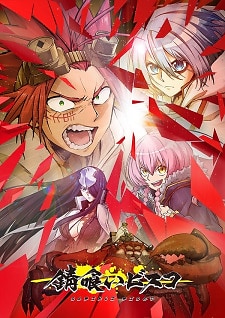 Anime can be anything it desires: fun, excitement, unhinged, and vice versa, that showcases itself as an intriguing enigma that goes left, right, center and out. That's even more so for shows that have cool and creative post-apocalyptic worlds that are a dime a dozen, especially for those Mad Max-esque sand-blast wasteland worlds from Trigun; Now and Then, Here and There to the more recent hit of Deca-Dence. And to properly describe what newbie novelist Shinji Cobkubo has done with Sabikui Bisco, is anything BUT simple. And being the very first LN to rank No. 1 in Takarajimasha's Kono Light Novel ga Sugoi! a.k.a "This Light Novel is Amazing!" annual guide book back in 2018, it's safe to say that an anime adaptation of this is pertinent at any point, and we got it, courtesy of some very notable people that I'll explain down the line as we go. If you look at ANN's interview done with creator Shinji Cobkubo, series composer Sadayuki Murai and director Atsushi Ikariya, it's actually very interesting to know how Sabikui Bisco was conceived and brought to life by some of the most talented people in the staff team. Shinji Cobkubo states that this is his first time writing a novel, and being an amateur, he's gotta weigh all the factors when considering the story and the world-building that's never yet seen before, but striving in all ways to give the comforting feeling of “something you haven't but also have seen before” with the sense and joy of discovery. He also knows that plotting and narrative structure are his weak points, and thus the anime prominently showed where Cobkubo himself have faltered (more towards the final stretch). But more than anything, he never once felt agnoized about it and the reception that it would receive, and where the story went, is how Cobkubo will drive that narrative despite of the issues. And for someone being raised by timeless stories like Makoto Shiina's sci-fi novel Ad Bird, Buronson's Hokuto no Ken a.k.a Fist of the North Star and Hirohiko Araki's Jojo's Bizarre Adventure, his work that was perceived as as a "counter" to the trends. That presented an opportunity for him to concoct a story that while "counter"-ing trends, respects the stories that use that narrative to run for years on end to create fun for the readers, which yes my man indeed, Sabikui Bisco IS the definition of fun. But let's hold up and go back to the beginning of Sabikui Bisco's foundations. Set in a post-apocalyptic world of sand dunes and most particularly Rust, a plague-like wind that decays everything of contact from items to humans, and the origin for this is said to have come from mushroom spores, and unforuntately, people like Mushroom Keepers are mistakenly maligned for being terrorists because they were believed to be the source of the epidemic. And one such Mushroom Keeper goes by the name of Bisco Akaboshi, an archer whom shoots arrows that instantly grows mushrooms, is well-known in the Gunma-Imihama Prefecture with a price on his head. Bisco's the infamous Man-Eater, which adds notoriety to his name, and everyone wants a piece of the reward pie for capturing this criminal. On the other side of the spectrum in the city of Imihama, we have Milo Nekoyanagi, a mild-mannered doctor whom does the duties of a doctor of serving the people and finding out the reason for the Rusting disease by cutting deals with the government and secretly buying mushrooms on the black market to save the Captain of the Imihama Watch, Pawoo, who's his older sister, also infected by Rusting. The two meet out of coincidence, and amidst all the propaganda made from concealing information with a territorial mindset with closed walls and border inspections, and as such, together with another Mushroom Keeper (Jabi) and Bisco's transport animal Actagawa the crab, set out on a journey to find the legendary Rust-Eater (Sabikui) Mushroom, which is said to be the All-Cure to this lingering disease. And for two, how Shinji Cobkubo develops this story and narrative, there's a lot of references to be had. There's the obvious tense of religious depiction, and Cobkubo places both Buddhism and Hindu mythology as a motif to drive the story, which actually complements sci-fi and fictional religions, and is a cinch to create. That's why the anime displayed many of these such motifs from the animals and creatures used as weapons, something that is very unconventional for AniManga standards. In terms of characterization, Bisco and Milo have a relationship that is dubbed hot-blooded "Shonen manga" like quality, so the idea of love is something that at first glance, seems like an odd choice of input, that gradually turns into character traits all on its own. Going back to the religious motifs, Bisco is his own man, he trusts himself with the actions he's done, and that's how he values his own "faith". And on the topic of love (as seen in the anime's final quarter), this may look off-putting, but it actually derives from Shinji Cobkubo's own life experience, where human beings decide to sacrifice their lives to attain something greater, that is their most shining and beautiful moment, and deep from his heart, this is his moment of extol to signify that "love". And nowhere is it more prominent than Bisco and Milo, more than treading though every trouble at corners loose, their bonds ever growing as the series progresses on, embodying that "love" as a sacrifice and protection of all the things they hold dear. Even to the antagonist that is the Imihama Prefecture Governor Kurokawa, his fight as means of a stranglehold on the region with an iron-clad fist, employng bunny-masked enforcers to carry out his will, that is also "love", even when faced with adversity to confront Bisco and Milo, knowing that all the power and control that he had was just a pretense of an act. This also trickles donw to other characters like Pawoo, Jabi and Tirol, they are tied by strong love as partners, teacher and disciple, and siblings, with responsiblity at their necks as they act according to their own principles. It's certainly a work of art that's different from what you'd expect to see. Given director Atsushi Ikariya's effort on this as his first directorial debut from being character designer and animation director of acclaimed series like Fate/Zero and ID:Invaded, Shinji Cobkubo's light novel was certainly something else, more akin to a Mad Max-like premise. Add to that, there's the lore of unique things from mushrooms to huge creatures and even pseudo-fusions of machine and organism (i.e. escargot aircraft), which adds nonsensical WTH moments that only adds to the fun. Animals are notoriously difficult to animate, and Ikariya has to consult newcomers to actually help him realize the vision of the series on screen. Not to mention that Sabikui Bisco is rife with a lot of real life references, such as the Black Hawk helicopters drawing experience from war films like Black Hawk Down, handguns from Italian mafia films, and even Terminator references (the most famous one will be the iconic "I'll Be Back" catchphrase). Along with series composer Sadayuki Murai's solid scriptwriting to avoid confusion for the viewer, and technically Shinji Cobkubo's story is mostly untouched with almost all of the settings intact, translated into anime of the fullest potential. Also, while new studio OZ was commissioned to produce this show, most of it actually came from the co-production from another studio, NAZ. Remember that I mentioned about ID:Invaded? That series is completely produced by NAZ, and it's no wonder that some staff came back to help produce this show, from the likes of color designer Emi Chiba, animation director Ai Asari, key animator Daisuke Mataga, to even director Atsushi Ikariya himself. Needless to say that Atsushi Ikariya really made use of all his experience to flesh Sabikui Bisco out as this weird-rando post-apocalyptic world of endless possibilities that doesn't detract and betray the source material. This high-octane action also delivers in the music category, and it's a bomb blast of insane proportions. Sound director Kisuke Koizumi is a man of insanity, having produced music for series like The God of High School and Shadows House, and his role in Sabikui Bisco is nothing short of amazing. While JUNNA's OP song does fit the overall narrative, on its own I find it to be a bit lackluster and something that is not of her standards, so this is a miss for her. On the other end of the spectrum, we have Bisco and Milo's VA-centric ED song, and that is really where the banger goes to make such a compelling ending song that retains all of the tension of the episodes. And if you think that wasn't enough, there is a version of the ED with just Milo's VA Natsuki Hanae's vocals, and that was purposefully made for a section of the anime that had death flags thrown boldly and wittingly. Even with its missteps, Sabikui Bisco is a source that is very ambitious in what Shinji Cobkubo is trying to concoct, that with the anime, Atsushi Ikariya makes this ambition grow exponentially times infinity. And when will be the end of that madness, we will never know since the LN for this is quite the ride that's still ongoing, and with the anime, people are noticing that this work actually exists. If anything, I hope that this won't be the last time that we'll see of Sabikui Bisco, the one true dark horse of the season that is one hell of a roller-coaster ride. Definitely gonna slide into the LN to see what the hoopla is all about, and see if this holds up. It's an acquired taste for sure that feels niche, when it's not. Sabikui Bisco is a prime example of “You had me in the first half”. What started out as a unique and gritty looking story in the first few episodes, became an extremely convoluted one full of plot holes and errors that made it a drag to watch. The build up to the climax of this show was great, but the climax itself was one of the most disappointing things I have seen in a while, and that’s truly a shame. My grading criteria: Story: /25 Art: /10 Music: /10 Characters: /20 Enjoyment /15 Thematic Execution /20 STORY: 8.5/25 At the outset, this seemed like an interesting concept. In a dystopian society called Imihama that was ravaged by rust, we see Milo, our character, live his life by investigating this “rust disease” and treating patients at a clinic. We see the seemingly scheming governor of this society, Kurokawa, who seemed like a very intriguing villain. I was thoroughly intrigued at this point. After that, Bisco appears, with a bow and arrow in which the arrows make mushrooms grow on whatever they hit, which was an interesting concept. Following a reveal about the true nature of the rusting and its effect on humans, Bisco and Milo embark on a journey. The rest of the build up you can watch yourself, but the underlying problems are the lack of a general direction of the plot. *SPOILERS IN THE NEXT PARAGRAPH The climax of the story is where it all fell apart. Kurokawa is the corrupt governor that has a hand in this entire rust issue, and Bisco and Milo confront him, but he proves tough to outsmart. My gripe with this entire sequence of events is that when there’s a clear opportunity to defeat him, Bisco spares him, and it led to more disasters down the road, including the demise of someone, which was another poorly executed “emotional” scene. Anything after that scene was just not good anymore, with the huge monster Tetsujin and all. It became generic and uninteresting. ART: 7.7/10 The overall art style is good, but it looks very grimy, if you know what I mean. MUSIC: 8.6/10 The soundtrack is pretty good, and both the opening and ending are one my favourites of the season. CHARACTERS: 5.5/20 Much like the story, the characters felt very interesting to start, but either didn’t play enough of a role (characters like Tirol, and anyone from the children’s fortress come to mind), or didn’t get good development down the road. In the action scenes, they made questionable decisions, and much of the character quality dropped with the story quality, which was a shame. Wish we could also know more about Bisco’s backstory and some more details about mushroom keepers and more about rusting in general. For Milo, the developments he got felt out of place, as characters shouldn’t be turning their personality into something that seems like the polar opposite for their personality, it was just a bit much. As for the villain, Kurokawa, he was way too basic, and his demise was very anticlimactic. ENJOYMENT: 7.8/15 Enjoyment declined with the overall narrative, but I enjoyed the first part. THEMATIC EXECUTION: 12/20 This show tries their hand at many themes, and I do think they build the atmosphere nicely, with that dark tone around Imihama, and overall in the story. The adventure element was alright, but the action themes weren’t all that great, especially the last part against the Tetsujin, because of the plot issues there. The emotional side to the story did not pan out due to the tragic situations being clearly avoidable. OVERALL: 50.1/100 It’s really a shame that the climax wasn’t executed very well, and made the story fall off afterwards, but for what it’s worth, the world had a nice vibe to it, and it was definitely an attempt at an unique concept, but it wasn’t flushed out very well. Last bit seemed rushed, but pacing seemed to be an issue throughout. 8/10 for the first eight episodes, 2/10 for the last four episodes. For Studio Oz’s first anime, it was average, and we hope to see some better things from them in the future. *UPDATED AFTER COMPLETING IT* This is my first ever review, so just a heads up if I don't do it as well as other people. I will start off with no spoilers and then head into spoilers in a separate paragraph. -NON SPOILERS- The show starts off with incredible mystery in both the plot and in characters. It does a great job in the early episodes of giving you teases and glimpses into the truth of the show. As the characters begin to explore outside of the initial city, you get to see the truth unravel more and and it starts to get real interesting. However, episode 8 the story goes off the rails and plot points just happen because the writer needs a "twist" to happen. To sum up my feelings in a word, it is 'disappointed.' I will continue to watch this since I'm only 2 episodes from the end, but I will likely be making fun of it every second of the final 2 episodes. -Updated After the Final 2 Episodes (Non-Spoilers)- The show slightly redeemed itself at the end. There was a plot point, that I get into in the spoiler section, that did piss me off and was a fearful prediction that I had, but the final episode and the final fight was very entertaining and made up for it. I still don't think there is anything crazy coming from this show, nothing that makes me say "Yes you need to watch this!" but there are some decent points in this show that I can say it's an average watch. If you got time and nothing else to watch, give it a try. -SPOILERS- Story (3/10) Yay, I can now talk about the shit show that Sabikui Bisco has become. Like I said in my non spoilers section, this show started off great, and I was thinking that this could rise to my favorite "small show" series of this Winter (this was battling with Strongest Sage for my favorite "small show" this Winter). I loved the episodes in the city, where Bisco is being called a man-eater and is being hunted, but in reality Bisco is just trying to spread the truth. I also loved how crazy he was because he was liking the fact that, even though it was all a misunderstanding, people were hunting him down. I also liked the look into the kid's village and even the rust eater was cool. But man the moment that they go save Pawoo from the office and leave Kurakawa there instead of killing me, that is the moment this show lost me. There was no legitimate reason for them to not kill him there, it was just the fact that the author wanted the plot to continue. I also still have no idea why Kurakawa is keeping any of them alive. He is depicted as a psycho, but in reality he just an idiot. He leaves Jabi alive twice, he leaves Pawoo alive for too long, his decisions just make no sense. Can we also talk about that fact that in that same episode Panda and Bisco are escaping, get shot multiple times, and are some how just fine the next episode. Did the agents not chase them down and make sure they were actually dead? Unfortunately that is not the end of my disappointment, because in the very next episode Bisco literally dies for no good reason. The author first doesn't kill off Kurakawa for no good reason, and then kills off your main character for no good reason. For the people reading this, thinking that Bisco's death was done well, I heavily disagree. Kurakawa was in a very weak state, a weak enough state that Bisco in his weakened state could completely overpower him and tackle him into the burning rust. You know what else he could have done? Bisco could have just kicked or shoved him into the burning rust and then still lived. It is ridiculous, so much so that I wasn't even sad when Bisco died, I was just confused. Then this most recent episode came around and me and my roommate are just laughing at how ridiculous the story telling of this show has become. I also love how this show all of a sudden turns into a Michael Bay movie with all of the explosions that randomly occur. As I talk about the art, sound, characters, and enjoyment, I will keep them short, as I did go long on the story portion. Art (7/10) The art is unique in this, and works well with the action. I don't think I have seen an anime yet that reminds me of the art style. It just fits the whole theme of the show. Sound (8/10) This has been the only redeeming factor of this show besides the art. The opening is fun and gets me hyped up for some good action, and the music during the show adds to the tension and action sequences during the episode, even if the tension is pretty terrible due to the poor writing. Character (5/10) This score isn't necessarily because I see the characters as bad, because I like the main 4, and I even like Tirol, even if you only see her for a couple episodes. The main reason for this score is because the development makes no sense. Panda, who is just a freaking doctor at the start of this show and has had zero combat experience is now just as strong as a Mushroom Keeper by episode 10. The progress in the character skills just make no sense. Enjoyment (4/10) Because of how random the plot points go, and how random the character strengths go, I just struggle to enjoy this show. The only reason I enjoy this show at all it to make fun of how ridiculous it is. -Concluding Thoughts- (4/10) It is a shame how far this show has come from the the beginning. It went from battling for my top Winter anime, to being the lowest anime I have rated I have completed since The Promised Neverland Season 2. Who knows, they may somehow redeem this show in the final 2 episodes, but if they actually do bring Bisco back to life like my roommate is predicting they will, I will hate it even more... -Updated Review After the Final 2 Episodes- Alright so the final 2 episodes came out and I watched them, and sure enough my fear came true...Bisco came back. Bisco coming back felt so forced, but guess who else came back, KURA-FREAKING-KAWA!!! Like how many times they gotta fucking die! The revival of Bisco felt terrible, but I would be lying to you if I wasn't enjoying the final fight. Something that shook me was the fact that they actually confirmed the relationship between Pawoo and Bisco. I had shipped them, but had seen so many other people shipping Panda and Bisco, but NOPE, Pawoo kisses Bisco right before the final fight. The show ended well, and as much as I hated the show overall, the final episode slightly redeemed it. I still cannot rate it any higher than a 5 because of all the plot issues throughout, but it did raise my score up 1 from a 4 to a 5. Tragically, Sabikui Bisco falls under that pile of anime that I wanted to like because of how interesting and weird it started out. I was won over by the soundtrack and how easily it elevated any fight scene it got used in. Bisco is a hot headed protagonist which is better than the usually morally obsessed crybaby main character that is often seen instead, and yet there wasn't really much to any of the characters. The antagonist was annoying, and only appealed to me because he was graced by the voice talent of Kenjirou Tsuda. Honestly, they should have just gotten rid of him early on and introduced a better threat. It sort of pains me to dig into this series this way, but I can only take so many obnoxious fake out deaths that felt they dragged on the story, and character models getting rocked back and forth rather than being adequately animated. By the end, the finale didn't do anything for me anymore. Though I really do like the soundtrack to this and the way it's used, I can't let it gloss over the fact this adaptation has a lot of problems. The writing in this is laughable, sadly so. The main antagonist could have at any point towards the end easily kill the entire cast if he really wanted to, but conveniently did not go for a show of power when it came to attacking them nearly every time. The amount of damage some of these characters can take and still be able to go on is comical. Besides the great soundtrack, I appreciate how this series tried to be interestingly bizarre. From organic planes to weaponized animals, to giant worms with human limbs and giant floating man eating pufferfish, I did enjoy how out of there they went with this. Milo and Bisco's friendship was fine though often borderline felt like a boys love relationship done on purpose. The romance in this felt laughably unnatural. I liked how the world building started out because this is an interesting post apocalyptical type setting. Despite that it didn't feel satisfying how it was explored. They rushed through places and monsters, and the viewers were left with lots of questions. Milo's character itself isn't anything much besides some typical nice guy who happens to be a doctor. That's what makes him trying to look tough later look forced and not work. More than that it just gave me second hand embarrassment. At first I enjoyed the arrows and their mushroom spawning abilities. Towards the end it felt like a broken skill as nothing really felt like a threat anymore despite Bisco and Milo going up against literally world ending monsters. This adaptation felt too questionable. A shame because it had potential in the beginning. Sasaki to Miyano / Sasaki and Miyano 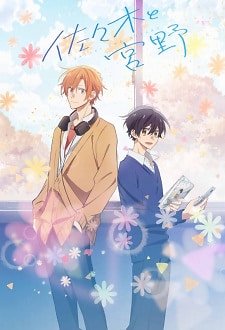 For the longest time, I've been looking for a BL series that matches as closely to the very first BL anime that I actually enjoyed: Junjou Romantica, produced by Studio Deen all the way back in 2008. And come this Winter season, Sasaki and Miyano brings all that nostalgia feeling back into my senses(that's even better because Studio Deen is back), greatly enhancing the enjoyment values that I've experienced with more recent BL-centric shows like the musically-inclined Given. Judging by the way that this show is titled, most of you would've realized that mangaka Shou Harusono's styling is very reminiscent of mangaka HERO's work on Horimiya, and that's not because of plagarism, but of immense inspiration taken from it. From the series' title to the overall sensation as a whole, Sasaki and Miyano a.k.a Sasamiya is basically the BL version of Horimiya, because the while the manga is already a trumping greatness in the BL space, the anime is just as good, if not better as the superior version of the source material. Sasaki and Miyano might be a BL work through and through, but don't let it fool you that this is pure BL romance at its finest, very simple with no overbearing drama that needs to take a dragging on, everything is concise, well-planned and executed very well. For one, taking into account the relationship of the Uke (Miyano) and Seme (Sasaki), the heartbeats palpitate of cheeriness and absolute heart-flutteringness to watch as their relationship evolves from a very simple Kouhai-Senpai relationship into something much more. The reason with Miyano Yoshikazu, is that he's a Fudanshi, someone that likes to read BL manga, and thus in an all-boys school, isn't the easiest to blurt out, lest the idea of being called names for it. And this is complemented by Sasaki Shuumei, whom acts like a Senpai and a delinquent all at the same time, reason being that he once saved Miyano from being bullied. Thus, the obsession from Sasaki to Miyano begins from there, and the latter especially has a heart time shrugging this annoying and playful Senpai off his shoulders. And to add to that allure, Sasaki inquires from Miyano for a book recommendation, and being the Fudanshi fanatic, the latter introduces to the former a BL manga. In a strange dynamic, Sasaki also develops an interest for BL manga, not realizing that reading too much of it relives the experience of him and Miyano in real life, and imaginations can run wild. Thus, this BL relationship is born, and for better or worse, Miyano has to content with Sasaki's antics, more of less friendships or romantically in a private setting. But what's a great couple ship without great friends? Miyano has Tashiro Gonzaburou and Tasuku Kuresawa as classmates, and the former's a joker while the latter looks like your typical class bookworm, and with a girlfriend to boot and being a very loyal boyfriend. Both are very supportive of Miyano as friends first and foremost, and provide diversity into Miyano's POV. Sasaki has Taiga Hirano and Jirou Ogasawara, the former being the same bad boy but very disciplined since he's on the school's Discipline Committee. Manga readers would be happy to know that there is actually a spin-off of the series covering both his and Akira Kagiura's side of things, though that's not the main focus of the parent story. As for the latter, Jirou is like Miyano's friend Tasuku, but only if the dynamics are all completely turned and messed up 180 degrees. He too like Tasuku has a girlfriend, but his significant other is a BL fanatic like Miyano, whom glows at every chance possible to see some BL from Jirou's friends, and is Sasaki's side of a joker at trying his best not to be the Uke to the Seme. Overall, this character cast I don't mind at all since on top of the BL aspect, this is a typical slice-of-life school romance in the simplest form, and it works either way. It's no secret that when I saw that Studio Deen was adapting this, my mind instantly raced off to the nostalgia that I had for Junjou Romantica. Heck, I'd rather say that Sasaki and Miyano is the modern-day Junjou Romantica, that's sweet, delightful and fun to watch. It's very realistic with all the love imagery signs of a typical relationship, be it straight, Yuri or in this case, Yaoi (or gay romance if you will). It's light-hearted, yet carries weight when things go astray. This is further proof that Shinji Ishihara, director for Tsukimichi and Edens Zero (as chief director) still has the knack in him to produce this with the staff team, on a soul of heart that love and care has been given to this production to make the best that it could. Yet again, a thanks to this guy for elevating the original source material. For a light-hearted series, the music must match with the vibes of the show, and I certainly felt that throughout the anime. Miracle Chimpanzee's OP is just the perfect song to start the series off in an upbeat note, and I really can't get enough of this extremely well-crafted piece of music. Sasaki and Miyano's duo-VA ED song is also the same, and compliments the entire show well. Not a bad selection of an OST. When it all comes down to it, Yuri or Yaoi series can still be enjoyed by straight people, and Sasaki and Miyano hits with absolute precision of the source material to elevate it with Studio Deen's adaptation. I really can't find any faults with it, and is a treat for both Josei and Shoujo fans alike. Watch it if you can, it's BL, it's Horimiya, it's just simply love. |
KANLen09Apr 25, 2022 12:31 PM
|
Apr 25, 2022 12:33 PM
#7
Shikkakumon no Saikyou Kenja / The Strongest Sage with the Weakest Crest 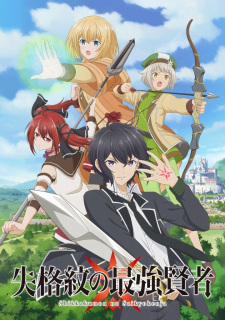 Isekai, or rather, reincarnation shows can be both good and bad. Case in point, the recent most famous of them all: Rifujin na Maganote's Mushoku Tensei, which is the undeniable platinum standard to follow. And over the years, many people have become mangakas and novelists just to have their ideas shuffled into the ever growing source material form, and one such person of interest is novelist Shotou Shinkou (or going by his official pen name, Shinkoshoto). This madlad has penned no less than 8 series to his name, and all of them (LN and manga adaptations combined) are released year after the next circa. 2015 (technically 2016 is a jump) to now, and concurrently serialized in various magazines. But sadly, with his first break-out series: Shikkakumon no Saikyou Kenja a.k.a The Strongest Sage with the Weakest Crest, being his very first work starting in Syosetu in December 2016 to get J.C.Staff's subpar adaptation, the red flag lies in the details. And more than writing this much novels consecutively, this just goes to show that while novelist Shotou Shinkou can write all he wants, the matter of the fact is that he doesn't know how to write a good concise and compelling story, and basing off from the tropes that have already existed to make a predictable story, already decent with padding to make up for the fact that he's suffering a burnout. If this is the case, then the next anime adaptation of his 2nd work: Tensei Kenja no Isekai Life a.k.a My Isekai Life produced by Revoroot that's coming in Summer, could be the same quality as this. But back to Shikkakumon. Rightaway, I'm getting flashbacks of the comparison between this and Summer 2020's Maou Gakuin no Futekigousha a.k.a The Misfit of Demon King Academy, and I'll just straightaway say this: ALWAYS take Maou Gakuin, you'd doing yourself a better service as Shikkakumon is basically the same average story, plotline, character personalities but executed immensely poorly. In storytelling, the "Show, Don't Tell" Golden Rule exists so as to give the audience sensory details as compared to needless and mindless exposition, and Shikkakumon absolutely failed that test by speedrunning the source material (LN and manga considered) in the premiere episode to useless jargons and details that can be skipped to enhance the world-building (which in fantasy shows like this is already considered predictable). And even more blatantly, lets the exposition be also explained by the MC Matthias Hildesheimer, he himself being the strongest sage Gaius in his previous life before the eventual trope of reincarnation as the boy with the weakest crest. These so-called "Marks" are pre-determined at birth so categorize people's knack for magic, and each of the 4 Crests signify different uses, the Fourth being the best (for frontal assault etc.) and the First being the worst (for magic support). And Matthias for one, acquires the 4th Crest, which should be the strongest of them all but ended up being labelled the opposite, despite being a ridiculously OP sage in his past life. And this is where another opportunity presents itself: the magic of the future has significantly been downgraded to the point where magic can be used anywhere, anytime, and anyhow may it seem fit. Couple all these problems together, and the newly reincarnated Matthias "Matty" Hildesheimer must make things right while facing the prospect of demons on the loose nearly thousands of years into the future. It's pretty much a given that fantasy stories like this would have the OP MC couple together with his harem of girls, and Shikkakumon is basically no different from the trope. Being the strongest Sage that literally only a few people would've heard of the Gaius name thousands of years later, Matty lives in full view of the new future's development overseeing how the world got to the point of absolute deterioration, he's basically the new land's dictator that every word of his is absolute. Yes, even above the king, to which I'm thinking that a 12-year-old like Matty can be intelligent enough to rule, but not in a situation like this. The harem of girls are also as basic as it could get for being both a romantic interest and suitable allies in Matty's conquest to correct the magic teachings the easy way in and out. And unfortunately, both Lurie Abendroth and Alma Lepucius were the classmates that that Matty singled out because he felt that they have potential, but also being his guinea pigs in the process to always be led by whatever situations they face. Even with most of the teachings guided by Matty, he is a madman to put the plans into action, forgoing any suggestion that is raised and making sure that his opinion only matters because of his own know-how. It's like adding characters that are purposefully made blank and is only supported by the MC to be his right-hand men as helpers, not that Matty ever minded if he needs ANY help at all, and ultimately used for entertainment and proof of power. The only person that's worth any level of enjoyment of the show is with the Black Dragon Iris, a dragon that has long lived since Matty/Gaius's time and the only one that knows of his true sauce. And when she is transformed down to a human, she is the epitome of hilarity as her powers go berserk, going with the flow with whatever Matty asks her to do, and above all, just doesn't give a heck about her surroundings. She's the sole reason why this show works: a lazy, but cute dragon waifu. I could not even fathom to begin to say that J.C.Staff is becoming the studio where lots of works are hemorrhaged concurrently and produced below expectations, this is turning out to be quite the shoddy work quality that only ages even worse to the point of being D.O.A. And honestly, coming off from director Noriaki Akitaya whom is also directing Slow Loop this season and once helmed fan favourites like Bakuman and OreSuki, working on more than a single show shows the limitation of not just directors in manpower, but also the extent of the changes done in the final product. And it's for this reason that Shikkakumon really suffers from the get-go, because he and his staff team could not understand how to translate LNs into anime, of which this is his very first attempt. All other sources are fine, it's just that LN adaptations may be this director's Achilles' Heel. Not even the anime's OST is enough to save this show, of which while I feel that fripSide's current-day songs are getting a lot more muted in content, both OP and ED songs are average at best, though Yuki Nakashima's ED is certainly one bright and cheerful song I can appreciate it's use of here but not one that warrants a second listen. Generic anime are a dime a dozen, even more so if it's an Isekai, of which the genre has not been fully suppressed yet of getting adaptation after adaptation to showcase more mediocrity. Shikkakumon is just garbage-tier Isekai, and coming off from someone that really loves Maou Gakuin because of the immense personality values it has, I'm sorry to say that you won't find it here. Shikkakumon no Saikyou Kenja is pretty much the same generic power fantasy series that comes out every season, which means it has most of the same fundamental flaws and cliches that you would usually find in the said genre. The plot is entirely devoid of creativity, the protagonist is extremely shallow, his abilities are far too overpowered, the supporting characters are completely neglected, the world-building is almost nonexistent -- I could honestly go on for a while. Our protagonist, a sage known by the name of Gaius, desperately wishes to become stronger. But in a world where an individual's magical abilities are predertermined at birth and cannot be changed, he is severely limited by his given crest which is not suitable for combat. Wanting to obtain his desired crest instead, Gaius decides to reincarnate into the future and is reborn as Mathias Hildesheimer thousands of years later -- succeeding in his goal just like he had expected. However, it appears that the world has changed dramatically during his absence; humans are now not nearly as efficient in magic as they once used to be. The crest that Mathias that worked so hard to attain is considered the weakest, and even basic techniques like chantless casting are thought to be extremely difficult to use. Soon, Mathias figures out that demons are responsible behind the immense downfall of humanity, and he subsequently embarks on a quest to thwart the demons from realizing their agenda. Does this sound familiar? I'm sure it does, because I can already name almost 10 titles off the top of my head that start pretty much exactly like this -- which is one of the biggest problems I have with Saikyou Kenja. Because it's not only the start, but the entire plot of the show feels like a rehash of other already existing power fantasy series -- albeit not as dumb or tryhard -- but still completely predictable and almost boring enough to be sleep-inducing. And this problem of Saikyou Kenja is only exacerbated by its insipid protagonist, Mathias. As it is the case with most overpowered protagonists in power fantasy anime, Mathias is at the center of everything that happens in the show. Thanks to his impenetrable plot armor, everyone around him unconditionally trusts and relies on him even though he has the appearance of a little kid. Mathias also acts like the active narrator of the show; he monotonously spells out all the events in the storyline and the brief exposition that we occasionally get is only ever told from his perspective. Because of this, the worldbuilding of the anime is merely limited to Mathius' monologues, which makes the world feel completely lackluster. Of course, this creates other problems too. Since the plot is almost entirely moved forward by Mathias, all the other characters in the show get completely brushed off as unimportant and always remain under his shadows. They are rarely given any time to properly display their individual personalities, as their actions and dialogues are limited to mere reactions for the most part. It doesn't help that Mathias himself is as dull as the supporting characters -- if not more -- and even more frustratingly, few of them are actually a lot more likeable and entertaining than him. Bluntly put, Mathias is wholly uninteresting. His only personality trait is that he is insanely overpowered and wants to become even more overpowered for whatever reason (keep count of how many times I use "overpowered"). And because of the fact that he is so overpowered, there is practically no sense of tension that could be felt throughout the story. Even if the skill level of the enemies is increased tenfold (be prepared to hear this million times), it barely matters because Mathias will probably defeat them with his bullshit powers anyway. There are times when he does use proper strategy and teamwork to win the battles, but they are unfortunately few in number. I suppose another personality trait of Mathius, only if it could be called one, is that he can be incredibly stupid and oblivious. Occasionally, the show tries to be humorous by making him say or do something really dumb, but it doesn't work at all and instead becomes very awkward as it feels completely out-of-place for his character. Following the same pattern, Mathias tends to be clueless at some of the most bizarre and simplest things—which, again, doesn't suit his usually arrogant personality and only makes the comedy seem tryhard. Speaking of which, Mathias frequently acts like a smartass. For some reason, he constantly needs to say to himself that he is extremely powerful and intelligent, and it is reasonably very irritating. Him being irrationally overpowered was already enough of a turn-off for me, but that being followed by his overly smug reactions made it worse. From time to time, the characters of the show also like to remind us that he is overpowered, and it annoyed me to death most of the times they did so (not every, since there were a few funny ones). Lurie is an inoffensive character; she is neither interesting nor unlikeable. Almost the exact thing could also be said about Alma, but I personally "liked" Lurie a bit more. These two receive by far the most amount of screentime besides Mathias, and even then they are never treated as significant characters. Their interactions with Mathias are expectedly bland, usually consisting of -- as I previously said -- the two laughing at his cluelessness, acting surprised by his overpowered abilities for the umpteenth time, and more concerningly, Mathias and Lurie blushing at each other while Alma teases them. The romance between Mathias and Lurie is portrayed in the anime as heartwarming, but I personally find it kind of creepy. Although his physical appearance and lack of maturity may tell you otherwise, keep in mind that Mathias is actually an adult (who presumably lived for many, many years). On the other hand, Lurie is most likely the same age as Mathias' current self, which means that she should be around 12 years old. Taking that into consideration, their relationship becomes somewhat messed up -- but luckily enough, the romance isn't given that much focus. There is one character that I do genuinely like, though, which would be the "dragon girl" Iris. She is without a doubt the best character of the anime by a mile. Her over-the-top and fittingly clumsy personality is actually funny, and the scenes featuring her casually destroying her surroundings are easily the best from the entire show. Unfortunately, Iris doesn't get much focus throughout the story, and although she is a part of Mathias' team and supposedly a main character, like many others, she is rendered insignificant for the entirety of the series. I don't think the other characters are even worth mentioning, but I will outline their roles and personalities just to show you why they aren't. Firstly, you have the unmistakably benevolent king and principal who can't do anything themselves without Mathias' help, and to oppose the good principal, there is the bad principal who has the mind of a 10-year-old kid (and definitely not a smart one). Finally, you have the boneheaded demons and their underlings, whose job is to act cocky at first and then get absolutely thrashed by their gigachad lord -- obviously none other than Mathias. And that's it. I just fully described all the supporting characters that appear in the show; there is nothing more to say about them. Unless you count the academy students as characters too, who literally make no more difference in the narrative than a cardboard cutout would. In contrast, I think the animation of Saikyou Kenja is quite decent on the whole. The character designs are generic for sure, but the animation quality is fairly consistent and there are not that many noticeable flaws in my opinion. I might even say that Saikyou Kenja is one of the better looking isekai/power fantasy shows in the last couple of years. The soundtrack is rather generic on the other hand, but the voice acting is expectedly very good. Repeating what I said in the beginning of my review, Shikkakumon no Saikyou Kenja is probably one of the most generic power fantasy titles I have seen to date. But you know what? As much as I criticized the series, it is not completely garbage. Even if Mathias is a dull and unlikeable protagonist, at least he isn't always obnoxious. Even if the storyline is repetitive as hell, at least there is no insufferable drama or harem. Even if everyone besides Mathias is practically worthless, at least someone entertaining like Iris exists. Even if the writing sucks, at least there is somewhat decent animation. The point I'm trying to make is, there are many more power fantasy shows out there that are worse than Saikyou Kenja -- it is far from being the worst one. That alone should be enough to convince some people to watch the anime and even enjoy it, but clearly, it wasn't nearly enough for me. I'll start off with a non-spoiler section and then will go into spoilers. --NON-SPOILERS-- The Strongest Sage with the Weakest Crest, what can I say other than the show is just, fine. Throughout this review I'm gonna just refer to the show by "Sage" cause I can't be bothered to type that whole name, haha! Well, this show's premise is that our main character, who we refer to him as Mathias (Matty as I'll call him), reaches a limit in power in a previous life, and in an attempt to get the strongest crest, he reincarnates himself and ends up in the same world, just many, many years later. However, in the current day, the crest he has gotten is referred to, by everybody, as the weakest crest. We obviously know that is not the case, but Matty goes on to prove to everyone that his crest is not weak. Throughout this show, Matty will travel from city to city with his group and they will take on demons in an attempt to rid them from the world. It's a fun watch, as Matty basically murks most opponents in his path, but at the end Matty finally struggles. The show ends on a very open ended note, leaving the door wide open for a season 2 if any studios wish to pick this up. I don't see a Season 2 happening, but I guess I wouldn't mind it just for another week-to-week watch. The show as a whole has a very meh story, one that seems a bit repetitive but also very rushed at times. The art style is ok, the fights never have the animation at a superb level, but it's at least watchable. The sound design on it is also very meh, nothing standing out from the music and sfx for me. The thing I love are the characters in this show! Matty is clever and his bluntness is very comedic. Lurie and Alma are great side characters that you cannot find a reason to hate (for the most part). And Eris is adorable and hilarious, every moment that she was in frame, I loved. There were very fun parts that I enjoyed, but a lot of long exposition dumping ruined some of the enjoyment for me. If you have time, I would give it a watch as it really is just fun and lighthearted, but nothing worth going out of your way for. -SPOILERS- Like I said in my non-spoiler section, I enjoyed this show to a degree, but the show seemed to rush some bits, have too little world-building that was necessary for the scale of the show, and had a few lack luster fights. Without further ado, let's break it down. Story (4/10) The story for this show had a really cool concept, Matty was so powerful, that he literally has the ability to reincarnate himself to get stronger and to have a "re-roll" in life. Then once Matty gets his crest that he has been looking for, the world then calls it the weakest crest, and the type of magic he uses (no incantations) is an archaic way. However, when Matty goes through his entrance exam and begins to blitz through the tests, they quickly realize how strong he actually is, and he ends up becoming more like a teacher, teaching the other students how to use incantation-less spells, than a student. The demons that Matty defeats just seems like fodder, and normally I would be ok with an OP hero, but it they make it seem like Matty struggles with each demon for just slightly long enough to make it unbelievable. The progression in Lurie and Alma's strength is also a bit ridiculous. They start the show being absolute trash, and by the end of it they take out a demon with some ease. It seemed way to quick, and I was a little unsure how their strength even got to that point. Also, Iris is in the show, is a very strong dragon, and she barely helps out with the fighting. When she actually is of use at the very end, her strength is fodder level to that of the demon, so it just felt like wasted character development on Iris' part. Another thing I noticed with the story is how much of it was just exposition dump from Matty. I'm ok with exposition dump every now and then, but almost every single plot point in the show was exposition dump. Overall, not a great story. Art (5/10) The art style for the characters was fine, nothing crazy about it, nothing making me say "Oh my gosh that is gorgeous," but it was average. Something that hurt the art rating for me was the fact that in the fights, they never made any of the skills look crazy. The most they did was add more magic rings to make the audience aware that this is a more powerful spell than others. But yeah, the animation was very bland in the fights. At the end you just saw some red and blue lights zipping around in the air showing Matty fighting the demon, but it was disappointing for sure. Sound (4/10) I can't say I was impressed by the opening, OST's or SFX. The ending was fine for me and fit the show well, but nothing else was great in my opinion. The SFX sounded unoriginal and not impactful at all. The opening and OST's are not memorable what so ever. They would also tend to play music at random sometimes which didn't make much sense to me. Character (7/10) Like I said in my non-spoilers section, the characters are the only saving grace in this show for me. I love the interaction between our main 4 characters, as they are just funny and witty. I also liked the King and the Headmaster. I also enjoyed some of the side characters that they would meet in the other cities. The characters were appropriately likable or hatable. Matty and Iris definitely carried, but I like the other characters just as much. For a 12 episode show, they did a pretty good job at giving you glimpses of different characters. Enjoyment (6/10) The comedy reigns supreme in this show, whereas the fights fall short. Watching this week-to-week definitely made this show more enjoyable to watch, as I just had to devote 20 minutes a week for it. I liked seeing them go around the different cities, enjoyed watching them travel together, and even find old relics from Matty's past lives. It was just a really chill show to watch. However, the exposition dumps slowed the pace way to much on it, and whenever you felt that a moment actually did need slow pacing for it, it rushed up way to fast. The fights, like I have said, were not as fun as I thought they would be with an OP character like Matty. He would struggle long enough with something, and it would annoy me when I know he could absolutely demolish his opponent in an instant. -CONCLUDING THOUGHTS- (Overall 6/10) This show was just a simple, kinda disappointing, 12 episode ride. I wouldn't watch this again, but I can't say I didn't enjoy watching this at all. If this show were to get a season 2, I would watch it just because it left the door open for a potentially good story, but knowing how these type of shows go, I'm not getting my hopes up. Shingeki no Kyojin: The Final Season / Attack on Titan: The Final Season (2nd Split-Cour) 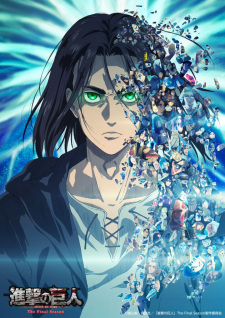 TLDR: This was probably my least favourite season of Attack on Titan. I can already feel the roasts coming. *Spoilers below Ah, Attack on Titan. Undoubtedly the anime of the 2010s, the defining anime of this generation. I started my Attack On Titan watch just about four months ago, binging it from the first season, up to this moment. It’s been one of the best experiences I’ve had with anime, hands down. The immersive story, the action, the emotion, we’ve been on a good roller coaster haven’t we? Now, to this season. From the greatness of part 1, the story picks up where it left off on that brutal cliffhanger, and starts on such a bang, with plot twist after plot twist. Since Season 3 Part 2, there have been what I call “The Banger Trilogies” in each cour. There was the set of “Perfect Game”, “Hero”, and “Midnight Sun” in Season 3, the set of “Declaration of War”, “the War Hammer Titan”, and “Assault” in Season 4 Part 1, and in this season, we had “Two Brothers”, “Memories of the Future”, and “From You, 2000 Years Ago”. My favourite set would still remain the one from Season 3, but the plot twists and reveals we had this season, was not too shabby either. The latter half of this season, was to be fair, nostalgic, it reminded me of Season 1, which I’m sure most of you would agree with, is Attack On Titan at its worst. My grading criteria: Story: /25 Art: /10 Music: /10 Characters: /20 Enjoyment /15 Thematic Execution /20 STORY: 19.5/25 *Another reminder about spoilers below A mixed bag to be sure. Firstly, we had the plot twist where Eren and Zeke go back in time to see what happened in the past, and it turned out Eren had more of an impact on the past than we thought, and there was this whole time travel aspect to the story, which was a good reveal, but needlessly confusing. There was this reddit post that explained the time travel aspect of the story, called “The complete guide to Chapter 121”, which I recommend you to check out if you haven’t already. There was also some backstory of the kingdom of Eldia and the backstory of Ymir and Fritz, that was quite tough to watch. The whole section of this part of the plot ends with Eren declaring the Rumbling would be beginning. The next part of the story is a grim reminder of what Season 1 had to offer. Just good action against the big bad Titans threatening to destroy Paradis and everyone beyond the island. It was simple, and a bit disappointing, considering the quality of the story beforehand, yet still quite nostalgic, especially when “Barricades” played in the background. There was a subplot where Connie wanted to save her mother, who was still stuck on that house in Ragako Village, which was an interesting, but a little out of place. We saw the return of Annie, which was great to see, and it led to a nice comedic moment with pies, and more of the Female Titan, we saw what happened to Levi and Hange, basically a tying of some loose ends. We see Floch continuing to be the scheming and devious man he is, and also Marley and the Survey Corps end up working together, to assemble the Avengers, as people call it. All in all, the reversion to pure action and occasional emotion is welcome, but it felt like a downgrade. Of course, there is also the depiction of mass genocide. Say what you will about the controversy about that, but this, combined with the time travel, just didn’t sit well with me. It felt oddly… generic, yet it felt like this might have been the only thing that could have happened, when we consider the foreshadowing. The key aspects are still done extremely well overall, like the foreshadowing, the plot twists, keeping viewers on the edge of their seat, a story that remains fascinating, making it so each episode flies by. That sentiment hasn’t changed, but I did feel the pacing slowed down a bit in this season, though it may have be necessary. ART: 8.4/10 Felt less rushed than the previous season, as Mappa had a bit more time to work on this. The CG and 2D aspects still aren’t done perfectly, but it was definitely an improvement to last cour. The animation in the ED this season was pretty spectacular though. MUSIC: 9.5/10 We’ll talk about the opening and ending themes first. The Rumbling. Wow, SIM really did a nice job here, surprising me with the heavy metal, with a great chorus as well, a lot of people’s favourite opening for sure, though Red Swan remains my favourite. The ED for this season, Akuma no Ko, was one the most beautiful endings I’ve seen. Ai Higuchi, props to you! Very emotional and gripping lyrics, and great visuals to boot. Probably my favourite ending so far of the entire show. As for Sawano’s soundtrack. This show recycles a lot of their past themes, using the nostalgic factor at times, especially when “Barricades” played. That is fine to me, and while it may be seen as lazy, I have always enjoyed the entire soundtrack in Attack On Titan, and good music will always complement the show, recycled or not. CHARACTERS: 12.5/20 The masterful character writing in previous seasons certainly carried over to some extent, but the second half really hurts the score here. I loved the first half, as Zeke and Grisha were so good to watch this season, because, like Marley, we don’t exactly root against them. Grisha has such a great voice actor as well, as that performance in “Memories of the Future” was so awesome to listen to. Other than that, we don’t see much development or good dialogue apart from Connie trying to save his mother and also killing his former comrades, Jean in the campfire scene, or Annie saying she doesn’t want to fight. Granted, these scenes were mostly pretty well executed, and emotional. Mikasa had her moment to shine when she ravaged a lot of the Jaegerists, and her fight scenes were certainly interesting and fun to watch. However, her character seems a bit static and uninteresting, made out to be a brute, which wasn’t that great in terms of development. Gabi continues her redemption arc, by saving people, and having some emotional scenes with Kaya and Falco, and that did make me enjoy her character a bit more. I never really hated her, but she has developed into a more “responsible” and mature person, which is good. Floch was a good villain, but nothing more. His attitude makes him a rat, and I have always said, if you strongly hate a character, it means he is written well, and I can see that here, though he doesn’t add a whole lot to the story. All in all, the lack of Eren hurts, and the fact that the second half was less of a character driven story, and more action, was not the path I wanted this show to go. Magath and Shadis though, what a duo. ENJOYMENT: 12.5/15 Some episodes were great to see, but nothing stood out to me as amazing this season, after the reveal about the time travel and all that. THEMATIC EXECUTION: 14/20 From all the political themes, and immersive dialogue and dark atmosphere and savagery and backstory from part 1 of Season 4, this season balances themes of war, camaraderie, and straight up action, which felt like a downgrade overall. As I’ve said, Season 1 was Attack On Titan at its worst, and this felt like Season 1. OVERALL: 76.4/100 Don’t get me wrong, Attack On Titan has never been bad. This season was just a bit below my expectations, as the dialogue didn’t feel as strong, the whole aspect of time travel was not the path I envisioned, and the whole second half went in a direction I didn’t exactly enjoy. Still a wholly enjoyable season overall, but I would have liked to have seen a bit more spice, more scenes that made us stare at the screen in awe, because Attack On Titan has just been that good up until now. I do look forward to what comes next with the Final Edition in 2023. I'll start with non-spoilers and go into spoilers after. --NON-SPOILERS-- What can I say about this show. First off, this is my favorite show, and I'm glad to say this did not disappoint. If you have watched the rest of the series, or got through season 3 and are deciding if you want to continue this show, my answer to you is yes. The revelations throughout this season show the amazing foreshadowing that Isayama has been able to conceive. He gives incredible reveals here, and really provides some of the defining factors that will bring us into Part 3. the way he develops Eren's character as well as a majority of our cast is astounding. The new Opening is in my opinion the best opening of the Winter 2022 season, and the return of some classic OST's as well as new OST's is incredible; the ending is also great! There are some iffy CGI moments, as is with a lot of CGI, but overall the fights are well animated and looks very clean. MAPPA...well done to you! I can't wait to see how you guys do Part 3 in 2022. -SPOILERS- Now I get to talk about my favorite show with no filters. I love how Isayama put this together. Part 1 left with the cliffhanger of all cliffhangers, and right away we start the season with a banger in the first moments of episode 1. Without further ado, let's get into this. Story (10/10) The fight is great, the dialogue is great, and I love how the fight evolves over the first few episodes. Something I was disappointed in was how Levi was taken out of the fight, but I'm hoping something happens in Part 3 to get our favorite Fidget-Spinning Boy to go crazy. I think the time in The Paths was done so well. It was paced well to the point where we didn't feel like we were there forever, but we got a very good look into just how much Eren was controlling everything. I also love the tension and climax with Ymir's backstory and with Eren and Zeke trying to gain the control of Ymir. Everything from there is just beautiful. You see characters truly going insane from this war, characters feeling betrayed, confusion, anger, happiness, etc...it is all done so well. I think that the pair-up with the scouts and Marley was done well, although I still don't know if I like it all that much, but it feels natural with how they all still hold grudges to each other but they know this is the only way they can stop Eren. Then in the port, seeing Armin and Connie so painfully conflicted to hurt their old friends, it really rips your heart, and can we talk abotu Magath and Zeldris' sacrifice...ah I got chills from it. The look into the past was a really cool scene, giving us a look into just what made Eren truly go into the deep end. Yet again, we get another crazy cliff hanger with Eren just about to destroy Marley. I cannot wait to see the ending to this story. Art (9/10) The art looks great. Yes, there is some iffy CGI in some moments, but honestly it is not as bad as most CGI I have seen out there. The Titans look incredible, there is just so much detail put into them and I cannot be upset by how MAPPA took control of this. The character designs look great throughout the show, and the gore is very well done. I think MAPPA also stepped up their game on the ODM gear movement as well, which was very necessary compared to part 1. Sound (10/10) When has AoT not hit the mark on their music. The sound design in this season is no less than what the rest of this show has accomplished. The music fits every single moment, adding tension and energy whenever appropriate, and just makes the fighting epic. Returning OST's help the nostalgia with this show, and yet again just fit the moment that the OST fills. And holy crap can we talk about how perfect of an opening this is? Even if you don't like Rock / Metal, just appreciate the lyrics and the meaning in the lyrics. I love you SIM for making this masterpiece to go along with this show. Character (10/10) Each character seems to have some major development in this season. You see some character just break mentally, some just cannot believe what they are doing, others have realizations of what they now need to do. Eren went from us loving him, to us hating him, to us loving him again. Only Eren could make me defend major war crimes. I love the change in the scouts during this, and I also like some of the change in Marley. I can't believe I'm going to say this, but I like Gabbie. BEFORE I GET FLAMED HERE ME OUT! I like Gabbie in the regard that she has been incredibly written, but I still hate her guts for her shooting Sasha and almost killing off Eren. Just astounding character development. Enjoyment (10/10) I'll keep this section short. Incredible pacing, incredible revelations, incredible fights, and incredible effects. This show kept me waiting week to week wanting more. -CONCLUDING THOUGHTS- (10/10) This show is the how that just keeps giving for me. Even with how Wano is going with One Piece, AoT stays my favorite show, and One Piece is really gonna have to do something crazy for it to top AoT for me. I am so excited to see how the fight in Marley goes, and man I want to see Armin erupt that colossal titan! Shuumatsu no Harem / World's End Harem 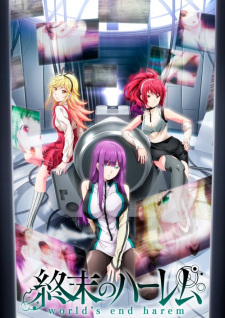 First, there was Ishuzoku Reviewers a.k.a Interspecies Reviewers, which marked the new 2020s decade of nuttiness, uncensored harem and ecchi glorified for all Men of Culture. Then, there was Kaifuku Jutsushi no Yarinaoshi a.k.a Redo of Healer, which marked 2021 with an outrageous revenge story, harem and ecchi uncensored if you wish to see all the pain and burn from an objectively wrecked MC. Now, there is the trash of harem anime: Shuumatsu no Harem a.k.a World's End Harem, which marks the brand new year of 2022 of the same feeling you got from Redo of Healer, except that if you'd put the current world events in toll, you'll have the same objectivity. Yes that's right, COVID (and now Omicron) has struck this anime, delaying it by a season to finally air right smack in the new year of 2022, and I feel like this is more than just a karma that every Winter season since 2020 has to have at least one Ecchi show to stand out (before the pandemic-that-must-not-be-named turned the world upside down). And for the brand new butt-spanking new year of the evolved Omicron variant, comes Shuumatsu no Harem, the apocalyptical, man's wet fantasy dream version of our current world if the "World's End" Times have already dropped upon us with Jesus coming down from Heaven to give His judgment, saying: "From now on, thou Omicron virus shall oust all Adams, leaving more than enough for all the Eves of the world, and I'm only leaving a million perfect Adams for all the 7 million Eves out there to get the harem SEGGS on for the End Times...enjoy and bon appétit!" And that is what mangaka LINK (not THAT Link from The Legend of Zelda) has basically concocted an idea that preceded the "World's End" time we're living in now: this potentially lethal, life-threatening and contagious Male Killer (MK) Virus, which was indoctrinated by the UW (United Women), caused an androcide (meaning the systematic killing of men, boys, or males in general), leaving only the majority of women left with a million men in the world whom are so VERY lucky to be put into cryostasis as a means to treat their "rare" diseases before the world ejected into women-only lockdown. Focusing on Japan, there are but only 5 men whom survived the incident, and since every UW has a regional branch located in each part of the world, the Japanese Division labels these men as "Numbers" to keep track of their progress into this conspicuous breeding program by having sex with as many women as possible regardless of circumstances. In my own opinion, this story would've made sense years ago around its publishing start in mid-2016, and since mangaka LINK is still working on the many Shuumatsu no Harem series like the sequel After World, canon Fantasia and the recently ended spin-off Britannia Lumiére, it's definitely a unique manga series...if you have trash taste, or have nothing else to read in your spare time. Let's Seggs-way to the characters, and for good or for worse, you decide. The first man encountered is No. 2 of 5, Reito Mizuhara. Living with his childhood friend Erisa Tachibana and having the dream to be a scientific researcher, Reito is a pure Mummy's boy if you will: he's dedicated to Erisa, and will only want to have sex with the girl he loves. Despite being traumatized by the fact that he's the first guy to ever get a peek of the outside world of Japan where only women roamed the streets, he is determined not as a breeder of women, but to breed a cure for the MK Virus, which works the opposite way as intended to get some attention and find his sister Erisa in the process. His attendant is Mira Suou, a girl whom looks like Erisa, and has a calm exterior to her name. She can be sweet if you let her, but she is pertinent to have second thoughts about getting it on with Reito, even if she looked like Erisa at first glance. In a situation like this, I know that a lot of people will chastise Reito for his decision to only make love to Erisa, so much so that he's one tub of a boring turd. But it's after all those events where he'll become useful...after the adapted events of the anime, that is if you can tolerate trash incoming. The second man is No. 1 of 5, Hino Kyouji. He's the definition of a lustful and hedonistic man whom gleams at a women-only world to take on sexual activities with them in law and order benefitting the women and the man in tow...if he just follows orders and does what is intended to live his wildest dreams. He's not that all interesting, or should I say, the men's wannabe of a popular male enough to have girls worth surrounding his ass at every corner. His attendant is Neneko Isurugi, and is just like him being goal-oriented at being yet another lust-filled character. Just meh. The third man is No. 3 of 5, Doi Shouta. And out of the 3 males that are extensively covered in the anime, he's the best written and liked of the trio, as his story is like Reito's, only if you inject much of the cynicism of Redo of Healer's MC Keyaru wanting a dark fantasy, revenge-filled life of mockery as the superior man on Earth. Being a behind-the-scenes good-gifted boy like any other goody-two-shoes attitude person, I feel like I have a kindred spirit for this boy whom was bullied all his life, and he was waiting for the exact moment to get his revenge on his tormentors which developed his PTSD, on top of being someone struck by mutiple sclerosis and in need of cryostasis. Fortunately, with the cryostasis, Doi was able to wake up into the World's End circumstance of the world only filled with women, and this was his chance of redemption that he could be worth a likable character to the girls that he'd never have met before. Doi's journey is a combination of the good parts of Reito and Hino: staying true to his first love, his teacher Yuzuki Hanyu, but also adhering to the UW's commands through his attendant Karen Kamiya, whom promises that the school that was specially made for Doi becomes a mating ground, the grandest of what Hino had and what he could potentially do to get the girls on and live out the "kind-hearted" world that he so desperately seeked for. Honestly, Doi Shouta is a chad that deserves to be preserved as a fine "Number" specimen (since 3's the (Lucky) Charm number). Now for the girls, or should I rather say, the partners alongside the Numbers. Starting off with No. 2 Reito, other than the childhood friend Erisa, you have his originally designated attendant Mira Suou (replaced by Rea Katagiri once higher-ups deem that her purpose was lost), nurse Akane Ryuzoji (whom her mother Kihara is part of the UW Japanese Division's upper management), child Sui Yamada whom has the obscene strength equal to a bear, and researcher Maria Kuroda whom is also seeking the MK Virus's origins as a virologist. Honest to God, not a bad diversity team of sorts as the research function to question UW about the MK Virus, but it can seem like an exercise in frustration. No. 1 Hino has attendant Neneko Isurugi, the former UW actress Rena Kitayama and the bunch of other girls that I prefer not to waste my breath on, this group just feels tacked on without any clear thought, other than to add a Number onto the list of surviving men to speed the breeding process. Just self-indulgence covered and smeared in selfishness and self-centredness, pure wasted and contrived effort. No. 3 Doi, once again, earns yet another deserved W for the girls that support his ideology of a women-only world, ruled by a man. Attendant Karen Kamiya who's free-and-easy, his real world teacher Yuzuki Hanyuu which supported him through his traumatic times, the once similarly bullied Shunka Hiiragi, rich girl Natsu Ichijou, athlete Akira Toudou, and the child-like Chifuyu Rain Kuroda, this is a team of girls that given the choice to have the harem of seggs with, this would indefinitely be my team of choice. As I mentioned earlier, the school that was specially tailored made for Doi's development, shows that these girls are more than just tickling fancies for the white-haired chad, and that Doi could actually live out a perfectly normal school life if given the right circumstances. Doi being led by Karen to do things that he wants to do, free and easy, along with the harem of girls that don't mind his undivided attention...be truthful to yourself: if you were in Doi's shoes, you would be a happy man with boobs and sex everyday with girls that love you with all their heart, soul, mind and strength. I'm quite surprised that Studio Gokumi has chosen to do this seemingly controversial work, as do most of the studio's collab works with AXsiZ, and given how much this was anticipated back in Fall 2021, the pushback to Winter 2022 because of the need to "closely examine" the anime's production, certainly hurt the anime community's interest as a whole as it was largely forgotten. Reasons being from that Fall 2021 being a hugely stacked season, to only if you'd realized that this show is coming back the season after to complete the rest of its broadcast after the special hour-long Episodes 1 and 2 were scruitinized heavily and reception turned sour thereafter. Director Yuu Nobuta is hands down one of the most average directors with little hits (Kuma Kuma Kuma Bear) and many misses (Maesetsu! and Saihate no Paladin to name a few), and you can count Shuumatsu no Harem on the "miss" side of things as the anime production is just simply abysmal at best. I'd expected at least Queen Bee or even Collaboration Works (the best Hentai studio of the lot) like quality, but what I got is something produced by sub-standard producers like Milky's early days, and that says quite a lot. I feel bad, at least for illustrator Kotaro Shouno, because her craft as a Doujin hentai/ecchi artist is sublime given her prose works from 2009 to 2016 (before jumping onto Shuumatsu no Harem), and to see it all wasted with the anime, it hurts deep inside. To edge the knife into the wound deeply even further, there are 4 versions of the anime: - The complete censorship (as you'd see on an official licensee i.e. Crunchyroll) with black bars that at times made the anime almost completely unwatchable; - The semi-uncensored version as broadcasted on AT-X, same 24 minute runtime as the complete censored version but you can at least see boobs and only boobs; - The "Super Harem" version that airs alongside the semi-uncensored version, but a bit longer and uses the same black bars to censor away all the naughty private parts during sex; - And last but not least, the BD version which is just basically the "Super Harem" version converted into a full Hentai, totally uncensored. Basically, to get the most enjoyment out of Shuumatsu no Harem, someone better be off buying the BDs, doing the work equivalent of fansubs, and uploading it onto a Hentai website so all of us Men of Culture can enjoy. What a headache. And if you think I can't complain anymore, there's the music, which is just about as subpar as the entirety of the show itself. For one, H-el-ical//'s OP I can accept, at least THAT is a good OP to match with the themes of the show, but EXiNA's ED is just plain bad, there's no excitement, even from an ending song that has a song calibre that thinks it's as good, but has no punch (or lack thereof) to it. All in all, my typical Spidey senses would recommend for you to go read LINK's manga (or better case, the other series) for better or for worse, but unless you're really someone whom can tolerate trash (I know I used to), then this series would just be your good-ol' fashion sense of a poison. If given a chance to re-do the entire production from scratch, I'd say that what came out of the advanced pre-screening back in end-September through Kadokawa's YouTube channel should have been a red flag to choose not to continue with the production at all. This show literally was a waste of time, even watching it semi-uncensored, because it could not live up to the trash manga's "superiority" at all. My final verdict would be to say that just watch any well-known Hentai series, and I guarantee you'd have better time spent watching quality and not crap like this. Now I'd feel like I want to spend yet another 4.5 hours just to re-watch the BD version once it gets fansubbed to cleanse my eyes from this pile of turd and satisfy my inner sword for fap enjoyment values. Someone PLEASE buy the BDs and do a service for us, then I'll flip that atrocious score around. You've heard the term 'Down-bad', the definition of which being: "When someone is depressingly horny", now get ready for 'Down-good', when something good comes out of being depressingly horny. World's End Harem, or Shuumatsu no Harem as referred to in Japan, is a good example of how to utilize harem in a story fashion, and to develop on characters. Through the series we watch a world in aftermath from a catastrophe, wiping out all but 5 men on earth leaving 4 billion women behind. Of course, like any normal story utilizing this concept, you would have a lot of foolery and fornication, but what you do not normally get is a writer utilizing this concept to expand its story further, towards the characters and even towards politics, introducing alien concepts to the genre of Harem, such as terrorism, corruption, and even a lead to a full conclusion resulting in not only the peace of the main character but to every character. Great examples of this at work is during the latter half of the series with Doi Shouta, who starts off the typical virgin in a school, getting nowhere in relationships and everywhere in school, y'know, the archetype for bullied kid, but is later on in the series given development showing his change and adjustment to the mold this world has given him to fit into, making Doi Shouta into the kind of person whom he previously so hated, and feeds his newly found desires. Something else in World's End Harem you have to applaud is its character dynamic. When given a generic concept you can expect a generic character dynamic, protagonist to antagonist, side character to protagonist, side villain to antagonist, et cetera. But what Shuumatsu gives you is the kind of twists in the plot needed to give it a proper mix and combination to really 'wow' you and give you that familiar sense of shock and realization, reflecting upon the details up to that moment and realizing how everything changed so suddenly and so smooth. However, these overwhelming positive facts are yet unable to cover up what has failed to change, zero personality. While Shuumatsu attempts to deliver a healthy dose of difference and change during its short span of 11 episodes, it is unable to make up for the lack of originality in the overall concept and TRULY spice things up, I could watch the show over and over and never get a shred of content that makes me think: "Yep, that's Shuumatsu no Harem for you.", and more "This is a less brutal Redo of Healer", because as it stands, Shuumatsu no Harem is forgettable and just as it proclaims itself to be, a Harem about the end of the world. |
KANLen09Apr 25, 2022 12:36 PM
|
Apr 25, 2022 12:36 PM
#8
Sono Bisque Doll wa Koi wo Suru / My Dress-Up Darling 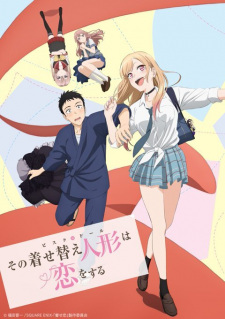 While his fellow high schoolers are immersed in the pop culture, Wakana Gojou finds his interest in sewing clothes for his Hina dolls. His dream is to perfect the art of making Hina dolls, and reach his grandfather's level of expertise. However he keeps this a secret in fear of getting ridiculed. Marin Kitagawa is an outgoing, confident girl, always surrounded by her peers. When she sees Gojou with a sewing machine, she asks him to make a cosplay dress for her. Now that the fates of these two completely opposite persons intervene, will romance bloom? Story: The story is based on a very close aspect to animes but also very underused: Cosplay. However, the development follows the common pattern of the other Romance Animes. The screenplay is nice, with a perfect pacing. There is a certain amount of Fanservice, but that doesn't bother me because the story in itself is quite cute and refreshing to watch. The show will, most likely, not bore the viewers at any point. Nothing too extraordinary storywise but refreshing and fun to watch. Characters: Wakana Gojou is a relatable character, especially to the introverts. He follows the same pattern of less popular mc of a shoujo manga but is different at the same time. Marin is cute and hot, a waifu material but that's not the only thing in her character. Her character has a certain amount of depth. The development in the character dynamics is slow but gradual. Other characters that were introduced later in the series , Shinju and Sajuna, are also quite interesting. Artwork and Animation: The Artwork was really good. All the characters were quite appealing, especially Marin and Shinju. The Animation was also smooth, except a few Instances. The cosplays looked great. The Fanservices were not excess or forced. The show was visually fresh, charming, heartwarming and fun. Music and Voice-Acting: The opening track is perfect for the show, having that charm and freshness that the show has. The ending track was also good. The bgm used went with the scenes and very selected wisely. The voice actors also did a great job. My Dress Up Darling is a good, refreshing, fun to watch show. The adaptation was perfect. Having the best girl of the season adds to the overall credibility to this show. Hope a season 2 comes out, a proper sequel matching the standards of this season, unlike other Cloverworks shows which either don't get a sequel or get a crappy one. If you are looking for a refreshing, cute, fun slice of life, romantic story, My Dress Up Darling is your destination. Give it a watch, if you haven't still. The whole tradition of Japanese Hina Dolls, and the subvertion of one de-facto activity widely treasured in the Otakudom: cosplay. Marry them both, and you'd get female mangaka Shinichi Fukuda's rom-com series that can only be represented with one word: BEAUTIFUL. Because more than anything else but the one and only definite stand-out new AOTS of the Winter 2022 season, this is a love song to the traditional Hina doll art of craftsmanship, more than just a clear-cut case of superior CloverWorks production and quality. In order to understand Sono Bisque Doll a.k.a My Dress-Up Darling that has taken the anime community by a massive hefty storm, we need to go back to its roots, to the inspiration that started this now beloved fan-favourite: the Suzuki Ningyo Doll studio with a rich history and tradition, founded in the city of Iwatsuki in Saitama Prefecture circa 1934. The tradition, now into its 3rd familial generation of Hina doll-making craftsman under Keisho Suzuki, he was approached by Fukuda to set up the base foundation for the male protag character Gojo Wakana, being aware of the intricacies and subtleties of Hina doll making, especially in the context that the protagonist is a male. And because traditional Hina doll making is always left to the stereotype that females are the ones making it, this is Shinichi Fukuda's way of breaking gender norms of "If girls can be like boys and dress and act like tomboys, why not the boys in doing "girlish" stuff like these". Through careful deliberation and consideration, the hard work came through to deliver the final product now known as Sono Bisque Doll, and this could not be done without the help of Keisho Suzuki, of which you can say that he's technically the setting supervisor in helping Shinichi Fukuda to create a stunningly beautiful translation of the portrayal of traditional Hina doll craftsmanship. Honestly, this is dedication to real-world craft that I rarely see in AniManga (aside from Runway de Waratte a.k.a Smile Down the Runway), and for Shinichi Fukuda to get this right to ultimately respect the art of doll-making, this is mission accomplished, successfully. The backstory of Sono Bisque Doll is truly awe-inspiring, and that dedication flows right down to the characters, and once again, Shinichi Fukuda literally plays with fire when it comes to the fanservice side of things (which is always the first point of criticism), but beneath all that layering of fun, lies fictional characters that feel very close and relatable to real life. Starting off with Best Boy Gojo Wakana, he is a stereotypical boy, but with one thing going for him: he's the basis of 3rd generation Hina doll-maker Keisho Suzuki, translated into manga form into becoming an established Hina doll craftsman. But Gojo's history is anything but pleasant. Being an orphan for his whole life, he is raised by his grandfather Kaoru to be an established Kashira-shi (Hina doll head maker), only for a bad trigger of a traumatic memory of his childhood friend to berate him on playing with Hina dolls, which caused him to become anti-social and harm his self-esteem to the point of being a reclused shut-in at times. This, in causal effect, also caused him to hide away his doll-making hobbies and remain as a loner. Gojo's character I understood VERY well, because much ado like him, I felt a sense of kindred about being maligned by society and what it truly means to be a normie in a world that favours and bends criticism to the majority. Being an Otaku too, meant that my habits were far too different for others' tastes, so much so that I felt very restricted in my own skin, and friends like Marin Kitagawa are hard to come by to truly let go of my introverted self. But if you give this guy a moment of your time to request his services, boy does Gojo deliver with his sheer tenacity and passion that overworking to the bone will eventually be nothing more than just out of habitual reasons. He works hard, and gives double as much to showcase his passion, that simply none can ever rival this innocent boy whom made a friend who's just about his extroverted equal when it comes to Otakudom. Since we're on the topic of Marin Kitagawa, here comes Best Girl that has countlessly delivered to knock our socks off this season. Marin's a beautiful gyaru, a very energetic, happy-go-lucky girl like Nagatoro, whom also fits the teasing aspect in that regard. Marin is to Gojo like yin and yang: a hardcore Otaku with the dream to one day be an established cosplayer. Of course, being an Otaku and a cosplayer meant that she would cross swords with Gojo in school, and after realizing that he's a Hina doll maker through doing some tailoring in school, she expresses her utmost interest to inquire more about Gojo and what he does...in the most unexpected way possible: fanservice, but being careful not to cross the line for one to see it as such. In fact, Marin is more into cosplaying characters from eroge a.k.a erotic video games to magical girl series, and her drive and passion is something that I've seen only really hardcore Otakus will go far and beyond to do what they like. But deep down under, her enthusiasm sadly doesn't match her walking the talk, being clumsy and not skillful when it comes to handiworks. And that's where Gojo comes in to perfectly fit her void as her cosplay designer, his skills being taken into account when creating the perfect costumes of her favourite characters, down to the most minute of details. It's love, or should I say, wuv at first sight, because Gojo's a Yes-Man, and he'll not fail. Honestly, Gojo and Marin are worth the Best Couple Ship of the season stealing every moment they could get, and rightfully so as both guy and girl really trade off their SWOT personality analyzes very evenly to potentially become a match made in Heaven. But, as they say: "Two's a company, and three's a crowd", I would like to add another to the mix: Four's a gathering. And this gathering includes the Inui sisters Sajuna and Shinju. The younger sister Inui is a well-known cosplayer that's admired by her fans, and that includes Marin as well, most particularly for her nickname "Juju". A sophomore a.k.a 1st Year at an all-girls' private high school, she is physically older than both Gojo and Marin by a year, despite having the posture of a elementary student. And like Marin, she goes to great lengths to ensure that she has all she needs with her older sister Shinju being her support caddie when she does cosplay. As for Shinju, she's more developed than the typical girl of her age, which can be mistaken as an adult in a kid's body. She secretly wishes to be like her younger sister to cosplay, though her big sizes have the assumption that there'll be less cosplay material to work with. Just as with Marin, both Shinju and Gojo are at adjacent spectrums as do Marin and Sajuna being support and cosplayer positions respectively, and this is a nice trade between people in the same profession, having fun and working and ironing out issues that cosplay is only for the slim-fitted. Everyone can cosplay regardless of your body posture, and that's a message that I would like to take home myself. It's no surprise that CloverWorks has developed somewhat of a risky business proposition by attempting to produce 3 anime in any given season, and they've been drawn a lot of flak for reasons to criticize on. The wonky production-immobilized Tokyo 24-ku a.k.a Tokyo 24th Ward has started to exhibit Wonder Egg Priority-like problems all over again, while Akebi-chan no Sailor-fuku a.k.a Akebi's Sailor Uniform is just an animation showcase more than anything. But, the better production has to go to Sono Bisque Doll, which demands a lot of attention of the staff team to translate everything to the small screen, and replicate them they did to go far and beyond the manga's already exquisite art. Director Keisuke Shinohara isn't really known for high-profile stuff, so I'd guess this finally serves as his first break-out series. But HOLY CRAP the animation that's lead by chief animation director Kazumasa Ishida, being the chief AD of SaeKano the Movie, I expected nothing but the best, and the experience was beautifully stunning. Fine details that aren't made by horrible CGI, the beautiful backdrops that are reminiscent of A-1 Pictures' work (since CloverWorks is a sister studio of A-1), and I have nothing but high praises to make even the most basic of character expressions, such as facial muscles and cheeks, look so eye-poppingly sakuga-like. And as Gojo would say it: BEAUTIFUL (as means of love). The same greatness translates from the production, right to the music. Though I've already heard one too much of Spira Spica's songs (this OP included), I'd say that this song is alright, save for the OP visuals that really define what the anime's all about. But, BUT, it's the ED that is THE banger of the season. Truly Best ED that's sung by Akari Akase, a real cosplayer. And if that's not enough, the official MV for the song is basically fanservice for the fans as Akari Akase douses in Marin's clothing, from the school uniform to the close-to-actual cosplay sets shows in the anime. Seriously, what a PR monster Akari Akase is for both the cosplay and that "kyun~kyun~kyun~" feeling of bubbly vibes, and that sums up a legitimate 100/10 PERFECT song that I'd have already put on repeat since Day 1. Sono Bisque Doll is a rom-com that definitely sets the standard when it comes to pure entertainment, more than just infotainment on the Hina dolls. I warn that there IS fanservice, but as mentioned, the mangaka took heart not to overstep the boundaries while keeping the tension alive. And this tension, it will kill your heart slowly for all the good reasons as we see Gojo and Marin take baby steps to acknowledge their love...er sorry, I mean, wuv for each other, while cosplay remains as the core of their relationship. Definitely an anime that you cannot miss, especially if you're a rom-com nut like I am. I'm very impressed, though that should come as no surprise, and it all hinges on the series serving the story plot with a lot of heart and know-how about what it means to be part of the Otakudom sub-culture. The takeaway is this: it's about the inalienable joy of being able to pursue a passion, just for the sake of itself, and for the sake of being yourself. Give yourself a chance, and go for it! This is beautiful wuv that hits the heartstrings so eloquently. “Does being a girl or a boy matter when you really like something?”, teaches the show My Dress-Up darling, possibly the most contradictory show this season, giving themes that tackles itself in a looping cycle of contradiction inexcusable to anyone with common sense. On the surface, My Dress-Up Darling is the common romance of the year where annually the entire anime community gets together to and talk, and talk, and talk, and talk, and talk, and talk, and talk, and talk, and talk, about the main girl character and about how well they're portrayed, or whatever nonsense theming they can somehow pull from 23 minutes a week. In this shows case, the theming being that it does not matter your gender, and that you can do whatever you have a passion or love for. While I personally agree with this a lot, I believe that this show does a below average job at correctly showing this to us in a way uncorrupted by poor writing or even just bias. This show not only manages to try and fail at sending this theme raw and untethered, but also manages to do what feminists have done for many years, and that's to leave absolutely zero room for evolving in their goal. To put this simply, the characters Marin and Goujo are portrayed as stereotypes of Japanese genders, but instead, here's the real kicker, the roles are swapped! Goujo, the male, being into doll making (more specifically, Hina dolls), and not being into anime, and Marin being the polar opposite, into anime and erotica. The overarching issue here I pointed out earlier is that this show does this, and yet does NOT try to change things up, or even make these characters anything other than their opposites. Marin is an otaku who is into erotica, yep, that is her depth in character, oh yeah, she also cried once for over-working Goujo don't forget that (she doesn't learn her lesson at all she keeps doing it). Goujo is a doll maker but was recently peer pressured into making dresses instead, and he does not want to upset her, yep, that is his depth in character. Please at least tell me these guys become something else rather than cold hard stereotypes with a criminal lack of innovation! Nope, not at all, but hey they have a crush on each other now that's cool I guess. Normally you could give an excuse that this was just a romance and that I shouldn't have that deep of a thought process to enjoy it, the main problem with this is, if I were to only look at it for the romance you might as well put me to sleep in an ice slab and float me towards Antarctica because without my proactive mind I am not waking up any time soon. The romance in this show is so painfully 1 dimensional and generic it's hard to really get into and/or take seriously, it reminds me of those XOXO Gossip Girl shows like Gilmore Girls where the entire plot is some sappy break-up story (as an example), and doesn't reach further than that or give any sort of new idea to try to be somewhat unique. So, either you can expect me to watch it and snooze along or watch it and expect something more than the author was ever going to plan. Finally the subject that makes me give this the rating it deserves. "Why have I been all doom and gloom throughout this whole review and still give it a somewhat high rating?" you might be asking; hey, the concept is pretty neat. While there are an innumerable amount of shows pretending to be different with the gender swapping theme, what we can truly appreciate about My Dress-Up Darling is that it's main story is not only the romance but the growth in Goujo's skills in dress making, while I would've preferred seeing him continue his initial road and pursue his dream, I can myself say that this show managed to make cosplaying interesting, and enough so to keep me watching 1 episode a week, eager enough to see what Goujo has been doing while I slept comfortably knowing that Bungee Gum has the properties of both rubber and gum. In short enjoyable but forgettable once an episode is over. So while My Dress-Up Darling appears to have lined itself right up for anime of the year when the time comes around, I feel that for all the themes and genres it takes on it does an extremely underwhelming job at most of them and makes the show overall extremely forgettable, being held afloat by Goujo's sewing skills and Marin being so painfully vibrant I go blind for 23 minutes each episode. From Marin getting best girl hype from the anime community, to Gojo getting the love he deserves, to us learning a bit more about cosplay, My Dress Up Darling has been undeniably a strong contender for the best series that the Winter season had to offer, through its unique and lovable characters, solid storytelling, and unique cosplay outfits. Although it has a few too many fan servicey moments, this series does fan service in a better way than most other shows, and I’ll mention that below in my review. My grading criteria: Story: /25 Art: /10 Music: /10 Characters: /20 Enjoyment /15 Thematic Execution /20 Story: 18.2/25 Definitely above average for a slice of life rom-com type show. Marin and Gojo meet through wanting to cosplay, and a wanting to create good hina dolls and pursuing his dreams that seemed like something not widely accepted by the people around him. Marin and Gojo embark on their journey to do cosplays, and at the same time, hanging out with one another, and as we might expect, love is in the air. Other than that, the story itself isn’t my favourite thing of the series, but I enjoyed the overall premise of it. The romance is unique, and there are some more genuine reasons why the main couple love each other, not just because they have to for the sake of the plot. Now for a big question: What did I think of the fan service? I would say, it was good at the start, but it got quite forced as the series went along. A lot of obvious pandering throughout to keep the watcher's attention, and while at the start, it was in my opinion somewhat necessary for the plot, it quickly became just random shots of things that don't contribute much to the story. ART: 8.3/10 The animation overall isn’t the most stunning in the world, but it also featured a new director in Episode 8, which was in my opinion, the episode that impressed me the most in terms of the animation. A bit up and down in terms of the quality, but I enjoyed it. MUSIC: 8.9/10 The opening theme is pretty generic, but the OST, if we pay attention to it, is actually very solid. It fits the atmosphere and vibe between Marin and Gojo extremely well. CHARACTERS: 17.9/20 The characters are easily the best part about this show. The cast of characters all had a decent role to play, though I wished Marin’s friends showed up a bit more. We’ll start with everyone’s best girl of the season, Marin. She’s indeed a “best girl”, but not because of her appearance or her being attractive, but how she is able to bring the best out in people around her. Her personality is the perfect one for Gojo to mesh with, because she’s kind, down to earth, and encouraging. Not only did she accept Gojo’s love for Hina dolls and crafts, she encourages him to follow his passions and helps him grow as a person just by being around him. She’s not scared of being herself, not scared about how she feels about things, and always stays true to herself. That’s what makes a character like hers shine. A lot of the times, the main male character in a romance story feels familiar or similar to another series, but Gojo stands out to me as yet another well written character. He starts out as maybe a self-insert protagonist who’s shy and ashamed of what others may think of his passions, but over time, with a little push from Marin, continues to do what he truly loves, which is sewing and making Hina dolls. He goes through the grind that we can all relate to on some level, working to meet a certain deadline, getting burnt out, but when it’s all finished, when you know you’ve made someone else smile because of something you did, it’s one of the best feelings in the world. Juju and Shinju also compliment the cast well, as they teach Marin and Gojo more about cosplay, and to us, the viewers in the process. Who knew about eye tape, b-holders, and all the measurements Gojo did before watching this? I certainly didn’t. These two characters are fun to watch, and although Juju didn’t have the best introduction to the main narrative, she got better as the show went on, but Shinju was even better. ENJOYMENT: 13.4/15 Enjoyed this a lot, although the fan service gets a little much at times. THEMATIC EXECUTION: 18/20 This show does romance in a way that is a bit different, as Marin is quite up front with her feelings, and Gojo eventually realizes it too. It feels less of a one-way street in terms of the development, and it’s such a welcome spin of the genre. OVERALL: 84.7/100 A very well crafted show, and a show that made Saturdays great. Characters were so lovely to watch, and I can’t wait for more Marin and Gojo greatness! And also, props to the translators and subtitles for making "wuv" part of my vocabulary! The slice of life genre has been one that has always appealed to me. The simplicity in their story and characters with the addition of often familiar settings make it easy to be invested in the daily lives of their likable casts. They are also a relaxing and entertaining experience to consume. My Dress Up Darling is no exception. My Dress up Darling was an enjoyable and wholesome experience that reminded me why I love SOL so much. Although the fan service is a bit of a mixed bag, the great and loveable cast, the wholesome moments between them, and the mesmerizing animation are some the areas that My Dress Up-Darling excels at as a slice of life. There is not much to say about the story of My Dress Up Darling. As I said, the stories of slice of life tend to be very simple so you can be easily get invested in it. To make it a little less broad My Dress Up Darling is probably closest to a rom-com in terms of tropes and clichés. Gojou Wakana is a socially awkward highschooler, who is a doll-maker in training, befriends the vibrant and cheerful Marin Kategawa, a popular girl in his class who indulges in the hobby of cosplay, thus bringing him out of his lonely shell. Sounds pretty typical, right? But that is fine. The strength of SoL series lies in its characters and overall enjoyment, not the story (not to say the story related stuff about cosplay is not good). Now to a more prominent feature of My Dress-Up Darling: the characters. Marin Kitagawa is a one-of-a-kind character. Her unique designs, idiosyncrasies, and mannerism in her speech, set her apart from different female characters I’ve seen. Of course, all this is given life to by the phenomenal job of voice actor Hina Suguta. Her vibrant, pro-active, and cheerful personality makes her easy to like and is a good contrast to the more introverted Gojou Wakana. The relationship between these two characters is handled really well and feels very natural in the way it grows. Their many wholesome interactions make this show an enjoyable experience, and of course, the romantic side of their relationship is great as well. To my surprise My Dress-Up Darling does have not have that big of a supporting cast (yet). Not to say there are no other characters in this show, but for the most part Gojou and Marin’s relationship is the main focus. Although it could use a slightly bigger cast, The characters of Dress Up Darling are easy to like and add to the enjoyment. A more controversial side of My Dress-Up Darling would be that of the ecchi elements. Much of the comedy comes from the awkward situations Gojou is put into with Marin as well as its suggestive dialogue. The awkward situations Gojou finds himself in are often funny; and then were other times the situations were hard to believe. Overall, I can’t say I dislike the fanservice in My Dress Up Darling but sometimes it can rub off the wrong way. My Dress-Up Darling has its fair share of low-brow fanservice, but it is not overdone, and it didn’t take away from my enjoyment in any big way. Last but certainly not least, is the amazing production of My Dress Up Darling. The art and animation are some of the bests in anime. The high-level quality is consistent throughout, the scenery is beautiful, and the animation is fluid and realistic. The art in My Dress-Up Darling is certainly a sight to behold. Soundtracks are also the good as they fit the mood and are enjoyable to listen too. Cloverworks certainly put of lot of effort into making this show as a mesmerizing as it can be. If you like slice of life rom-coms and do not mind some ecchi then Dress Up-Darling is a must watch. Its characters are fun, and it constantly had me smiling with how wholesome it was. The first installment lays a solid foundation for a bright future. I look forward to seeing how the relationship between are two protagonists grows in future installments, and it is not far fetched to say it will be something truly beautiful. Thanks for reading. I will start with non-spoilers and then will go into spoilers below. --NON-SPOILERS-- Wakana Gojou is an aspiring hina doll craftsman who learns well from his Grandpa who has been doing this for his whole life. Although he loves hina dolls, because it is seen as weird for a boy to be into dolls, Wakana has a hard time opening up to any body and making any friends. One day the sewing machine at their house breaks, so Wakana decides to go to the school to use their sewing machine, but to his suprise a girl walks in while he is using the sewing machine. In a panic the doll flies out of his hands and the girl sees it clear as day. Wakana prepares to be made fun of, but to his surprise, the girl, Kitagawa, actually admires it and admires his ability to use a sewing machine. That is when Kitagawa asks Gojou to make cosplay outfits for her, and the story is off to the races. This show had me scared at first because I had heard of the fan service in this show, but to my surprise, it's not bad fan service. Sure there are moments that are unnecessary, but really, I cannot say that the fan service is over the top. And even in the moments that have fan service, it comes off as comedic more often than not. The show is incredibly wholesome and I cannot get enough of the moments between Wakana and Kitagawa. If you are scared to start this show because of the fan service, take my word on this and start the show. Once you get to the fan service, you will see that it really is not that bad. -SPOILERS- I didn't start watching this show until episode 10 was about to come out, so I only got to experience this show week-to-week in the final couple episodes, but I was so glad I did start the show. I loved each episode and it really was just a nice, funny, and wholesome show. Story (9/10) The story paces so well and is just a very nice anime. To see the progress of Gojou's craftsmanship and how he has a friend is amazing. The story sets the tone right by making it clear that they will both find so much happiness in their work on cosplay. Kitagawa wants to become her favorite characters, whereas Gojou just wants to see people happy. And it isn't just strictly to Kitagawa, as can be seen with his interaction with Sajuna and Shinju. The other piece to the story that I love is how much Kitagawa wants to help Gojou out. Obviously she loves him, but beyond just the romantic feeling, she genuinely wants him to be happy as well, as can be seen when she takes him shopping and invites him over to watch shows and movies. The two have hilarious romantic chemistry, although Gojou is just oblivious to Kitagawa's feelings. I was really hoping for a kiss at the end, but Wakana gotta be clueless...here's to season 2! Art (9/10) The art style in this show is incredible. The clothing looks immensely detailed which helps in a show for cosplaying. Something else I noticed was how much effort they put into their backgrounds. The lighting, the buildings, the sky, it just all looks so crisp. I also have to give praise to the fact that they decided to show 'anime' and a movie in the show which meant that they had to animate in a different style on 2 different occasions. To make it look as good as it did, it's pretty impressive to say the least. Sound (9/10) The opening and ending are favorites of mine, and the songs throughout the show fit right in with the heavy moments within the show. They really encapsulate the mood of the show without overpowering it, it simply is reinforcing it. The sound just works so well that I have to give it high rating. Character (10/10) Like I said, I love the change in Gojou and Kitagawa's characters throughout the show. Something that may get overlooked is the change in Shinju. A character that only shows up in a couple episodes gets their whole life turned around simply because Wakana noticed that she looked a bit off when talking about taking pictures of her sister. Because Wakana stepped up, talked to her about cosplaying, actually helped her make the cosplay, and had her go through her first photo shoot, she now loves cosplaying and she will continue to save up money for her next one. The characters all empower each other in this show...I love it! Enjoyment (10/10) The tense moments, the wholesome moments, the romantic moments, and...even the risky moments. I love them all. This show is so fun to watch, and each episode goes by quick. That part makes it sad to me with how fast the episode goes by, but I cannot deny that it is a good sign if the episode feels quick. I am not someone who is usually for the fan service type of moments, but in this show, I enjoyed them because they added tension and comedy. The first moment I think of is Kitagawa's boob bag about to burst. This was incredibly fan servicy, but holy crap was it funny. Wakana trying to psych himself up to wipe off her back, and then Kitagawa teasing him, it made for some very funny moments. The other is the notorious love hotel scene. I knew this was going to happen right when Kitagawa got on top of him, but I never thought they were going to get that close. The moment was so incredibly tense that I couldn't stop staring at the scree. It felt like I stopped breathing during that silence, it had me hooked in the whole time. -CLOSING THOUGHTS- This show was just so much fun to watch. The wholesome idea behind the show along with the humor and romantic scenes add to the endless enjoyment in each episode. The fan service is definitely present, I think every episode does have at least 1 scene, but the moments are not absurd and are often used for humor. I know the manga is still on-going, so I hope that they get to the point soon where there is enough content for season 2, I can't wait to have this show back. I might end up rewatching this show multiple times! My Dress Up Darling kept reminding me of Welcome To The N.H.K., and no, Misaki is not coming, and neither is Kitagawa. Cloverworks has really opened up my eyes to how much of a shameless studio it can be. The viewers can't pretend that this studio does not know what it is doing with it's foot obsessed pandering to sick fetishes such as in Akebi's Sailor Uniform, a boring girls doing boring things series. All you need to do is see the type of discussions that come up and you'll see the degeneracy everywhere. Besides the beach and abandoned hospital episodes, this series did almost nothing for me. Gojo is more stale than bread besides just being your typical nice guy that is obviously supposed to be the viewer. He allows himself to get used like a tool by this girl with high cholesterol who is beyond unrealistic. It sounds comical to expect realism in anime, and yet this series went out of its way to push that as far as it could. At some point, a love triangle was introduced that went nowhere, and there are girls with grown up bodies that are supposed to be in middle school. Everyone knows why this got so popular. The fan service is the only thing this series excels in when it's not choppy, and the only thing most of the viewers really care about. It will be remembered only or the countless lewd art it has inspired. A great series has the ability to get you interested in something you know nothing about if it executes it in a fascinating enough way. Initial D did it with street racing, Ashita no Joe did it with boxing, and Ping Pong the Animation with said sport. This series focuses on cosplaying, and though I have always been open to look into it, this series didn't make it feel interesting enough. What annoys me about romance anime is the constant dragging of the love between the main characters for the sake of more content and money making. This series had great moments where they could just confess, and yet it felt the need to toss away potentially good moments for the sake of dragging it on. That's why I can appreciate romantic comedies such as Kare Kano that did it outright from the start and went on from there, at least until that series destroyed itself and fell apart towards the last 2 episodes after Anno left. Kitagawa is a fascinating character in how much reality gets stretched for her. Somehow, someway, no one was pursuing her until she went into Gojou's life and began giving him a more exciting way to live. Somehow, someway, she has horrifying eating habits but doesn't gain weight. All her imperfections and ridiculous traits are unrealistically glossed over as the "perfect woman." I find it hard to believe how innocent she makes herself appear to look considering she is into all those perverted games. And that smile creeps me out. This series ultimately reminds me of the death of consciousness in anime and anime viewers. This decline, generation by generation, in overall human consciousness, is getting more and more noticeable, and frightening. I am not saying that an anime must be "deep" to be good, as anyone can see in my review of Rusted Armors which I praised despite it's flaws. As I finished this, it didn't even get a strong ending in the last episode because what happened in the end doesn't even matter. I think that if this story ended with these 12 episodes and got to the point it would have been better. |
|
Apr 25, 2022 12:37 PM
#9
Tensai Ouji no Akaji Kokka Saisei Jutsu / The Genius Prince's Guide to Raising a Nation Out of Debt  Tensai Ouji is a way better rhetoric than Realist Hero. There, I've said it. Honestly, I didn't even think that there was another work that could better refine the Realist side of things, and when Tensai Ouji by novelist Toru Toba dropped this season, I'm more than elated to say that more than Realist Hero finally having a legit competitor, the latter was a lot more heartful and soulful that kept me rather engaged than Dojyomaru's big-brained insanity of a drag on that has already spanned across 2 cours. Of course, this wasn't all without its drawbacks that hindered what could a better potential of a much better Realist Hero be within the firepower lines of sight. And that story starts just like Realist Hero, except without the Isekai, so it's keeping the narrative within closed borders and without external interference. Right off the gate, the full name of the series actually omits the ~Sōu da, Baikoku Shiyōu~ (Hey, How About Treason?) LN/manga tagline because that was supposed to kickstart the anime alright, but the beginning section was handled very briefly, but poorly to the point where it went speedrunning like crazy. I was almost legitly spooked because yet another series this season (Shikkakumon) was doing the exact same thing, and that was a big no-no when it comes to adaptations of not providing introductory context to the viewers. You can blame director Makoto Tamagawa for that mishap, considering that he didn't have enough experience as a director should be to break the 3-episode rule (which thankfully, the series gets better after that). But enough about that. As I was saying, the introduction is very similar to Realist Hero, where due to certain complexities, the rightful king has to be commissioned out of his throne, only to pass the baton to someone capable. And that person is the Crown Prince Wein Salema Arbalest, the capable heir to the royal line of the Kingdom of Natra. He has the wits to raise his nation out of potential issues (say, debt) and is lauded for his genius traits, the only problem is that like the title, beneath that princely facade of his, lies the true colours of a rash rebel, a treasonous attitude to sell off his own kingdom and escaping from his duties. All day long, he will try to think of ways to complain about anything and everything, so long as he achieves his goal of not wanting to be shouldered with the kingdom's responsibilities on his neck. And as much as he gets flak in doing this, none is as more close as Ninym Ralei, a close friend and his personal aide whom comes from an oppressed minority race known as the Flahm. She is always the one that keeps Wein in balance and check, should he try to play punk and do the impossible, which for hilarious reasons (since this is a fantasy comedy), always fails outright with his genius brain, leading him steps further from treason. Honestly, I can consider these two as a couple ship, though they are more than just friends governing a kingdom, growing from a pre-mature state into a colossal feat from that genius brain of Wein's alone. Also, Ninym is waifu material, nuff said. These two aren't alone in making Wein's conquest of winning kingdoms and bawling like a kid a reality. Wein has a youngster sister by the name of Falanya Elk Arbalest, whom one day aspires to be like her genius brother by filling in the gap when he couldn't do. And in my eyes, the perfect Imouto character can actually exist, even more for someone whom holds a position within the royal family. And like Wein, she has a personal bodyguard by the name of Nanaki Ralei, though both him and Ninym are unrelated to one another as siblings with the same family name. Politics is the name of the game, and what character to fill that gap within the conflict of nations by adding a fellow friend into the mix: Lowellmina "Lowa" Earthwold, the second princess of the Earthworld Empire alongside her brothers Demetrio, Bardloche and Manfred, all vying for the throne in the most kingdom-like inner conflict ever. Of course, being a princess has stakes too just like a prince, and being friends with both Wein and Ninym in the Royal Academy, she knows the tricks and trades of both characters, more than being the female equal of Wein to the point of playing mindgames and trying to outwit each other. And shall I say for a fantasy comedy, the psychological "brains vs. brawn" of Lowa and Wein is one of the highlights of the series, and I can't understate this enough that this is the mark of friendship that's purposefully churned upside down for comedy purposes. It's like they didn't mean for things to happen, but yet it did, and will always come to a consensus at the very end to draw the psychological infighting. This is character development that I'm willing to invest into, and it paid off quite nicely. Conspicuously, Yokohama Animation Lab was (and still is) a relatively new studio that I wasn't expecting to see on here, considering that the last series that the studio produced (Magatsu Wahrheit: Zuerst) didn't really show off any kind of decent visuals, and is still kinda at the bottom-tier of the animation pack. That said, Tensai Ouji is the studio's 3rd full-fledged work after Magatsu and Lapis Re:LiGHTs, and I can see some improvements, though much ado at times falling back to the same styles that have been done before. Specifically, the 3DCG that still feels wonky to watch, that neither is it good nor bad, just not a clean transition at all. But otherwise, it's just mediocre to at best, decent animation and visuals, since this features some action as well that's more static than moving ones, unless you want CGI in then it'll look horrible. Likewise, there is something that caught my eye when the show started. Apparently, if you're a sharp-eyed hawk like me, you would've noticed that for some reason, they couldn't get the OP visual done in time, resorting to splicing and combining regular episodic animation cuts as sort of a "Just In Time" replacement before we would get the official OP visual fixed 4 episodes in. Yikes, that's honestly scary to not meet deadlines, and likely killed off potential viewers whom were interested in the show. Otherwise, the selection of the OST here is really good, and that one surprise is the unusual collab that I'd never expected to see: Nagi Yanagi and The Sixth Lie, joining forces to compose a song together that in my mind, was nothing short of a pleasant OP song, might be one of the better ones this season. For Yoshino Nanjo, her depature from fripSide is very telling, and the streak continues with her solo ED, which like the OP, is also a pleasant, upbeat song. All things considered, this would be one of the better OSTs of the season for me. When it all comes down to it, I have to say that I really enjoyed Tensai Ouji more than Realist Hero, and the difference lies in these pointers (thanks to a certain someone's recommendations which I feel, resonates a lot with me): - Realist Hero spends lots of its time on, for instance, fanservice in disguise, whereas Tensai Ouji relies on fewer narrative devices but it doesn't attempt to hide them. - In both shows, the MC gets instantly appointed to lead their nations. Realist Hero's events happen randomly and clogs the narration trying to justify it, whereas Tensai Ouji makes it easy to accept and move on. - In Realist Hero, magic plays a role to conveniently solve many issues, whereas Tensai Ouji relies solely on the wits of the protagonist. - Realist Hero stresses on minor (at times, tedious) details of the governance; whereas Tensai Ouji almost exclusively focuses on the grand scheme of things. If you're finding a show better suited to showcase what it means to be a Realist Hero, you can do no better than Tensai Ouji. And indeed, this show guided me out of debt to appreciate a few more comedy than I ever could. How could clickbait have come this far? Going over the Winter 2022 animes in an attempt to find something to tickle my fancy, I pick up a few animes, one with promising visuals, one show that looked to be for babies, and this show, which promised me something which I never got, and that was comedy. As I had read the synopsis of this show I had come to think of this show as to be the next KonoSuba in comedy, promising in its synopsis and satisfactory in its deliverance, however, with The Genius Princes Guide to Raising a Nation out of Debt (or for the sake of conciseness, Genius Prince), you'll find that the constructed and advertised idea isn't entirely honest with the viewer, upon brief analysis of the shows content you would think that the show portrayed a heavy element of comedy; in all plot summaries I have read I had gotten a heavy vibe of comedy, such examples being "his wit often surpasses even his own expectations—much to the benefit of the oblivious citizens of Natra." and "selling off his home country and escaping from his duties". This is the exact reason I went to watch this show because what I did NOT expect was a heavy dosage of politics, criminally lacking in any form of comedy that a normal person would understand, and becoming what I'd call "Alzheimer's Writing", where it forgets the entire point of the show; which brings me to first point of this review: The failure of unrelatable comedy. The comedy in this show is so underwhelming and unnoticeable it feels like the writer's point of comedy is that HE himself finds it funny how the average viewer is not able to understand, you cannot make good comedy complex otherwise most of the show's duration is spent overthinking everything thus making the comedy pointless for the entire purpose of comedy, which is to lighten dark tones or bring a sense of playfulness to the genre-blend. In Genius Princes case, this show makes the comedy so vague that if you were at all able to notice it, you’d just forgotten the joke and the scenario because you were too focused on the indistinct punchline that may or may not have occurred. Any simple joke that someone could’ve understood here is your typical freak out and baby tantrum which you’ll find in any unimaginative comedy in the anime medium. To summarize, the comedy feels less like it’s funny for the viewer and funnier for someone like Sheldon Cooper from Big Bang Theory, who sees 5 step 500 IQ jokes to be the only amusing ones. Final point, branching from my first paragraph we get the use of politics. Politics may have not been an advertised factor within the shows many synopsis', but it's definitely clear and broad within the shows genre-blend, and so why shouldn't I just ignore the comedy aspect and focus on the politics, and instead try to understand the world and how he plans to sell his nation off? I tried, but this show is yet again another example of how to poorly execute politics in a show. Upon trying to understand the show I have found that it is indeed well rounded, enough to make sense and wrap up nicely in a huge bundle of "Oh I see what they're doing now.", however, I feel this show lacks any innovation to make it interesting in any sort of way at all, and manages to turn a comedic show political, and a political show snooze worthy, which I can say from experience as I perfectly recall trying to stay awake during one of the earlier episodes where I tried to learn the worlds politics. Genius Prince's genres are probably the most pathetic excuses of genre utilization in recent years, failing to execute any of its desired themes, by being plainly unfunny and vague in its comedy, and uninteresting in its politics, making the show be about as bland as cardboard and as interesting as a slugs journey across a footpath. Tokyo 24-ku / Tokyo 24th Ward  Note: There will be little spoilers in this review, though it'd be best to put it all together like a fine douche portrait of an intellectual philisophical research paper of a work. Overly exuberant ambition, undermined by problems from behind-the-scenes pre-production woes to wistfully "grand" exposition and storytelling, that only begrdudgingly concocts as a servitude to hide the fact that you don't actually need to be a "big brain" of a fool to even understand a conch of this work. This is the story of Tokyo 24-ku a.k.a Tokyo 24th Ward, brought to you by CloverWorks, the studio now infamous for the "3 shows per season lineup" moniker that the Black Sheep of the season has to suffer inherent problems, and this show is that Black Sheep of blame. Let's start by laying the groundwork for this show: directed by Jojo director Naokatsu Tsuda, with scriptwriter and series composer Vio Shimokura from Nitroplus (the company responsible for churning out visual novel games, created from writers like the acclaimed Gen Urobuchi), Tokyo 24-ku can be summed with these words alone: groupism, artificial intelligence, altruism, utilitarianism, individualism, consequentialism, principle of double effect. But the most important aspect of how Tokyo 24-ku works is by this barreling issue called the "trolley problem", first invented and accounted in a 1967 philosophy paper by English philosopher Philippa Ruth Foot, one of the founders of contemporary virtue ethics that are inspired by Aristotle, along with fellow philosophist Judith Jarvis Thomson. To understand Tokyo 24-ku, you need to understand what is this "trolley problem" all about. This thought experiment is described as such: a series of thought experiments in ethics and psychology, involving stylized ethical dilemmas of whether to sacrifice one person to save a larger number, that usually begins with a scenario in which a runaway tram or trolley is on course to collide with and kill a number of people (traditionally five) down the track, but a driver or bystander can intervene and divert the vehicle to kill just one person on a different track. Then other variations of the runaway vehicle, and analogous life-and-death dilemmas (medical, judicial etc.) are posed, each containing the option to either do nothing, in which case several people will be killed, or intervene and sacrifice one initially "safe" person to save the others. And this trolley problem is placed on the 3 central characters: Shuta "Shu" Aoi, Ran Akagi and Koki "Ko" Suido, or as nicknamed as such: RGB, because of their hair colours. How all these events conspired to turn on their heads, falls on their history growing up in the 24th Ward a.k.a Shantytown as childhood friends with their own typical ambitions in life, being raised in different family backgrounds, hobbies and personalities, with friends being close and typical as family-like. But one event changes everything, and that's when their historic elementary school suffered an arson attack that at first, was thought to be a rando terrorist attack, but it was insignificant things like rats nibbling on old wiring that caused the school to catch fire, and that someone was Koki's younger sister Asumi whom was caught in the flames, the causal effect to lose her life. Asumi is close to the RGB boys, in fact, she'd call them as such to signify their closeness, but with her death, she is seemingly not done yet as her tentative soul lives through phone calls to the RGB guys to present to them the trolley problems known as "Visions", though for what purpose remains to be seen in the beginning, that slowly begins to unravel the ugliness that's harnessing those "Visions" and the very things that make up the special district of the 24th Ward. So first off, I mentioned that you do not need to have a big brain to understand this show, because at hindsight, these trolley problems or "Visions" start out as being 2-way choices of limiting innocent deaths by the count. But as time progresses, the Visions get progressively more nuanced, taking into accounts of the nihilistic nature of human radical behaviours from the likes of utilitarianism, altruism and consequentialism, that despite the descriptions of the trolley problem at hand, raises the stakes that would always result in a win-lose situation. And this is where the mysterious Carneades comes in to thwart the RGB guys, thereby raising the stakes higher that death is imminent for at least an innocent being despite the choices that they make. This is pretty significant because Carneades (in history) is known as an academic skeptic, whom holds the belief that all knowledge is impossible a.k.a acatalepsy (meaning "inability to comprehend", incomprehensibleness, or the impossibility of comprehending or conceiving a thing), except for the knowledge that all other knowledge is impossible, that human knowledge never amounts to certainty, but only to plausibility. On the basis of truth, Carneades argues that if there were a criterion, it must exist either in reason (logos), sensation (aisthêsis), or conception (phantasia). But then reason itself depends on conception, and this again on sensation; have no means of judging whether humans' sensations are true or false, whether they correspond to the objects that produce them, or carry wrong impressions to the mind, producing false conceptions and ideas, and leading reason also into error. Therefore, sensation, conception, and reason, are alike disqualified for being the criterion of truth. Alas, the happenings within Shantytown have a butt-ton of problems to deal with. Starting with the RGB guys, or as I would like to call them, Shuta "Mr. 24 hero" Aoi, Ran "DoRed" Akagi and Koki "SARG" Suido, each of their ambitions are very different, and yet thus serve a different aspect that shows the faction divisions within the ward. The red-haired Ran Akagi is the leader of his graffiti group called DoRed, whom exhibits a strong personality and is able to convey his emotions and feelings through the art of graffiti, which has progressed in the series to be more like a cult following for people opposing the government's radical changes against their will. Together with friends like Kinako, technological hacker Kudo "Kunai" Naito, and influencers like Kuchikiri (better known as 0th) Ran is a force to be reckoned with. The green-haired Koki Suido comes from his familial line of intelligents, with his father Gori being the mayor of the 24th Ward, save for the deceased sister Asumi. Together, they run the 24th Ward with the usual bigotry treatments of fabrications and lies (as you would expect of any governmental system) heralding from the system utilized to keep the ward in their grasp, funded with the help from fellow chief researcher Sakiko "Satchan" Tsuzuragawa. And this is so because Koki works in SARG, Shantytown's police faction equivalent to keep harmony within the midst from the likes of Hazard Cast (their version of police surveillance control) and the KANAE System, named after the Suido family's deceased mother (which is an upgraded feature that severely limits privacy in exchange for security) through phones specially supplied to and heavily controlled in the ward, known as cPhones. The blue-haired Shuta Aoi, he's your typical neighbourhood boy with a childish ambition to match, and is the one that always knocks time off around with the people of Shantytown, doing the regular work that's just like the normal average layman. Together with Mari Sakuragi whom manages the 24th Ward's popular okonomiyaki restaurant "Itadaki", Shuta is the most average person alive whom has a good side to him being of childlike wonder, yet scramble to action when the Visions occur because he finds it to be a recurring dilemma of choice, because he is known as Mr. 24 the hero of Shantytown, and he wouldn't want anyone dying right in front of his eyes to befall emotional curses upon himself. The other characters ploughing through this wonky series, it's sad but obvious to say that they're nothing more than plot movers, because where else would you concoct characters that only have ulterior motives, only to scrap them when their duties are done. Guess this shows that character dynamics are essential, yet when executed wrongly, can become the most glaring of issues to question why does "this and that" characters need to be around to begin with. A very hard pass on having too many characters to reflect the adage of "too many cooks spoil the broth". By now, you should've known the terror that is the behind-the-scenes production woes at CloverWorks, and probably already guessed it by now: the Wonder Egg Priority curse has struck again. In case you didn't know, in Japan, it's prohibited for staff to share what's going on with the production of shows, think of it as like NDAs. But yet above all, one person did: chief animation director Kiminori Itou, whose pessimistic troubles were so rampant enough that he literally documented, chronicled and shared the events leading up to release on his Twitter account. Starting way back last year on October 24th when the anime was officially announced (and mind you, that was after announcements for both Sono Bisque Doll and Akebi's Sailor Uniform), the staff only literally had 2 months (give and take) to create, make and finish the entire production, even if it meant that they had to outsource animators to finish up the job. To put things into perspective, Episode 1 (the double-length premiere) was only completed in the nick of time before the TV broadcast. What resulted in all of that was inconsistent animation, visuals that look nice but was hampered to the point of overlays (the RGB guys displayed many instances of overlay visuals), and though the CloverWorks name is attached to it, the perception that the Wonder Egg Priority curse had already taken over the entire anime in general was already realized even before we the audience actually got to see Episode 1 in the flesh. Yikes, what a mess. Of all the bad occurences in this show, there is some sliver of hope, and although the musical function is decent, I just can't feel it with so much dialogue and information being pushed down to our throats. All I can say that the OP is great, and come on, it's the same J-Pop band that brought you Vinland Saga's 1st OP. Survive Said The Prophet never misses, and shows their pedigree here. The ED's title references the RGB colour codes in unison to the RGB MCs, though the song is a bit on the meh side. When all is said and done, even after taking everything into consideration, music alone can't really save the entire hectic production that leaves people to having tireless crunch and overwork, it's just so inhumane to see this, but this is the life of the anime industry in Japan, and there's no way to salvage this practice for years to come (that's why we advocate KyoAni in a different light, geddit?). Whatever the reason here, if Wonder Egg Priority was a showcase that if not taken severely enough, then Tokyo 24-ku is the next work to point a finger at both CloverWorks and Aniplex on a practice so deadly that it could cost people their lives and precious time wasted. And this is a protest that the anime industry will not listen to, because it's quantity over quality, and money is the root of all evil. So there you have it: the classic case of greedy corporations at the oversight of quality, that rather of Tokyo 24-ku as a standalone show telling its own internal side of the story, there's an external side waiting to be scrutinized and criticized just as hard. What a shame, really. Vanitas no Carte / The Case Study of Vanitas (2nd Split-Cour)  Jun Mochizuki's epic vampire tale continues after a season's break, and is it just as good as the 1st Cour back in Summer last year? I mean, come on, it's gotta be good, and I assure you that it delivered the same and more. In the 2nd Cour, right after the events of the Chasseur Hunters, the two main focal events are The Beast of Gévaudan and Amusement Park arcs, which covers the manga progression continuing from Volume 6 to the most recent Volume 10, meaning that the anime has fully caught up with the source material, which in my mind, sums up the perfect adaptation of an esteemed series by an esteemed author like Jun Mochizuki. Spoilers be warned for intensity. The Beast of Gévaudan arc, which takes up 2/3rds of Part 2 / 2nd Cour, this arc really displays the magnificence of Vanitas no Carte's world-building as a whole, which combines both vampires, humans, Charlatan, Chasseurs, and the diabolical plan of the Beast: the Silver Witch known to all as Chloé d'Apchier. As the daguther of Marquis d'Apchier and being a "curse-bearer" vampire herself, she was the hidden vampire of the family, and her presence mattered because Jeanne's parents were Lord Ruthven's students when she was young, and Jeanne got to know Chloé because Ruthven introduced the former to her, taking care of her well-being until it was found out that she was the Beast, and you can imagine that all hell broke loose right after that fateful incident. And this time, the Book of Vanitas becomes a lot more relevant as it's used to create the Alternte Engine in an effort to make her human again, and there will be none to stop her, other than getting past her protector Jean-Jacques Chastel, which he is always prepared to sacrifice his humanity to play the scapegoat game as the Beast to lure people off Chloé from her oppressors. Along with the inner conflict of the Charalatan that continues to haunt people's past, makes for one hellish nightmare that requires a lot of sacrifice, reconciliation and realization to turn people to the truth, that like Noé friends turned curse-bearers before, it's the same story but on a larger, grand scale. And if you'd thought that was enough, the Amusement Park arc which displays the final 1/3rd of the 2nd Cour, is where I like to call: personal friends settle grievances towards each other. Vanitas's past is on full display this time, since we the audience never really got the chance to dive deep into his psyche in the 1st half, and it's forced through this little boy known as Mikhail. Not just Vanitas's, but combining Domi, Louis and his past, paints a picture of a moment in that time the human of the Blue Moon would not want to diverge and forget about all that's happened between him and Mikhail. If you remember the eccentric vampire doctor that is Moreau, he was employed by the Chasseurs to research on vampires, and declared Vanitas as No. 69. But, BUT, there was actually another person hiding in the sidelines: the young kid Mikhail, whom like Vanitas, is subjected to inhumane research. Why do I say this, is because both Vanitas and Mikhail were rescued by the original Vampire of the Blue Moon, being raised by him/her and teaching the young-uns all about the world of vampires consisting of the malnomen, astermite, and most importantly, the Book of Vanitas, which is why Mikhail has another copy of it as well. The past that Vanitas wishes not to be digged into, forces Noé to confront him and save those he cares about fondly, and ultimately understand Vanitas as a whole in his most vulnerable stage. As I've said in my 1st Cour review, Jun Mochizuki really knows how to use character development to her advantage, and using that to course and piece the events of her epic story, it's just as well done as Part 1, if not on par with it since this is a continuation after all. Her stories are fearsome, yet have balance at stake to weigh the pros and cons, and this is the mark of a very talented writer that I honestly just have no words to say, but even more jaw-dropped at its capability to warp understanding even in the most intense manner. It's ambition at its most darkest, yet gleaming with light at the end of the tunnel. Vanitas's core staff team from Bones are back, and the quality retains its action-packed violent gore that simply just is breathtaking to watch. The OST is just as great under the invincible woman of flare that is Yuki Kaijura, but I feel it's a tad under for Jun Mochizuki's standards when it comes to the OP/ED. Little Glee Monster's 2nd half OP isn't bad, but compared to the 1st half with Sasanomaly's, I really gotta take the latter's anyday. For the ED, I would like to believe that Momonkul's ED song is without a doubt, purposeful. As is by the song title of "salvation", this 2nd Cour's teaching point is that everyone deserves salvation, regardless of the right or wrong actions done addressed towards themselves or others' lives. Vanitas no Carte a.k.a. The Case Study of Vanitas is more than just a work of art, it's about the allegory and juxtapositions of life, and the extent of putting others at risk just so that you could preserve your history. That's why this show is a play on the classic case study teaching quantum, and will be a Case Study worth examining that I will never forget. |
|
Apr 25, 2022 12:37 PM
#10
Non-Seasonal ᗝ丅ᕼᗴᖇᔕ Densetsu Kyojin Ideon / Space Runaway Ideon  Back in 1980, Mobile Suit Gundam had already been released. Mobile Suit Zeta Gundam was on it's way. The history of anime demands that the viewers acknowledge that a fearsome roar cried out from far away in the distance of space between their releases. Space Runaway Ideon is one of the most terrifying pieces of fiction I've come to know, and another work of Tomino. The opening, as iconic and upbeat as it is, was already warning the viewers about it. There was no way for me to understand until "Be Invoked" grabbed me by my emotions and scarred me with it's brutality. I couldn't help but constantly cry, gasp out of shock, and hold my face out of terror. Still, There is a beauty to this story just as much as there is horror to it. In the 90s, and as an influential and important work, Ideon were the hands that helped mold what became Neon Genesis Evangelion. Based on the way this story folds out, it wouldn't surprise if this was a prequel to Mobile Suit Gundam. Many of the characters here mirror others. There are the very similar relations between Cosmo and Amurou, and Bright and Bes, for example. The story involves a group of humans who find a red giant robot and ship underground and take refuge in them. They were made by an intelligent ancient civilization that died out after its creation. Suddenly they get attacked by aliens in a misunderstanding, and the struggle begins. it was the struggle to control the mysterious power of the Ide, and yet they were all playing into it's own hands instead. As the crew of the Solo Ship and Ideon try and figure out how it's mysterious powers function, they are forced to flee from the Buff Clan in a never-ending game of cat and mouse where time and supplies are running out. As they battle, the Ideon begins awakening its true powers, and it's a sight to see how it can cause multi universal destruction. But for the crew on board, they begin to feel frightened of it. It's a power that they cannot only not control, but is appearing to look more and more frightening and undesirable to have. This series does not slow down. Past the half way mark, it only accelerates and doesn't slow down in quality. It did rush at the end because it got canceled, but more than made up for it in the end with the movie sequel. The ending here is abrupt and weird enough, but doesn't spoil anything for the horrific but beautiful experience that is The Ideon: Be Invoked. The entire cast features great and memorable characters. Many viewers did get annoyed with Lou at first and the constant crying, though later one can't help but feel bad and sympathize for the baby and what he has to see. The Ideon is a frightening giant robot. Sentient and all powerful, it posses infinite power but is difficult to understand and control. Ultimately, it's an apocalyptic peacemaker that sometimes acts like a mother, mirroring the Evas from Evangelion, and demands that resolve takes place for conflicts between intelligent life. It feels for the life around it, as it can be angered and roars from the killing of innocent animals and people. It is a protector of the pure and just. If upset, it can unleash enough power to slice a planet in half or shift reality itself. As the humans and the Buff Clan continue to fight, the Ideon puts them on a test. The music of Ideon is by the composer of the Dragon Quest series. It's a legendary soundtrack with many militaristic and guitar solo infused tracks that remind me of original Star Fox's soundtrack. As the Buff Clan and the Solo ship move out and Ideon begins to dock, the drums start rolling, the trumpets yell out for the battle to start again and help uplift with perfect execution. As the viewers move on to The Ideon: Be Invoked, the music takes an abstract and surreal turn into sounding like something out of the most intense songs from End Of Evangelion. The battles stay fresh, and not a single episode disappointed me. The animation of Ideon takes the brutal depictions of war to a whole different level from Mobile Suit Gundam. I can't help but have the highest respect for the attention to detail. It is tragic that older animation in anime always seems to get dismissed because it's "too old." The animation of Ideon is beautiful, and something worthy of respect that can no longer be done with today's technology and must be appreciated. It is wonderful and unique to its time. I'll always cherish my memory of watching this and the movie for the first time. I finally felt something that could threaten my favorites. The main cast are a colorful set of characters with an unshackle will to survive. Bes is the courageous captain of the Solo Ship that led a comfortable upbringing until forced to lead this desperate struggle. Cosmo is the brave and cunning lead pilot of the Ideon who leads an emotionally painful journey. Kasha is the rational and logical second pilot who is hot headed and too honest for her own good. Sheryl is a researcher who summed her character up well enough in one word: Petty. Deck is among the child soldiers and carries a pet animal on his shoulder. Lotta is one of the non-combatants who helps raise the children and raise the animals for food. They also farm and do all they can to help the crew survive with their limited supplies. On the Buff Clan's side, Karala sees this is all a misunderstanding, and that instead of going to war, the different civilizations should try to understand each other. Gije is another who as wicked as he is, becomes better and better of a character further into the series. They want the red giant, and go one to advance in all sorts of military technological advancement to try and seize it. After the Ideon resurrects, and goes on to observe and cast judgement, as if it was on a side of its own, the two races take the viewers on a journey filled with death, destruction, bittersweet romance, amazing tales of redemption, and more. For who does the Ideon decide is worthy? Kotarou wa Hitorigurashi / Kotaro Lives Alone  I will begin with a non-spoiler section and then go into spoilers. --NON-SPOILERS-- If you want a show where you can go and cry for 4 hours, then I got the perfect show for you! This show will seem wholesome at first but man is it sad. The way Kotaro deals with his problems, the way his neighbors rally around him, it just makes you wanna cry. This show also does a great job not to reveal everything at once. It gives you little hints and breadcrumbs throughout the show, and by the end you can finally piece together the puzzle, and it makes the pain so much more. It's a slice-of-life, so it is not like the art style matters all too much, so this show is pretty average on that mark. The songs, opening and ending are solid and fit the show well, but they aren't' anything that stands above the rest. The characters are all amazing in this show, which because of it being a slice-of-life makes the show so much more enjoyable. This is a great short show to watch, and I cannot recommend it enough to people. -SPOILERS- This show just makes you cry over and over again, from the fact that his father is such a psycho that Kotaro is forced to live alone, and the fact that Kotaro has no friends or people he can rely on that he tries to get through life on his own. Let's just get into the breakdown. Story (10/10) When a kid has to watch a terrible TV show to get life guidance, you know it's gonna be a sad show. I also love how each neighbor plays a significant role in Kotaros' life. The fact that Karino goes from being a loser and a low-life to being the father figure for him is amazing. I also like how in the story, they don't just make it so that Kotaro is the only one benefiting from his neighbors, but all of the neighbors learn significant life lessons and better themselves from their interactions with Kotaro. Like I said before, Karino becoming a father-figure, Mizuki learning how to take care of herself and get away from an abusive boyfriend, Tamaru learning how he should treat his child, and so many more. Also the slight hints at his rough bringing up throughout are so well done. For instance, Kotaro hiding from the camera, the weekly allowance, him feeling like he needs to be clean all the time, etc. The story is told so elegantly profoundly, that at times it is just so hard to believe that he is a 4-year-old. Art (7/10) This shows art isn't anything crazy, but it doesn't need to be, it's a slice-of-life, and there is a lot more effort put towards the voice acting and story development which is good. For small studios, you can get into a lot of trouble if you try to do too much, but LIDENFILMS understood that this show was meant to have a great story and characters, so they made sure to prioritize that. The art is good enough though to not take anything away from the story, so well done LIDENFILMS for successfully doing average art! Sound (7/10) Like the art, the sound is nothing stellar, but it didn't need to be. They did well to make music that fit with what was happening in the show very well, and they have their opening and ending fit the theme of the show well. I can't really knock on the sound, but I also can't praise it to extensive measures. It's good, simple as that. Characters (10/10) I kinda hit on the characters in the story section, but that's just because they are integral to how well the story is told. Each neighbor develops so well throughout, and the bond that they all share with Kotaro is incredible. I can't hate any of the characters (other than the father of course), they are just so genuine and wholesome. I love them all so much. Enjoyment (10/10) This show just threw me on a roller coaster. In one frame I'm laughing, in the same scene but a few frames down the road, I am crying. The show just continues to keep you engaged and you love every moment. Each episode is longer than a typical anime episode but it doesn't feel longer by any means. I've had 20 minute episodes from other shows feel longer than the longest episodes in this show. The pacing, the emotions, and adventure are all just massive wins! Also, this was a small detail I noticed when watching some of the episodes back, but every time Kotaro is genuinely happy in a moment, his pupils in his eyes turn from black to white. Go back through some of the episodes and see if you can catch that as well. It just adds to the emotion. -CONCLUDING THOUGHTS- (9/10) Just like Your Lie in April or Komi Can't Communicate, i find myself genuinely feeling sorry for these characters when they are in their lowest moments, and celebrating along side them when they are in their high points. This will be a show that I definitely go back and watch again, it was just such a good ride. |
|
Apr 25, 2022 12:38 PM
#11
|
Reply Disabled for Non-Club Members
More topics from this board
Sticky: » Introductions! :D ( 1 2 3 4 5 ... Last Page )thanna - Sep 11, 2014 |
1994 |
by DevOpsElfMage
»»
Yesterday, 7:57 AM |
|
Sticky: » [Nomination Phase] The Clash of Fall 2025 Unsupported ShowsHibbington - Dec 9 |
12 |
by 54bubbles
»»
Dec 11, 8:30 PM |
|
Sticky: » 【Anime Guild】 Ending of the Season - Results (Fall 2025)Ranniwaifuending - Dec 9 |
2 |
by Jozuwa-_-
»»
Dec 9, 8:51 PM |
|
Sticky: » Fall 2025 Power Ranking Committee Announcements ( 1 2 )Hibbington - Sep 15 |
66 |
by KANLen09
»»
Dec 9, 3:03 AM |
|
» 【Anime Guild】 Ending of the Season - Day 21 (Fall 2025)Ranniwaifuending - Dec 5 |
12 |
by Ranniwaifuending
»»
Dec 8, 10:36 AM |