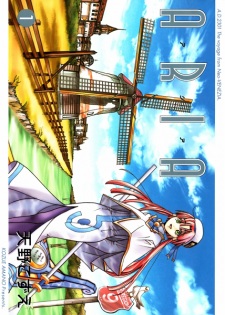
Alternative TitlesEnglish: Aria Japanese: アリア
Information
Type: Manga
Volumes: 12
Chapters: 67
Status: Finished
Published: Feb 28, 2002 to Feb 29, 2008
StatisticsScore: 8.691 (scored by 2752 users)
Ranked: #502
Popularity: #364
Members: 6,390
Favorites: 815 1 indicates a weighted score
My Info
Popular Tags
comedy fantasy sci-fi slice of life |
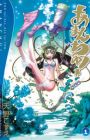
SynopsisOn the planet Aqua, a world once known as Mars, Akari Mizunashi has just made her home in the town of Neo-VENEZIA, a futuristic imitation of the ancient city of Venice. The technology of "Man Home" (formerly Earth) has not entirely reached this planet, and Akari is alone, having no contact with family or friends. Nonetheless, the town, with its charming labyrinths of rivers and canals, becomes Akari's new infatuation, along with the dream of becoming a full-fledged gondolier. Reverting to a more "primitive" lifestyle and pursuing a new trade, the character of Akari becomes both adventurous and heartwarming all at once.
(Source: ADV) |
Related MangaSide story: Aria Special Navigations Prequel: Aqua Adaptation: Aria the Origination Special, Aria the Natural, Aria the Natural Special, Aria the Origination, Aria the Animation
Reviews
|
|
superange128
95 of 116 people found this review helpful
|
60 of 67 chapters read
|
| Overall |
10 |
| Story |
7 |
| Art |
10 |
| Character |
9 |
| Enjoyment |
10 |
For the purpose of this review, I’m going to write a review for both people who have watched the Aria anime already, and who have not and are only reading the manga.
----
Review for those HAVE NOT watched the anime:
Aria is a very nice and relaxing slice of life manga that definitely deserves reading.
One interesting thing about Aria is that it can be a bit hard to recommend to other people. Basically you follow the 3 main characters: Akari Mizunashi, Aika Granzchesta, and Alice Caroll as they work hard to become great undines… which are basically tour gondola rowers.
While that might seem a bit odd, in the world they’re in, it actually fits pretty well!
Like most slice-of-lifes, besides the goal of becoming better undine, there is no big concrete “plot” to follow. Basically every chapter is a new adventure through the relaxing yet mysterious world of Neo-Venezia. A majority of the chapters consist of the main characters interacting with each other, or doing random things that people in regular life do today like visiting a coffee shop. However, there are also a bunch of “supernatural” events that happen throughout the story, and they usually involve Akari and… cats. But they’re still entertaining and they fits well with the fact that Aria is already a whole new world to the viewer.
Even if in most of the chapters there is “nothing that happens”, make no mistake, the characters themselves still get a good amount of development throughout the series, and it’s very nice slow and smooth just like the series.
Speaking of the characters, I would have to say every single one of the characters is very likable, including the minor characters. However, the 3 main characters and their mentors are easily the best characters in the show, and their likable personalities will definitely keep you interested throughout the story.
Overall, Aria is a very likable manga series with some nice stories, great characters, good character development, and it just knows how to make you feel warm and fuzzy inside. I definitely recommend reading it!
(This is my first review. If you can, If you put whether you thought this review was helpful or not can I have some constructive criticism of why you think so? Thanks!)
----
Review for those HAVE watched the anime:
Basically the majority of the actual content is about the same. There are a whole lot of differences though. A lot of the content featured in Aria the Animation is actually covered in the manga “Aqua”. The character “Ai” was actually a filler character in the anime, and does not appear in chapters where she would normally appear in the anime… except for the last chapter, since the author decided to put her in.
The actual order of the chapters is actually quite a bit different compared to the order the episodes aired in each season. Not only that, but you may get a few chapters that you saw in Aria the Natural then all of a sudden you may get a chapter that was from Aria the Origination or Animation or vice-versa.
As you go through the manga you’ll notice that there are a whole bunch of episodes missing.. that’s because each season had about 3-5 episodes of filler each.
Also, there are roughly 5-8 chapters that were not covered in the original anime. I’m actually a bit surprised that they left these out since all of them were great, but I suppose it may have been a bit hard to find a nice spot to fit them in. Probably the most important one (in my opinion) is a slightly better resolution to the whole “Cat Sith” ordeal. If you wanted more of this particular character, definitely read the manga for this.
One thing that I actually liked about the manga more was that it was a bit easier to read at your own speed, since the anime tends to go a bit slower than the original manga chapters (however you may or may not agree with me).
I’d say if you enjoyed the anime a lot, it definitely would not be a bad idea to read through Aqua than through the Aria manga.
(This is my first review. If you can, If you put whether you thought this review was helpful or not can I have some constructive criticism of why you think so? Thanks!)
read more
|
|
santetjan
48 of 61 people found this review helpful
|
60 of 67 chapters read
|
| Overall |
9 |
| Story |
7 |
| Art |
9 |
| Character |
8 |
| Enjoyment |
9 |
Poets and travel agencies abound that describe places as having a character of their own; books and anecdotes aplenty consider cities to be living entities. A place, then, is something that one may get to know better, and something familiar that seems to share - and have a share in - one's own life.
A depiction of little more than the life of characters within their setting, Aria has often been described as being fully character-centric. It is not nearly the only manga to have been given this description, but seldom has it been a more apt one - as long as the reader keeps in mind what might be meant with 'character' in the first place.
-= Characters =-
As far as the obvious characters go, the reader is presented with a small group of three young girls and their wider world, who have come together in the manga's setting for the sake of apprenticing themselves and learning a profession. There is no greater goal, no overarching deed that needs to be done, so that the manga can focus simply on their everyday lives as they strive towards graduating from their apprenticeship. While there is nothing particularly innovative or even endearing to a series showcasing daily life, there is in Aria's characters at least a sense of purpose, which means that there is room for them to work towards something and, hence, grow.
At first, what is presented is little beyond the wonders and tribulations of everyday life. Blessedly untroubled and unhurried as their lives are, the characters all tend to be shown in just about any chapter in more or less the same way, displaying how generic most of them actually are. The main character, Akari, is sweet, a bit of an airhead and someone who delights in just about anything; her friend Aika remains a bit boisterous while hiding a tinge of uncertainty; the third of the group, Alice, juggles a still somewhat childish mentality with a more mature work ethic and intellect; etc. In all, their thoughts, actions and emotions are far less extreme than is common in anime and manga, and while this tranquillity is certainly a major selling point of Aria that should be taken as an example of how to portray characters correctly, the uniformity of actions and reactions can be a bit predictable and, eventually, uninteresting.
That does not take into account, however, the slow, slight but very sure development of the characters over the volumes. Over the course of multiple years the three main protagonists are seen to slowly but certainly mature, becoming more steadfast and certain in their thoughts and behaviour, without them losing their personality or undergoing major, inexplicable changes - in short, their development reflects the actual maturisation process. In the same time, their mentors slowly fade out of their guiding role, gently coming to stand on a more equal footing with their protégés. As a whole, this development is highly satisfying and convincingly portrayed without having to resort to sudden influxes of disaster and trauma.
Still, most of the time the characters as such remain somewhat flat, not so much acting out of themselves as reacting to their environment. That's to be expected, as Aria as a whole makes very clear where it's focus lies: to depict the life in a fictional world. It's really no exaggeration to say that the world of Aqua, and more in particular the city of Neo Venezia, is the real star of the manga.
And what a world it is! Though it seems as if every one of the chapters of the manga shows a different part of the city and its wider surroundings, at the end it still feels as if there are hundreds of nooks and crannies left to explore, some right behind the corner. It's a rich, vibrant and very much living city, with a new 'wonderful encounter' at the end of each alleyway.
Many tools are employed to attain this sense. The simplest, and most powerful, is the very simple fact of temporal change. Seasons change and with them part of the economy of a city to quite an extent dependent on tourism; festivals come and go; people seen once before return later in a slightly different role; and slowly the characters themselves grow up, reflecting on the passing of the seasons as they continue their business. Another tool is the amount of people passing by, many of them nothing but background actors but all engaged in meaningful activity. Because they are so omnipresent the switch to empty back streets become very much pronounced and enhances the fairytale feeling of some of the chapters.
This fairytale aspect, in turn, helps make Aqua so nice to explore. With no visible crime or squalor, Neo Venezia becomes a little kid's adventure site, filled with delightful moments of discovery and mystery - every chapter containing the native and intelligent Aquan cats and their community in particular enhancing the feeling of mysterious yet benign otherworldliness.
-= Visualisation =-
The manga renders of all of this in gorgeous panoramas, capturing the glory of the city in black and white and many, many shades of grey, in such a manner depicting the very human and living alongside the hazy and mysterious. Not only, though, is the drawing style often simply gorgeous and is splendid use made of the effects of different greys, but Aria just might be one of the best manga out there in terms of its graphical style representing the focus of its story.
Most effectively, it does so by employing differences in scale between chapters, and even between panels. Though most panels, as with almost every other manga, are focused on the characters, showing only their immediate surroundings, ever so often the view widens to show whole buildings, streets, even entire city-scapes. At the same time, angles shift, and one looks up from below, passing the weathered stone of walls to see the sky visible above alleyways, or watches from above or far away the quays of the city. The difference in scale in such scenes is even more pronounced in the manga than in the more widely-know anime based on it, for the simple fact that a page of small panels may be suddenly followed by a two-page panoramic spread.
There is always at least one human figure present, but it's a rarity that the figure is placed in the centre of the shot: the small human person is present only at the sides, looking at something bigger than himself, forming only a small part of the bustling city, the brilliant sunrise or the pristine, newly discovered grounds that command the attention of both the eye and the story filling the chapter's pages.
Equally consistent is the use of backgrounds to emphasise the present focus. Whenever the story is more strongly focused on the characters, the presentation of the background takes a backseat. Colouring becomes more monotone, the environments are more generic (such chapters also more often take place indoors) and there is little differentiation between the buildings, squares and canals. Whenever the story becomes more strongly focused on Aqua and Neo Venezia themselves, though, suddenly there is added detail to all environments and, in particular, a far more pronounced contrast between light and shadow, displaying every little nook and cranny of the setting. Some of the stronger chapters strongly favour this playing with saturation of greys, giving every set of panels its own distinct mood.
Of course, beyond such tricks, the design of the setting itself contributes to its appeal. As a whole, Neo Venezia appears as a sun-drenched city, filled with buildings that are just weathered down enough to become scenic, quaint little alleyways and stairs leading up to yet another bright new spot. Fog rises up from unspoilt fields to enhance mystery, to clear whenever it is called for. Tools, modes of transport, accoutrements, everything is deliberately outdated, to evoke a setting of a more leisurely age. It has all the charm of a tourist brochure, but none of the downsides of the actual place.
Perhaps deliberately, perhaps less so, the presentation of Aqua as a world of exciting new vistas and people to meet, almost wholly devoid of any threat that should hamper exploration, is mirrored in the graphical design and presentation of the characters. It's relatively uncommon to see anyone appear more than mildly annoyed, while in the few instances that it does happen use is made of a deliberately deformed style that takes off the edge. Moreover, more so than in most manga, the design of the characters' bodies is devoid of extremes, and of angles: there is a very 'soft', curvaceous look to most of them. Yet, while a certain basic feminine attractiveness is present, it remains well shy of any implication of sensuality or sexuality.
-= A note on the anime =-
Here, a bit of attention should be given to a comparison of the manga with the anime based on it, as I consider the manga to be by far the better of the two. This at first seems to be a bit strange: Certainly the anime should be better able to use colour and movement to fully visualise the splendour of Aqua?
Well, no. For much of the first two seasons of the anime, the palette was somewhat garish, lines weren't as strong as they should be and the animation itself resulted in some distortions of perspective, something that is highly detrimental to the depiction of the city. Moreover, as a result of infusing colour, much of the play with light and shadow was lost, resulting in a Neo Venezia that was more strongly relegated to the background. Worse, exactly at the point where the quality of the animation went up, the focus of the anime shifted drastically, as more and more episodes were devoted to the characters only, with less attention given to the setting, meaning that the manga is superior in depicting the integration of the characters with their setting.
Much of this is the result of pacing. A few of the very best chapters in the manga, such as 49, are just a bit too dependent on single shots, meaning that any adaptation in anime format would have very little to work with: the chapter just cannot fit within an episode. Yet it is exactly chapters such as that one, showing Akari's reflection on her life on Aqua and her moving through the streets and the seasons, that most clearly show how much the characters form a part of their world, how all the 'wonderful encounters' are the result of both giving and taking and not solely the result of one-sided searching.
-= Final consideration =-
Aria as a whole is peaceful, charming and a tremendous joy to read, a manga to be thought of with contentedness and satisfaction. It matches a very simple premise and a lovely setting with a presentation that can be called mostly flawless in its integration of character and world, which by the end has become a living character of itself.
read more
|
|
Both are the most superb slice-of-life that i have ever read.
each manga has its own unique atmosphere and tells you wonderful storys that when they end you fell all fuzzy and warm inside.
Both are slowly paced slice of life series.
Due to its brighter atmosphere and the moé appeal of the characters, ARIA is a good choice for helping people get used to the genre before introducing them to YKK with its more mature and melancholy insights.
In truth, if one was to really think about it, ARIA and YKK are not actually similar from how it is presented or the feeling you get from it. However, the story's theme(?) is quite same - a slow, peaceful glimpse of a group of people who seem to find happiness from many small things. I think that alone is enough to try the other and experience both.
Storyline wise, they aren't at all similar, but YKK gives a similar vibe as that of Aria, both occuring in a futuristic world, yet giving a laidback, fantasy feel to it. Though Aria is much much better IMO, YKK is worth a second look.
Honestly there is no plot, you could say they're about nothing and turn away from them. That would be a mistake. These titles are relaxing and soothing reading matter that gives you sensesation that life isn't all about money, work even education. In both landscapes are feast for eyes. Main difference is in pace , both slow but YKK is more adult and based on inner thoughts of heroes while Aria is shonen slice of life with lot of moe. Same charm , different ways of achieving it.
both are relaxing slice of life with no action, but great characters and warm atmosphere.
These two are both very relaxing to read, nothing much happens, but together with the characters you can come to appreciate the beauty of the world. Definitely worth reading.
|
|
|
In the eyes of the innocent, the world is always full of wonders.
Both are slice of life comedies that are laid back. Both of them are definitely worth reading.
Very strong in the slice of life theme, neither has any real story, yet is better than many others with. Both Yotsuba and Akari see the world in a very innocent way, both very enjoyable. Yotsuba&! is more comedy oriented than Aria, though.
The genre of both is best described as slice-of-life. Both deal with the generally calm and relaxing details of a character's everyday existence. The chief similarity between Yotsuba and Akari is that both are eternal optimists who find wonder in everything they experience. Akari is able to reflect in a more sophisticated way on the wonders she discovers, but both characters' initial reactions are often comical in their intensity.
|
| No posts for this board were found |
Related Clubs, -The Order-, Aika Granzchesta Fan Club, Akira E. Ferrari FC, Alice Carroll, Alice Carroll Fan Club, Alicia Florence Fan Club, Amano Kozue Neko Club, Ara ara, Aria - FanClub, Aria Company, Aria Company, Athena Glory FC, Awesome Club, Blader's Lair, Claim a Smart Character Club, CNCFixins, Cogito Ergo Sum - Philosophy In Anime and Manga, Critics and Connoisseurs, Elyzion's Sanctuary, Green Haired Anime Characters, guys with ponytails!, Italiani su MAL, Iyashikei, Ka~ Cards Club, Kimi-chan's fanclub, Kipi, The Goddess of Cosplay Fanclub, Long Black/Dark Haired Guys, MAL Adopt a Pet! [CLOSED], MAL Astronomy and Astrology [AA] Club, MAL Hipsters, Manga > Anime, Manga vs. Anime, Marketplace Germany, Mizunashi Akari FC, PINK, Ponytail/Pigtail Fan Club, Prima Undines, Punyaa~! An Aria Shachou Fanclub!, Purple and Blue Haired Characters, seinen & josei, The Beret Fanclub!, The Kozue Amano Club, The Lighthearted Anime Club, Underrated Anime and Manga, [ S T E A M P U N K .], ~ WATER BOTTLE CLUB ~, ~Slit Cat-like Eyes Club~, Бессюжетные девочки
|
3 hours ago |
4 hours ago |
4 hours ago |
7 hours ago |
12 hours ago | |
Yesterday, 3:38 PM |
Yesterday, 3:01 PM |
Yesterday, 2:27 PM |
Yesterday, 1:21 PM |
Yesterday, 12:57 PM |
|
External LinksMangaUpdates, Wikipedia
|
|