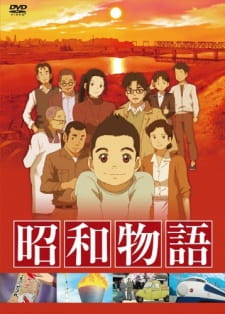
Alternative TitlesSynonyms: Showa Monogatari TV Japanese: 昭和物語 TV
Information
Type: TV
Episodes: 13
Status: Finished Airing
Aired: Apr 4, 2011 to Jun 26, 2011
Duration:
25 min. per episode Rating:
PG - Children
L represents licensing company
StatisticsScore: 7.021 (scored by 489 users)
Ranked: #28812
Popularity: #3031
Members: 2,229
Favorites: 1 1 indicates a weighted score
My Info
Popular Tags
No tags found |
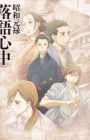
SynopsisDramatic story of the Yamazaki family during the year Showa 39 (1964), the year that Tokyo hosted the Summer Olympics. |
Related AnimeSummary: Shouwa Monogatari (Movie)
Characters & Voice Actors
Staff
Reviews
|
|
stanleygogo
19 of 36 people found this review helpful
|
11 of 13 episodes seen
|
| Overall |
8 |
| Story |
8 |
| Animation |
7 |
| Sound |
8 |
| Character |
7 |
| Enjoyment |
9 |
Even though series like Madoka or Suzumiya Haruhi made a great hit all over the world, one should bearing in mind that JAPANESE ANIME is a products of Japanese Culture, especially in this case.
Shouwa Monogatari is a story about post war Japan's most glorious days in 1964, when Shinkansen started rolling throughout Japan, and Tetsuka Osamu's Astro Boy first broadcasted on TV. If you have read Urasawa Naoki's manga 20th Century Boys, you should familiar with the Shouwa era, though 20th happened in the 70s.
After achieving a remarkable recovery from WWII, Tokyo was going to hold its 1964 Olympic Games and ready to join the group called "developed countries". Sounds similar? Yes, just like what the Chinese done in 2008, although it still claims itself "developing".
The Shouwa Monogatari take a look in the daily life of Yamazaki family, a typical core family - grandma, parents and 3 children - in the Shouwa era. You can see how two generations of Japanese living in the changing times. Like father Youzou - a veteran turned small factory owner - argued with his eldest son Taichi - a engineering university student - over the prospect of the family business while the factory automation is under process in those days.
Fairly speaking, Shouwa Monogatari is something specially presented for Japanese over 50. But it is also a good history guide for the post war Japan, and should help you learn more about Japan.
For those who have been to Japan, you may find some familiar scene in Shouwa Monogatari, like Ginza, Haneda Airport (though foreigner usually use Narita), and something never heard before, like Gatsby CM song (covered in Kimura Takuya's recent CM). For those who never been to Japan, you may still enjoy a great time in discovering the romantic Shouwa era by watching this "Televi Manga", Shouwa Monogatari. read more
|
|
ggultra2764
2 of 16 people found this review helpful
|
13 of 13 episodes seen
|
| Overall |
6 |
| Story |
6 |
| Animation |
7 |
| Sound |
8 |
| Character |
6 |
| Enjoyment |
6 |
For as much as Showa Era Story's premise seemed to interest me with its historical premise and the Olympics, I found myself disappointed and underwhelmed in how the anime chose to convey itself. The series is mostly a historical slice-of-life title focused on the everyday lives of the Yamazaki family leading up to the 1964 Olympics taking place at the time. The Olympics, for the most part, only serve as a backdrop on the everyday ordeals faced by the family from Kouhei's mischievous behavior to Yuko's complicated matters in love as a teen to the heavy ordeals that their craftsman of a father puts up with in maintaining his business. From my understanding, this anime was supposed to be made in mind for a much older audience who lived through and experienced the times in 1960s Japan and it certainly shows with the title's simple approach in the exploration of the Yamazaki family and their everyday lives. The anime does believably depict the cultural norms, technologies, major events and trends that were commonplace in 1964 Japan, which would be a plus for fans of historical-based anime.
However, the show's major issue for me is that it lacks a major hook to engage wider audiences considering the audience this was made in mind for. Kids on the Slope takes place in the same time period as Showa Era Story and had its engaging musical elements and complicated romantic developments to keep me hooked on the show throughout its run. Showa Era Story, however, is too mundane with its tone, which makes it kind of hard to engage me into caring for what takes place at many points of the series, making it somewhat dull for me to see throughout its run.
Visually, Showa Era Story is of standard quality for an animated title having vivid color and plenty of visual detail in the designs of its settings and characters. The animation is decent in moments of character movements and there weren't many occasions I recall still frames being used, though animation certainly wasn't the highest priority in the making of this series. Music in the series mostly consists of light piano pieces and popular music of the time period which were catchy to listen to throughout the show's run.
Overall, I found Showa Era Story to be a bit too much of an acquired taste for me, even with my interest in looking into obscure and not-so-popular anime titles. This was an anime that seemed to be geared too heavily towards its intended older audience as the lack of engaging elements and too mundane feel did make the series a test of tolerance for me at a number of points. Unless you have a huge interest in historical-based anime such as this, you may find yourself having difficulty in enjoying Showa Era Story. read more
Recommendations
|
|
Same time period. While SM always includes popular music from Shouwa 39 (1964), SnA focuses on Jazz. There is some romance for the college boy and high school girl in SM but this is mostly slice of life based on the real daily experiences of a working class family in Tokyo during the year of the Olympics. SnA deals with the romantic and personal entanglements of four high school students. Both series have a nostalgic feel.
|
|
|
Both works are set in the Showa period during which Japan experienced rapid modernization. Specifically, both occur around the time Tokyo hosted the 1964 Summer Olympics. While the two works have different approaches to introducing viewers to the Showa period, they portray the conflicts that occurred between the traditional Japanese society and those who would learn from Western cultures. These stories show the viewers how modernization affected the middle class who live in the suburbs of Tokyo.
|
Opening ThemeNo opening themes found, add themes.
Ending Theme#01: "Toukyou Gorin Ondo (東京五輪音頭)" by Haruo Minami (eps 1, 13) #02: "Utsukushii Juudai (美しい十代)" by Akira Mita (ep 2) #03: "Nagaiki Chonpa (Funabashi Health Center) (長生きチョンパ (船橋ヘルスセンター))" by Toshie Kusunoki (ep 3) #04: "Boku wa Nai Chicchi (僕は泣いちっち)" by Hiroshi Moriya (ep 4) #05: "Aa Ueno Eki (あゝ上野駅)" by Hachirou Izawa (ep 5)
#06: "Hondara Koushinkyoku (ホンダラ行進曲)" by Hajime Hana & Crazy Cats (ep 6) #07: "Koi no Vacance (恋のバカンス)" by The Peanuts (ep 7) #08: "VACATION" by Mieko Hirota (ep 8) #09: "Sudara Bushi (スーダラ節)" by Hitoshi Ueki (ep 9) #10: "Furimukanaide (ふりむかないで)" by The Peanuts (ep 10) #11: "Yoake no Uta (夜明けのうた)" by Youko Kishi (ep 11) #12: "Nanimo Iwanaide (何も云わないで)" by Mari Sono (ep 12)
more
Fansubbing Groups
Which fansubbers do you like the best? Click + to approve of their subs for this show. Click - if you don't think they did such a great job.
Recently Watched By|
05-18-13, 1:00 AM |
05-18-13, 12:54 AM |
05-16-13, 6:01 PM |
05-13-13, 1:26 PM |
05-13-13, 1:20 PM | |
05-12-13, 4:36 AM |
05-11-13, 7:14 PM |
05-09-13, 12:51 PM |
05-09-13, 5:43 AM |
05-08-13, 11:43 AM |
|
|