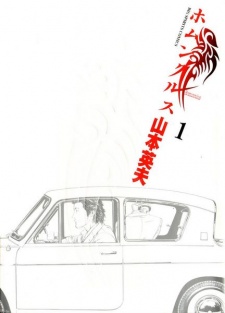
Alternative TitlesEnglish: Homunculus Synonyms: Homunkurusu Japanese: ホムンクルス
Information
Type: Manga
Volumes: 15
Chapters: 114
Status: Finished
Published: Mar 17, 2003 to Feb 21, 2011
StatisticsScore: 8.321 (scored by 2631 users)
Ranked: #3222
Popularity: #363
Members: 6,256
Favorites: 307 1 indicates a weighted score
My Info
Popular Tags
psychological seinen |
SynopsisTrepanation is the procedure of drilling a hole in the skull. It is said to increase the blood circulation and improve pressure inside the skull. It is also said to bring out a person's sixth sense, the ability to use ESP, see ghosts, move objects with one's mind. This is speculative fiction based on the concept of trepanation. |
Reviews
|
|
Beatnik
110 of 137 people found this review helpful
|
114 chapters
|
| Overall |
9 |
| Story |
10 |
| Art |
9 |
| Character |
9 |
| Enjoyment |
10 |
False face, false money, false women, false status, false life.
Susumu Nakoshi is a beanie-wearing homeless man living out of his beat-up car. He hangs out at a park with other homeless people though not being one of them. This man is actually more displaced than the vagrants he surrounds himself with.
The mystery of this man, his real identity and motives is the highlight of this brilliantly disturbing psychological drama. Each chapter peels away like an onion, the more you read the more layers are uncovered about Nakoshi and his place in society, his relationship to other humans and how he ended up where he is when the manga begins.
But that’s only the outer layers. Deeper inside are some very strange ideas at play. Author Hideo Yamamoto dabbles with trepanation and the concept of homunculus, via a kooky surgeon, Manabu Ito, willing to use Nakoshi as a guinea pig. The idea of homunculi is that they represent the subconscious mind. The question of whether they're 'real' or just subjective delusions hovers in the air all throughout the manga. Things are never simple with Homunculus, and the relationship between Nakoshi and Ito develops and complicates as brilliantly as all the other people depicted in the story.
There is a main narrative of Nakoshi's experiences connected to Ito's operation, the after affects that he has to deal with by himself, and the larger narrative of who Nakoshi really is.
Nakoshi's relationship with Ito is an engaging cat and mouse affair that gets increasingly complex throughout the story. Who the cat and mouse are up for debate. Who is using who, and what for? The relationship is unpredictable and always entertaining. Yamamoto avoids convention all throughout the story and the twists and turns will continually surprise you. It’s never for shocks however, the story just flows from one turn to another without letting up so at one point you think you've got a handle on the story and a character; then a few volumes later your entire perception is changed.
The after affects of the operation on Nakoshi's skull are as if he suddenly gained super powers. If so, Nakoshi is surely the most messed up superhero ever. His so-called power is to see people's inner hearts and minds via imagery that would make Picasso vomit. The art is inspired and so disturbing; Yamamoto's ambitions in the manga are admirable. We get many dynamic panels, artistic point of views and designs of human anatomy re-arranged or plain replaced with inanimate objects or beasts.
Nakoshi is seeing the world in a way most of us would rather not. On top of being aware of the distortions of the mind and sufferings of the heart, he has to work for the answers. It’s no use seeing a woman with a zebra for a body; he has to figure out what the symbolism means in order to understand her problem.
Every story has arcs, in shonen the climaxes are battles, in shoujo they're confessions, but in Homunculus the climaxes to scenarios in this manga culminate in surreal imagery with symbolism and allegory all over the place. Its psychological battles of wit and mental fortitude that make the manga so gripping, you never know what the author is going to throw at you next, whether through narrative or stylistically.
The actual main story is pretty compelling. Yamamoto takes a typical post-modern predicament and distorts it in such a way it feels fresh whereas if he'd just told the story straight without all this hallucinatory craziness it would just be clichéd po-faced stuff.
Homunculus should ideally have hit the seinen manga scene like The Matrix hit cinema. Both are about/products of the post-modern condition and have crazy effects while showing more possibilities of the medium they're in. Whether you like it or not, Homunculus is definitely unlike any other manga out there, with great visuals and substance to boot. read more
|
|
Veronin
19 of 24 people found this review helpful
|
114 of 114 chapters read
|
| Overall |
9 |
| Story |
9 |
| Art |
10 |
| Character |
8 |
| Enjoyment |
9 |
An individual knows that it is not status that defines who they are, but how they perceive the world around them.
This is quite the case for Nakoshi Susumu: former-salaryman turned vagrant. Homeless he may be, but he does not think or act as one normally would. Living life in the comfort of his cheap car, he is ostracized by the homeless men that he interacts with.
An intimidating young man appears before him with an offer — 700,000 yen in return for an experiment involving trepanation, the drilling of a hole in one's skull. While initially reluctant (and for good reason, one might add!), Nakoshi eventually undergoes the surgery and receives what is believed to be a supernatural effect of the trepanation: the ability to see Homunculi, the repressed feelings of an individual by closing or covering one of his eyes.
But is it really something supernatural?
Despite its premise, Homunculus still manages to remain firmly rooted in logic. It never truly answers whether Nakoshi's experiences are a supernatural phenomenon or if they are simply a hallucination. While the characters will often use psychology to rationalize these events, several questions are curiously left open for the reader to interpret. And at the end, both conclusions are still equally valid. It is duplicitous but never contradictory.
What Nakoshi sees is often disturbing; at times repulsive. These aberrations may be represented by something as simple as a person with no face or a body of a robot, while in other situations it may be something far more unsightly, such a man with a penis for a head, or Nakoshi seeing his own face on a woman that he is sleeping with. At times it is even worse. For all the manga's phallic and unpleasant imagery, though, none of it is ever used for shock value. It is there to effectively immerse the reader in the mental state of Nakoshi, a feat which Homunculus brilliantly achieves with its abstract and detailed artwork. Perhaps you might need a bucket beside you, though. Just in case.
Homunculus carries an exceptional cast of characters, with Nakoshi in particular being wholly fascinating. We do not know his past or his situation, but as his ability pulls him into invariably bizarre situations, these details slowly begin to piece together in a relevant, harmonious format. And while he does not change completely, he develops. He grows and matures as a person. Nakoshi begins to understand that his running away was meaningless, and rather than adhering to his detached and misogynistic persona, he simply wishes for a person that can love him without the superficiality of appearance and wealth. After all, it is not sex that defines happiness, but something less tangible— something more personal.
And then there is Manabu Ito, the one responsible for the trepanation surgery. An example of the proverbial "Don't judge a book by its cover", he is a man who acts completely contrary to his appearance. With piercings, bleached hair, and a flamboyant outfit, you would normally think that such a person would sooner stab than help you. But that is not the case. His appearance is a facade, much like Nakoshi's, which inevitably brings the two together as accomplices and eventually friends. The dynamic between the two is consistently engaging (and occasionally amusing) with Manabu concurrently receiving his fair share of development over the course of the story. You may even grow to enjoy his presence more than Nakoshi's.
Notably, the side characters are also fleshed out and given unique personalities. Even the homeless men or yakuza that Nakoshi interact with have their own backstory, resulting in a much more authentic feel to the characterization. Clichés do not exist within this manga.
The artwork of Homunculus is meticulously illustrated and oftentimes beautiful. No panel is treated as inconsequential. Subtle symbolism, such as winter leaves blowing across a busy city or Nakoshi assuming the fetal position in his sleep, provide as much depth to the art as there is in the story. You may also find enjoyment in discerning what each Homunculus represents. Though with that said, you can just as easily ignore the symbolism and choose to focus solely on the story instead. This is a manga that is as complex or as simple as you want it to be, but it will reward if you choose to analyze and dig deeper.
There's an unpredictability to the narrative which makes Homunculus such an engaging read. When you think that the series has peaked in absurdity, the next chapter will reveal something even more abstract or revolting. When there is a twist, a more surprising one will soon follow. All the way until the final pages. It is never tiresome and will always compel you to continue reading.
Beyond the surreal presentation is a distinctively macabre story. A number of panels are depicted in a gruesome fashion. For example, there is a scene where a character enters a public bathroom and performs self-trepanation with a drill, knowing that they may die or suffer brain damage in the process. What occurs is a brief moment of madness, with the character displaying a ghastly expression while blood rushes from their forehead. Such moments are not uncommon in Homunculus.
You will certainly be surprised by the ending, too. There is no traditional happy ending to be found here, nor is it an inherently 'bad' ending. It is neither and entirely ambiguous. At best, it will provide you with one of the most intelligent and poignant endings in manga. At worst, it will leave you scratching your head. But it will not be something to be forgotten.
What Homunculus manages to achieve in the end is an experience unlike any other. With its beautiful artwork, subtle interpersonal themes, brilliant characters, and macabre narrative— this is not a manga that should be passed up by anybody with an open mind. It is intelligent, it is entertaining, and most importantly, it is memorable.
While we may not always be satisfied with who we are, Homunculus shows us that it is how we think and feel that ultimately decides our role in life. And things never do remain the same. read more
|
|
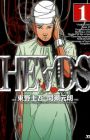
Both series are about a loner protagonist who makes use of his ability to percieve a visual manifestation of the darkness in people's hearts to help them with the problems they don't want to face, and ultimately has to face his own troubles. Genkaku Picasso is a rather shounen approach to the subject and comparatively optimistic, whereas Homunculus brings adult subject matter and ambiguous morality into the mix.
Both manga talk about a person with supernatural powers who help others with their hidden self
|
|
|
both are very dramatic, and have a "drilled in the head of somebody"-setting, and the chara-development is interesting
but there are 2 big differnce:
1. heads is a love-story
2. in homunculus, the guy get a "sixth sense" after the operation, in heads he gets a "second personality"
both have deals with brain surgery and changed personality
|
| No posts for this board were found |
Related ClubsDark Anime Club, Marketplace Germany, Mindfuck-Club, Moe and loli haters , My personal favorites., seinen & josei, The Derailers, The Mature Manga Club, Unusual is Better, Virus, [Facial Hair]Sexy[/Facial Hair]
|
56 minutes ago |
1 hour ago |
5 hours ago |
Yesterday, 11:22 PM |
Yesterday, 8:29 PM | |
Yesterday, 6:34 PM |
Yesterday, 1:44 PM |
Yesterday, 1:33 PM |
Yesterday, 1:16 PM |
Yesterday, 12:10 PM |
|
External LinksMangaUpdates, Wikipedia
|
|