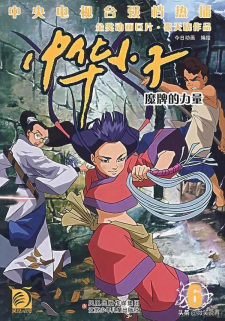
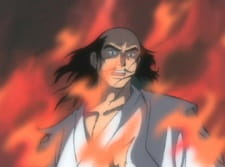
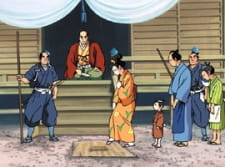
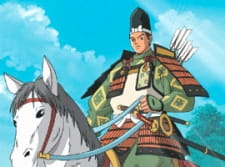
An animated trailer for a new Ninja Scroll project, revealed in 2012. Since no further news have surfaced regarding this project, the trailer is all that remains.
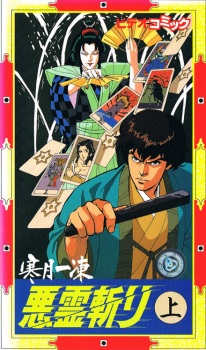
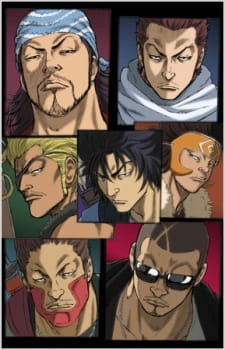
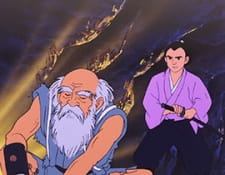
Set in the Henan Province of China during the 17th century, three teenagers are sent to a Shaolin Temple to learn the style of Kung Fu against a ruthless Demon, not seen since the Sui Dynasty, who terrorizes the province in order to search for two magic books to create more power and being stronger in world domination.
(Source: Wikipedia)
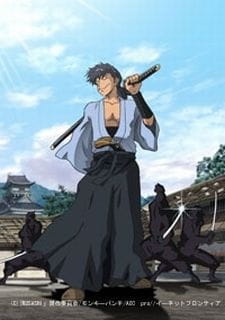
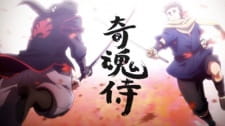
Two blade-wielding adversaries face off against each other, but neither of them can gain the upper hand. As the battle eventually reaches a draw, the only thing left to do is reconcile.
[Written by MAL Rewrite]
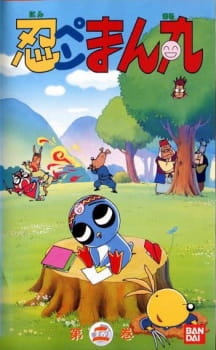
Manmaru goes to ninja school at Nenga, where foxes and raccoons study the art of assassination under a bear ninja master. He is soon thrown in to local rivalry between the Nenga school, the Koga (monkeys), and the Iga (dogs), as well as facing temptations from the Dobe, a group of dropouts from the Nenga.
(Source: The Anime Encyclopedia)
15th Century Japan is ravaged by constant wars, as the lords of the realm seek to rule the land. Having lost your father in battle, you are working in the restaurant he left your mother and little brother...when an evil magistrate sends your little brother away...to become a poison taster! To save his life, you disguise yourself as a boy and go to the castle in his place...but what awaits you there is so much more!
"I'll show you all...my divine rule!"
In the Sengoku era...love is the most dangerous battle of all!
(Source: Voltage)
This music video had an original 1974 version and a 1981 version. Both versions used the exact same animated footage, the only difference were the singers. The original 1974 version was sung by Maasaki Sakai and the NHK Tokyo Children's Choir. The 1981 version was sung by Saburou Kitajima and the Hibari Children Chorus.
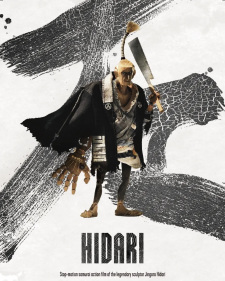
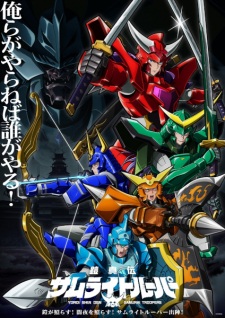
This is a pilot movie for a Polygon Picutres Inc. original project, a full CG SF action samurai drama movie originally announced at the 2005 Tokyo International Anime Fair. The project was scrapped and only the pilot remains.
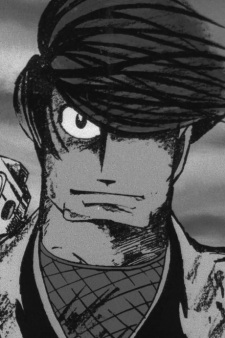
Kidnapped and rescued by a Ninja, Fujimaru has mastered martial arts over the years. Now he sets off on a journey to find his mother and also locate an old tome containing secret martial arts techniques.
(Source: AniDB)
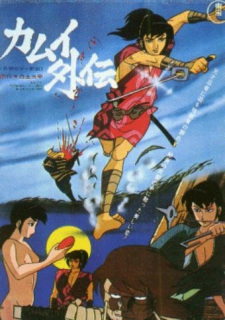
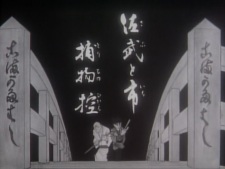
An animated pilot film for Ninja Bugei-chou released to the public over three decades later on Ninpuu Kamui Gaiden DVD volume 7.
The pilot film was created in 1969 as director Nagisa Ooshima was wanting to make a TV animation to build off his controversial film from 1967. The pilot was rejected by Shirato himself (the original comic creator the film was based on) and the plan was changed to animate Ninpuu Kamui Gaiden instead, a side story to the Kamui Den manga also created by Shirato. Though with this change, Ooshima did not partake in Ninpuu Kamui Gaiden's production.
We should never forget our manners no matter how much we may excel in martial arts. Learn lessons from Yoshichiro's failure.
(Source: Japanese Animated Film Classics)
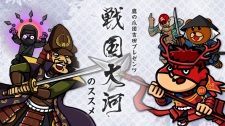
A collaboration between Eagle Talon and the mobile game Sengoku Taiga. Yoshida is playing the game and suddenly becomes Yukimura while the Chancellor becomes Ieyasu. Yoshida explains the game mechanics and Chancellor is ecstatic that Yoshida's advice for battle tactics help him defeat Deluxe Fighter's character in the game. Yoshida continues to talk about a special event running from April 24, 2019 - May 8, 2019.
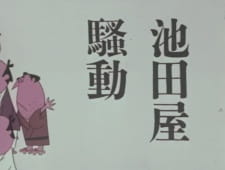
Independent film by Yanagihara Ryouhei, member of the Animation Sannin no Kai pioneer group of independent animation. It tells the story of the Ikedaya raid by the Shinsengumi from the point of view of the neighbors of the Ikedaya.
The blind samurai Haku can perceive that which cannot be seen by the eye. But he does not try to see the world that the eye can see. 'This world is the full of darkness' Attacked by thief in the dead of night, he lost both his parents and his sight. From that day on his faith in the world was gone.
(Source: IMDb)
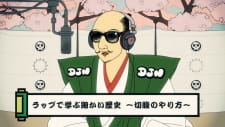
A promotional short for DJ Nobunaga's YYY event held on August 25th. The music event will feature 4 DJs (Nakata Yasutaka, Kz (livetune +), Tofubeats, and Banvox) and starts at 11pm. The anime short has the four DJs rap about Oda Nobunaga, the historical character, as a tongue-in-cheek nod to DJ Nobunaga presenting this event.
The 1st arc of the Chiyotarou Kodomo Gekijou program that aired on TBS. Every episode is a different Japanese fairy tale told with shadow puppet animation.
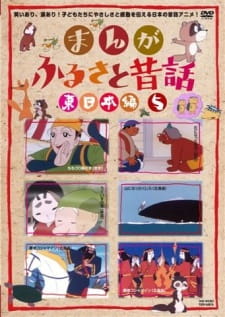
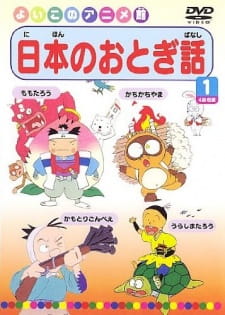
Folktales from Japan. Each episode was composed of two stories. The focus of the anime was to showcase folktales from different prefectures.
The original airing only reached 18 episodes (36 stories) before stopping, the show was rebroadcast at a later date and the final 8 episodes (16 stories) were shown. The anime was family oriented and funded by the Seibu Department Store chain with a "Seibu Family Gekijou" subtitle on each ep, perhaps to mirror the highly successful "Calpis Family Gekijou" adoring the World Masterpiece Theater anime program.
Legend has it that before the tunnel (Ao no Doumon) was built, people had to climb over the cliffs through which the tunnel is built to reach an important local shrine. The path was very dangerous and people regularly fell to their deaths. During the Edo period, a Buddhist monk named Zenkai, who had committed a murder in his earlier life, decided to build a safe passage for worshipers in order to atone for his crime. Beginning at the age of 49, he dedicated 30 years of his life to digging the 185 metre tunnel by hand, using only a hammer and chisel.
(Source: Wikipedia)
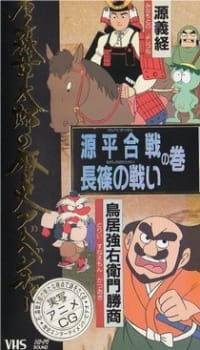
A two-part video series in which Dr. Teng (a researcher at the Time Institute) and his faithful kappa assistant Pasuke travel through time, first to the Battle of Sekigahara (1600) and then to the fourth Battle of Kawanakajima (1561). In the second installment, they then look in on the last stand of the Japanese underdog hero Yoshitsune in Hiraizu mi (1189) and then, after spending so much time on the Genpei War, suddenly leap several centuries into the future, to cover the first time Nobunaga Oda used firearms in battle, at Nagashino (1575) . A mixture of live-action and anime, described by Japanese sources as a "documentary with a touch of story," and presumably related in some way to Shotaro Ishinomori's multivolume manga history of Japan.
(Source: The Anime Encyclopedia)
This is the story of the extraordinary Benkei, who after having met his enemy Yoshitsune in his childhood (then named 'Ushiwaka') came to guard him as a lifetime partner in later years.
A series of children's OVAs covering various stories from old folk tales, books, and historical events. Each OVA has a various amount of stories featured.
The 3-part series commissioned by Japan Construction Training Center for educational purposes (to elementary schools originally) shows how civil engineering has developed Japan into the country it is now.
Part 1: Takes place in the Nara period and covers Chinese Buddhist monks which came to Japan and taught the people Buddhism and how to construct and fix bridges and pods to improve the lives of farmers suffering from drought and taxes in what is currently the Hyoujo Prefecture.
Part 2: Takes place in the Sengoku period and covers Takeda Shingen and how the Kai Province was always plagued by the violent river rains dues to the mountain region surrounding them to them causing the Kofu Basin to flood. He funneled man-power into developing a system of flood control using stone embankments and planting tree lines. The civil engineering project is also the foundation for the Roushigumi which later became the Shinsengumi in the Edo period.
Part 3: Takes place in the Edo period and covers the Meiji government wantin to catch up with the rest of the world's technology and hired many foreigners to implement the success of the Western world's industrial revolution. "Contract foreigners" (oyatoi gaikokujin) brought knowledge of: lighthouses, railways, ports, water supplies, improved flood control, and education. The railways specifically were handled by the British railway engineer Edmund Morel who was a mere 28 year old. The project was completed in 2 years connecting Tokyo to Yokohama in 1872 as Japan's first railroad and first two railroad stations.
Unfortunately Morel had tuberculosis and died in right before the projected completed but he advised many Japanese scholars and engineers on railway production in his own home til his dead which lead to the boom of ever-so-famous-and-successful Japanese railway system.
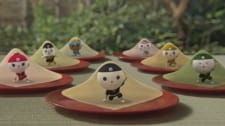
A CGI commercial for Honke Yatsuhashi Nishio which aired on TV. Yatsuhashi in general are a traditional Japanese confection made from rice, sugar, and cinnamon and a common souvenir from Kyoto. The ninja mascots have gone on receive a mobile manga, character goods, and stickers on LINE.
Bandai's new toy line for boys: Mushinin. It combines bugs (mushi) and ninja (nin). The anime follows the various characters as they train in their ninja arts at a local playground.
An educational film about Tokugawa Iemitsu. He was the grandson of Tokugawa Ieyasa (who founded the Tokugawa shogunate and ended the Sengoku era with his victory). Iemitsu is mostly known for his xenophobia and tried to close Japan to the world, this is known as Sakoku. The policies he put into place blocked out Japan for nearly 200 years which eventually caused internal strife and internal war in the Meiji era when Japan opened its borders again only to find it was economically, politically, industrially, scientifically, and culturally behind the rest of the world.