

"What we've got here is... failure to communicate." - Cool Hand Luke
Misunderstandings are brought about by a failure to convey what one truly wants to say. In many cases the problems caused are nothing more than trivialities, but in certain situations a misunderstanding can have damaging consequences. Relationships can end, families can turn against each other, friends can become enemies, misunderstandings can even spark wars.
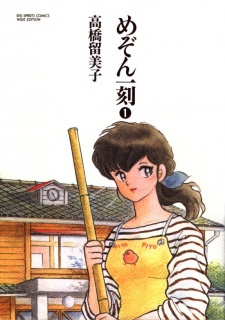
Maison Ikkoku is probably one of the most well known and influential romantic comedies in the history of manga and anime. Created in 1980 by the reknowned Takahashi Rumiko, the manga was serialised in "Big Comic Spirits" for its entire
...
7 year run. The story was adapted into a 96 episode anime in 1986, and also spawned a movie, three OVAs, and a music special.
The tale begins with Godai Yusaku, a student who is attempting to leave the the boarding house known as Maison Ikkoku as he feels that the residents there are hindering his studies and causing him to fail his exams. He changes his mind however, when a beautiful woman, Otonashi Kyoko, appears and tells everyone that she is the new manager.
Now, many people consider the story in Maison Ikkoku to be a straightforward romantic comedy with indecisive lead characters, and to be honest, this is a perfectly reasonable and logical conclusion - on the surface. What really struck me about this series though, wasn't actually the romance or the comedy, both of which were pretty decent. No, what really stood out for me was the fact that the main concept seemed to be about misunderstandings, in particular how they can force people to behave in certain ways over time (more on this in a bit).
While the majority of the story flows pretty well, one of the issues that some people have with Maison Ikkoku is that there is a large section in the middle of the series where it seems as though nothing in particular happens. While I can understand that perspective, I actually thought this was a rather clever way of highlighting how time can pass with nothing actually happening. Those of you who are familiar with Takahashi Rumiko's other works will know that she is an author who doesn't approach a story in a typical manner, and that her tales aren't often straightforward affairs.
That said, even I felt that the middle section of the series dragged on a bit too long, however I didn't really get bored of reading the series as the comedy made up for some of the shortfalls.
As far as the artwork goes the series shows its age in two main areas - the drawing style and the character design. This is particularly noticeable at the beginning of the series and may put some people off reading the series altogether. However, while the style may be typical Takahashi Rumiko, the series is particularly indicative of how her she developed during the course of the manga, and the latter half of the series is more reminiscent of much of her later work.
Even though the series does have some flaws with the artwork, some of the visual gags were truly inspired and the characters are a lot more expressive and emotive than one might expect from a series this old.
One of the biggest gripes people have with Maison Ikkoku is the characters. I've heard it mentioned that if both lead characters were less indecisive then the series could have been completed in half the time, and even I have to agree with that statement. However, I would have to add that certain ways of thinking, certain behaviours, become habitual in a very short space of time. Kyoko's inability to choose between Godai Yusakui and Mitaka Shun is one example of how the characters become accustomed to a certain situation - something that can happen in real life as well. The middle section of the series is the area where these habits are most prominent, and it's actually rather nice to see a mangaka acknowledge that any type of relationship can become stale when one is simply "going through the motions".
One thing I will add is that while both character display a clear inability to make a decision, Takahashi has made the effort to justify their indecisiveness to a degree.
As far as development goes, much of it occurs on the part of Yusaku and Kyoko, however a number of other characters are also given some depth over the course of the series, and while the amount may vary from one character to the next, the series is surprising in its ambition to give every character a moment in the spotlight.
In terms of enjoyment, Maison Ikkoku is one of those stories that you can love and hate at the same time. The romance and comedy are well handled, however the numerous misunderstandings that lead compound Yusaku and Kyoko's indecisiveness can become annoying for some people, and I will admit that the series tested even my patience on a couple of occasions.
That said, if you can work through the flaws in the plot, the poor artwork at the beginning, the numerous misunderstandings, etc, then what is left is a surprisingly charming series with some unique characters. One thing that many people may find though, is how similar Maison Ikkoku is to later romantic comedies, but given that many took inspiration/borrowed/stole outright from this series, it's understandable that there would be more than a passing resemblance.
Still, they do say plagiarism is the first form of flattery :P
 Alternative TitlesJapanese: めぞん一刻 More titlesInformationType: Manga
Volumes: 15
Chapters: 162
Status: Finished
Published: Oct 14, 1980 to Apr 6, 1987
Theme:
Adult Cast
Demographic:
Seinen
Serialization:
Big Comic Spirits Authors:
Takahashi, Rumiko (Story & Art) Statistics Ranked: #4682 2 based on the top manga page. Please note that 'R18+' titles are excluded. Popularity: #1035
Members: 18,047
Favorites: 741 Resources | Reviews
Filtered Results: 14 / 15
Sort
Your Feelings Categories 
Mar 24, 2010
"What we've got here is... failure to communicate." - Cool Hand Luke
Misunderstandings are brought about by a failure to convey what one truly wants to say. In many cases the problems caused are nothing more than trivialities, but in certain situations a misunderstanding can have damaging consequences. Relationships can end, families can turn against each other, friends can become enemies, misunderstandings can even spark wars. Maison Ikkoku is probably one of the most well known and influential romantic comedies in the history of manga and anime. Created in 1980 by the reknowned Takahashi Rumiko, the manga was serialised in "Big Comic Spirits" for its entire ... 
Mar 13, 2009
Maison Ikkoku: the famous, much loved romantic comedy (rom-com) that began its serialisation waaaay back in 1980. Its success resulted in a flood of manga being created about a college loser falling madly in love and, after many comical hardships, EVENTUALLY getting the girl of his dreams.
The story is about a group of individuals living at a boarding house that is - of course - called Maison Ikkoku ('MI' from this point onwards). Kyoko Otonashi, a 22-year-old widow still trying to come to terms with the death of her husband, moves in as the manager in an attempt to take her mind off her problems. ... 
Dec 23, 2017
While not the worst manga I have ever read, Maison Ikkoku is certainly the manga I hate most. A seemingly unthinkable opinion given the reviews and recommendations that seem to drip of this work in buckets worth. Any and all of those reviews seem to take what I view as the reasons that this manga is a god awful piece of shit as reasons that it is amazing and wonderful, or give the manga a great rating while acknowledging how glaring these issues are. I'll try to cover them, and I can on some of them understand it is simple a difference of taste, but
...

Oct 17, 2020
Its been 40 years since this manga was released onto this world. This #1, masterpiece manga by Rumiko Takahashi. Twas over a year ago that I watched the anime and about 9 months since I reviewed the anime, which I dubbed both a masterpiece and my favorite anime of all time. I'm now back to tackle the original source in celebration of both the 40th anniversary (which I’m a bit early on), and my ever lasting love of this series. This review will mostly be comparisons between the anime and the manga as quite honestly, a lot of what is to be said here are
...

Jan 23, 2015
Maison Ikkoku, Where the love blooms
Maison ikkoku is the perfect sample of the Romance Comedy that actually have Romance and Comedy, Unlike these days Romance Comedy which full of filler story and such, Maison Ikkoku is not that kind of manga. A full guarantee of Happiness , Misunderstanding , Comedy and Romance all the way in this Manga. Reading Maison Ikkoku was a great experience. For you that looking for straight drama in the early chapter, well i guess you will disappointed because the "real" drama starts at chapter 100. although you might found some little drama before chapter 100, but other than that its ... 
Jun 5, 2021
“ The woman I love burns with jealously, leaps to conclusions, cries, and turns to ice... but when she laughs... the world is mine.”
This series is perfect. Takahashi is a genius. I will never forget how this series has made me feel. I am sitting here after just finishing the final chapter and I am blown away. I know romantic comedy and slice-of-life isn’t for everyone, but if anyone is reading this who is considering it, please pick this up. Takahashi’s characters are incredibly real and this series is unlike so many others in my opinion. It kept me on the edge of my seat and ... 
Jun 9, 2016
"The woman you love... hey, what's she like?"
"The woman i love... burns with jealousy leaps to conclusions cries and turns to ice but when she laughs... ... 
Oct 12, 2010
Maison Ikkoku will have you both crying and laughing, both angry and at ease, and both content but wanting more. Takahashi Rumiko has set up the prefect formula in making a successful romantic comedy.
A lot of people will complain on how the series drags in the middle, and this is probably true. This series could have been about 100 chapters shorter and still had been as good. But at the same time this series could have been 100 chapters longer and still been as good. This is the charm of Rumiko. You might get angry at the countless number of misunderstandings that happen for ... 
Nov 24, 2019
TL;DR: Maison Ikkoku is the romance comedy that will make your heart go doki-doki and feel a little less lonely inside. Definite recommendation for any fans of the genre or Rumiko Takahashi in general.
L;DR When I first began Maison Ikkoku, I didn't have high expectations. Sure, I was coming in as a great fan of Rumiko Takahashi, but I guess the art and plot line of Maison Ikkoku didn't appeal to me. Still, I'm always in the mood for a good romance--so I began reading. Then, of course, I read more. And more. And more. Maison Ikkoku has so much heart. Just from reading, the emotions of ... 
Jul 22, 2020
NOTE: This review is in direct comparison to the anime and assumes that the reader has either seen the anime or is at the very least familiar with it. Some minor spoilers for the anime are inevitable and so reading discretion is advised.
*** Art: I have been watching anime since the mid-1990s. However, most of the spurt happened only in the early 2000s with the onset of fansubs and series like Naruto and Bleach. The reason why I bring this up is because the first impression that one gets when starting Maison Ikkoku is something similar when reading a work by Shakespeare. The language is weird with ... 
Sep 14, 2023
There were times I loved this story, and times I hated this story. You can say I have a love/hate relationship with this story, because honestly, the characters are some of the worst humans to exist, and the best. This manga is a paradox, it is both bad and good. It's a slog that you can't stop reading.
I don't like Shoujo, but I read it because it's a famous manga. I don't regret having read it, and now that I have I hope to purge it from my memory and never think about it again. It's a story that's worth reading once. Never again tho. 
Feb 29, 2024
"You take my place in the showdown
I'll observe with a pitiful eye I'd humbly ask for forgiveness A request well beyond you and I" - Joy Division in the song "Heart and Soul" from "Closer" Maison Ikkoku may not be the best thing since Citizen Kane, but personally great enough to resonate in my heart, impart quite strong emotions from me, to the point where I nearly had a meltdown at one point. It's your classic romcom, with the male MC seeming even more plain and flaccid than his counterparts from other romcoms, but we see a metamorphosis of relationship, silent, quiet but very deeply entrenched. Godai could have ... 
Mar 22, 2024
I'm finally finished the manga. It was great! Not perfect, here's my issues.
Everyone's an idiot. It made me beyond frustrated so many times. Not because I wasn't getting what I wanted in the story, but because it's just plain random easily solvable forced conflict derived from misunderstandings and often insane one in a million chance coincidences. They do this over and over. Now it's not like they don't have a reason to be upset over whatever problem they have, but there is a total lack of basic communication. Kyoko is a stubborn dumb lady who refuses to hear anyone's explanation. Godai is an idiot ... 
Oct 2, 2021
The guy who is supposed to be the love interest is a pervert, in fact all the men in the first five chapters that I read were. The men made a hole in one of the girls bedroom wall and watched her as she sleep and stared at her in her underwear. And the main guy felt another up and made very inappropriate comments. I'm not going to waste my time reading about horny men sexually harassing woman. Some people might say its just for comedy sake, its not meant to be taken serious blah blah blah. I take it the people who rated this
...
|


