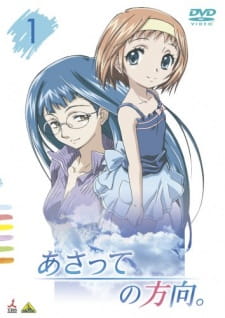


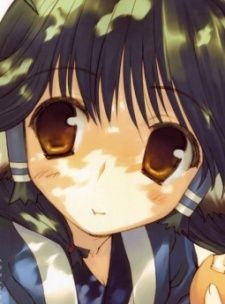
Alternative TitlesEnglish: Living for the Day After Tomorrow Synonyms: A Direction of the Day After Tomorrow, Towards the Day After Tomorrow Japanese: あさっての方向。
Information
Type: TV
Episodes: 12
Status: Finished Airing
Aired: Oct 6, 2006 to Dec 22, 2006
Duration:
25 min. per episode Rating:
PG-13 - Teens 13 or older
L represents licensing company
StatisticsScore: 7.251 (scored by 5673 users)
Ranked: #21412
Popularity: #1333
Members: 11,494
Favorites: 33 1 indicates a weighted score
My Info
Popular Tags
drama fantasy romance supernatural |
|
|
quakis
36 of 50 people found this review helpful
|
12 of 12 episodes seen
|
| Overall |
7 |
| Story |
|
| Animation |
|
| Character |
|
| Enjoyment |
  |
Characters/Development
The story then flows through both of Karada’s and Shouko’s life with their new ages, and how they come across the problems and emotions that take place. Karada is concerned about her brother, Hiro Iokawa, doesn’t know where she has disappeared to and to get him to believe that she is actually his little sister. We are shown that the two girls come to deal with their problems differently which then reflects their personalities a bit more to the viewer. Karada is shown to get depressed, having some emotional stress and brought to tears quite easily showing off more of her child like qualities. Shouko on the other hand seems to get on with what has taken place while being rather quiet and calm about her situation. However, what goes on inside her mind and what she is thinking may be a different story.
There are several other characters of which are involved in this short story that gives use a nice amount of different personalities between each of them. Karada’s brother seems to be quite a misterious guy whom of which covers his eyes with his hair quite a lot. Then you have Karada’s school friend, Tetsu, a young male who appears to care about her more than just friends. Then ofcourse his older sister and another female friend whom of which seem to be people that support the other characters. Throughout the twelve episodes we learn a little more about each one, their relations with each other and feelings about certain issues.
The story is developed quite well in twelve episodes although with a slow pace between them where Karada can face problems which arise that don’t always get resolved in a single episode. Some episodes we are given some flashbacks which add more to the development of characters with more insight to reasons and relationships, and how they came across adding a few new twists to the plot. The aren’t exactly too much of a surpise however, but not easily expected either. The series isn’t always full of emotional and sad moments since there are some happy times with some light comedy and romance added in their too.
Animation/Scenery
The art uses a lot of soft, warm colour tones throughout the series, which suits the overall sunny weather nicely and keeps a consistant blend between everything. Character designs were rather good but there was nothing exactly unique or special about each one. There aren’t really any similarities though, which keeps a distinctive look between them, hair and clothing styles are the most noticable area for this. Hiro’s character design was rather depressing during several scenes where you rarely see his eyes and the facial hair suggests a lazy mood to the guy, while Karada as a child smiles quite a lot using a few more brighter colour tones for her hair and clothes adding a more cheerful look to her character. The child and adult versions of both Karada and Shouko have a resemblance between them so the viewer can still tell they’re still the same character which was also another good point as it added a bit more realism to that event.
Scenery has also been done rather well keeping the consistant blend of the warm colours in them to detail each of the scenes and make sure the characters fit into them. They aren’t exactly over detailed but give the viewer a general idea of the location or setting the characters are currently at without using any lines to define them more. The art almost feels much like paintings in many areas throughout the series, but overall they were decent with a beautiful exotic look to each one of them where light helps add to the atmosphere quite a bit. Animation is moderate throughout without anything too special to note about, where simple actions such as talking or moving are again done in a simple manner.
Audio/Music
Again to be brief in this area there doesn’t seem to be any major problems with the sound anywhere in this one and keeps a moderate approach to the usage. No problem with the voice acting either which some well chosen voices that worked and suited well for the characters. Both the opening and ending themes are calm in tone, while the latter has a more slower pace to it. Bother were good songs, enjoyable to listen to especially the relaxing ending which uses a fitting sequence at the end of each episode. Background music seemed to be calm melodic tracks but I yet again cannot exactly remember much about them.
Conclusion
An interesting story mixed with its emotion and drama, during a slow pace per episode with some developments between the characters. Decent background and character art using a lot of warm colour tones and blends, moderate auid and animation throughout. An enjoyable watch. read more
|
|
MoMo-Da-Gr8
40 of 57 people found this review helpful
|
12 of 12 episodes seen
|
| Overall |
10 |
| Story |
10 |
| Animation |
9 |
| Sound |
10 |
| Character |
|
| Enjoyment |
10 |
Never before have I ever been glued to an anime as much I had this one. I started it, and for once paid attention to the first episode from start to finish, no pausing. Its THAT good. Its a shame not many people watch it...
--
STORY - 10/10
Karada is a young girl who hates being treated like a child and who wishes to be grown up. Shoko is an aloof, unhappy young woman who has just returned from overseas. When they meet by coincidence one night at a local shrine where they both like to make wishes, they exchange ages.
Ive never seen an anime where people exchange bodies, minds or anything. So, seeing something like this was a new deal for me. However, the plot is so much different than just switches. It may move really slow at times, but the character development and story is amazing. The story focuses more on Hiro and Shouko's relationship, and the drama that Harada is put through after just being 12 years old. I even cried all the way through one of the episodes.
ART 9/10
I really liked the art, its just... The entire time I was watching it, i kept thinking "Karada looks like Ahiru from Princess Tutu..." I dont know why. There really wasnt anything special about the art, its the typical shoujo. :D
SOUND 10/10
I think... Out of all the anime Ive watched, this one had the best BGM OST. The piano pieces played were beautiful and fit the show perfectly. The voices where amazing too, since the same actresses played the younger and older character. Im seriously hooked on the opening song as well, Suara's voice gives it a unique feel.
CHARACTERS 10/10
The character development in this story was amazing. Without it, the story would be dull and not even worth watching.The characters where great too. It amazed me at how TINY Harada was, and she was 12! Shouko, the dismissive one... Well I didnt like her much. Now, my favorite character was Tetsu. 6th grade, mistaken for a highschooler. He was too CUTE. and for the Kansai-Ben fans [ahem... moi~] Tetsu spoke it, so thats a big plus. Hiro was adorable too, for a 28 year old. And for being a junior high student, Kotoko wore some SKIMPY~~ outfits. But other than them, all the characters where lovable.
OVERALL 10/10
I watched this ALL in one sitting. (Well ok, I got up to make food. A girl's gotta eat) If you like light-hearted, tear wrenching shows about REAL life with a hint of magic, then this one is for you. Actually, even if you DONT like shoujo themes, you might even like this. Its for everyone! :D read more
|
|
MugenPein
6 of 14 people found this review helpful
|
12 of 12 episodes seen
|
| Overall |
10 |
| Story |
10 |
| Animation |
9 |
| Sound |
6 |
| Character |
10 |
| Enjoyment |
10 |
I'm not usually into the whole twelve episode thing, I normally don't think it's enough time to tell a good story, but did this prove me wrong. Asatte no Houkou is an extremely emotionally complex anime and I was seriously taken by surprise when I learned that by the second episode, because it starts you off making it seem like it just might be a loli anime, but if you keep watching, which thank goodness, I did, you'll learn that not only is she no longer a child after the first episode, but this entire anime is about everyone, including the adults, learning to behave like adults.
Anyway, Asatte no Houkou is about a twelve year old girl, named Karada Iokawa. She's unusually upbeat considering all the crap she's been through over the past four or five years. At least, it seems like she's upbeat. When she was eight seven or eight, she learned that her parents and older brother are not biologically her family, we never learn what happened to her real parents, we assume they're dead, but a year later, her adoptive parents die. Shortly after, her older adoptive brother comes from America to take care of her. Unfortunately, Karada is extremely bright for her age and knows her brother is in a lot of pain over everything he left behind while he was in America to come take care of her. Over the next four years, the guild of her brother having to take care of her all the time and having to work so hard to do so, torments her. Eventually, she meets a woman whom was a friend of her brother in America, but the woman, Shoko Nogami, is very cold to her to Karada and treats Karada like a child so much, Karada runs away. Feeling guilty, with Karada's brother angry at her, she looks for Karada and finds her at a wishing stone near the woods. When Shouko sees Karada praying at the stone, she asks if she can wish too, and sits down next to her. As they sit together, the two wish for what they desire most. And, this is the part that got me to keep watching, When they opened their eyes, Karada had taken on the body of a 20-26 year old girl and Shoko a 9-12 year old girl. I know that this has been done before tons of times, like with the thirty remakes of freaky Friday and all that stuff, but it was really interesting to see the direction they took it where they didn't switch bodies, just ages.
From there on, the anime is surprisingly real. Like if that were to actually happen to someone, everything that followed was exactly like what you would expect in real life.
So the two of them hide out for a while and everyone thinks they've gone missing. The police aren't involved, since they think Karada's with Shouko, but still, everyone looks for her.
the anime is all about Karada learning how to appreciate her childhood and Shouko learning how childish she behaved as an adualt. Shoko learns that she was jealous of Karada, for having taken her boyfriend away, Karada's brother, and Karada learns that even if she is an adult, her brother will always want to be in her life and that she's not holding him back from anything.
There’s also a character, Tetsumasa Amino, who is Karada's friend from school. He's huge for his age and looks like he could be in his late teens to early twenties, which makes him look really bad since Karada was extremely undeveloped for her age and looked six at the age of twelve. But anyway, he's really cool.
He and Karada are in love and he spends nearly the entire series looking for her, even though he meets her on a number of accounts he doesn't recognize her. He and older Karada spend some time together in the last few episodes of the series and he confesses his love for the younger Karada.
Just to spoil some stuff, everyone finds about and comes to believe that Karada and Shouko had swapped ages, which is really cool since usually in those age swapping movies no one knows but them and there's a cute ending that isn't the least bit corny, which made me very happy since I was expecting a very cheesy ending.
All in all, it was pretty flawless for what it was going for. I can't really think of anything they did wrong other than in real life the police probably would have gotten involved. But again, it's a very real anime and that's why I probably appreciate it so much. read more
|
|
jimbo1023
11 of 29 people found this review helpful
|
12 of 12 episodes seen
|
| Overall |
6 |
| Story |
7 |
| Animation |
7 |
| Sound |
8 |
| Character |
6 |
| Enjoyment |
6 |
I watch all of this anime as it was coming out, and I was not entirely pleased by it. The graphics worked, but I wasn't impressed. They seemed rather drab and uninviting. The characters also seemed to blend into one, with only a few of the secondary characters actually standing out. They all had the same set of emotions which consisted primarily of feeling bad for him or herself. Whether about the past, present, or future, all they did was look off in the distance and sigh.
It was a bit slow, but it was only twelve episodes, so it was not unbearable. If they stretched the series out any longer, I probably would have bailed half-way through.
My major gripe with the anime is the direction they took it in. The main plot revolved around an older woman turning into a child, and a child turning into an older woman. Now, with a plot like this, it sounds like a great opening for a comedy. Originally, that's what I was looking forward to. Instead, we are given an anime that shovels on lame drama about the two struggling to hide themselves away from everyone, and generally complaining about their state. I was ashamed of the series. They could have put in so many laughs.
The reason I watched the anime the whole way through is not because I loved it, but because the story was gripping. You wanted to find out what happened as you watched it, but that was about the only reason I hung on. If you are into dramas, great. You might find Asatte no Houkou enjoyable; but stay away if you are looking for a light-hearted comedic romp. read more
|
|
sora_yume
3 of 9 people found this review helpful
|
12 of 12 episodes seen
|
| Overall |
9 |
| Story |
8 |
| Animation |
7 |
| Sound |
8 |
| Character |
8 |
| Enjoyment |
9 |
Karada Iokawa hates treated as a kid and she secretly wants is to be a grown up so that she would no longer be a burden to her older brother Hiro.
On the other side, Shoko Nogami, Hiro's ex-girlfirend, envies and somehow hates Karada (I guess..) 'cause Hiro left her in America just to look after her younger sister who lost both of her parents, even though, unknown to Karada, they aren't blood-related. Unknown to herself, he wishes to be a child.
One breezy night, when they meet accidentally at the shrine where they both make their wishes to the wishing stone--the thing Karada believes that grant wishes, they suddenly exchange ages--Shoko's body becomes a body of an eleven years old while Karada became a grown up!
How will they accept what happened to them?
Started airing in Japan between October 5 and December 21, 2006 on TBS,and was produced by J.C. Staff, Asatte no Houkou (A Direction of the Day After Tomorrow) is a 12-episode anime based on the manga of the same title penned by J-ta Yamada.
What makes it appealing is its smooth graphics--totally an eye candy!, awesome and alive-looking characters' eyes and most of all, its unique story.
Though I MUST ADMIT it has some usual anime cliches. And the story is so simple--no furthermore complications. It's disappointing 'cause if they focused on it, maybe they can make it much better. Since it is predicting and easily can be forgotten.Well, most slice of life and short anime are really forgetful.
The opening is good but not worth downloading. The ending song is a lot better.
If you want a relaxing slice of life with a bit of drama, then,why not give it a try? read more
|
|
tentacle_raep
4 of 16 people found this review helpful
|
12 of 12 episodes seen
|
| Overall |
8 |
| Story |
9 |
| Animation |
7 |
| Sound |
6 |
| Character |
8 |
| Enjoyment |
9 |
Yes, the first thing I thought about was Tom Hanks.
Shoot me.
This is a oft forgotten little gem of an anime about people who have fallen out of love with one another, and the discomfort of reunion.
The plot focuses on two girls Karada and Shoko. Karada is a young girl whose adopted brother, Hiro, abandoned her to travel abroad, where he met Shoko--another Japanese studying abroad. Through a chance wish at a shrine the young Karada gains the body of an older woman and Shoko becomes a young child, both seemingly of a desire to gain something they've lost.
The story deals with guilt and selfishness, as all of the characters seem to be motivated by their own ends and desiring their lives to return to an ideal that cannot be regained. In a very symbolic way Karada becomes a childlike adult woman representing the way Shoko was when she wanted to return to Hiro and Shoko is a mature adult child (representing the abandoned Karada).
This is set along the backdrop of sleepy rural Japan one beautiful summer and focuses on how everyone deals with the fact that we all do selfish things, hurt one another, and we can't just all hug and make up and everything will be better again.
Karada vanishes because she is now an "adult," Shoko is now a child but with the mind and desires and inclinations of a woman, creates an additional awkwardness between the characters (in the way of a physical distance) and drives them away in an outwardly symbolic manner of what was inside their hearts.
Hiro, at the center, iis neither seen as bad nor good in the way he hurt the two main characters, as we can't make everyone happy at once, including ourselves. And there lies the central premise, trying to undo these selfish transgressions by acting rashly only leads to more heartbreak and sorrow.
These complex interactions make this one of my favorite anime--mostly due to the subtle undercurrents to the characters. The stark presentation and complex resolution only add to its realism, even if the premise (at least symbolically) is pure fantasy. read more
|
|
Arch-Defender
1 of 9 people found this review helpful
|
12 of 12 episodes seen
|
| Overall |
8 |
| Story |
7 |
| Animation |
8 |
| Sound |
7 |
| Character |
9 |
| Enjoyment |
9 |
At first, after reading this series was about two girls who switched body and how the youngest now had to adapt at being an adult, I thought this was going to be an ecchi and humoristic title. However, I could not have been farthest from the truth. This is a sweet show about a young girl whose wish turns horribly wrong and while their might be some instances of humor it is mostly about their hardships and their relationships.
Opening sequence: 7
Ending sequence: 2
My Age Rating: AA: Safe title for the most part.
Review based on the Animax English dub.
While watching this show, at first I was turned off by certain characters who seemed either mean, for lack of a better word, or just stupid, though as the story progresses the first impression I had of these characters was misplaced. As the characters' past is revealed and their past relationships explained it becomes quite obvious as to why they acted a certain way at first. While one could say the main character as the basic moe atitude (crying often, very kind, cute, always apologizing...) it is also not made to be the basic moe character, her atitude stands from the fact that she is, after all, a child. I personally found her to be quite a good character. The other main cast is composed of interesting characters each with their own unique personality which can't be said from every show we see these days.
The story, is of course, not based on any particular chain of important or desastrous events but on the development of the characters' relationships and the good as well as the bad times they have together. This show as friendship, hardships, romance and a view of how difficult the real world can be for a child who as no idea of how it works out there.
The main theme of the show was a look at a child's desire to grow up. We often encounter children who wish they could be adults already without knowing the hardship, maturity and responsabilities that come with it and this series decided to grant such a child a shot at being a grown up. It demonstrated quite well how children should stay children until they grow up on their own and made an examplary job of portraying how children simply can't handle adult situations. But having also returned an adult in the body of a child they covered another area which I'm surprised and pleased they did: how adults sometimes forget the basics in life which children are so attached to when they're young. One of the characters is returned to childhood and learns through the experience the simple things that were missing from her life, helping her grow as an individual.
Living for the Day After Tomorrow is quite an enjoyable show that keeps you wanting to see it until the very end, I had waited a long time to be able to watch it and I am quite happy I did. I recommand it to those who prefer shows concerning the characters and the hard times they have to face. read more
|
|
rafi160
1 of 11 people found this review helpful
|
12 of 12 episodes seen
|
| Overall |
10 |
| Story |
10 |
| Animation |
9 |
| Sound |
10 |
| Character |
9 |
| Enjoyment |
9 |
What can I say more about this anime , I loved it !!!I was glued to the beginning of the story and they throughout the episodes you are the character development and their past. My heart fell in love with Karada and younger shouko, then the surprise at the end with the friend shouko made was a great add. I was really in tears on the family death and leaving the loved one parts... I'D love to see a OVA of this series just to see the loving relationships the characters have now which was glintly shown in the end
|
|
Last_Sinner
1 of 4 people found this review helpful
|
12 of 12 episodes seen
|
| Overall |
9 |
| Story |
10 |
| Animation |
7 |
| Sound |
10 |
| Character |
10 |
| Enjoyment |
10 |
Remember that feeling when you were young and taking in all that was reality, yet despite the freedoms that came with being young, you resented the restrictions that also came with it and wished you would grow up to an adult as soon as possible? Or that when adult life gets too harsh, you wonder what it would be like to be young again? Well, what if it actually happened? Are you sure it would be everything you thought it would be? Would you regret the consequences of your decision? Could you cope with the sudden change and the impact it would have on those closest to you?
In the October season of 2006, after the airings of the heavily hyped Melancholy of Haruhi Suzumiya and Fate/Stay Night, J.C. Staff produced a rather intriguing series called Asatte no Houkou (Living for the Day After Tomorrow on release by Sentai), based on a manga originally created by J-ta Yamada, which explored the scenario of age changing. The story revolves around two females who have never met before but are linked in more ways than they know. Karada is a middle schooler who is rather small for her age but very likeable, one heck of a cook and very positive in her approach to anything in life, but the fact her brother, Hiro, had to return from overseas four years ago to take custody of her when her parents died, is something she’s never been able to live with. The older female is Shouko, in her late 20s, somewhat cold and empty. But there’s a good reason for that. Shouko was once Hiro’s long-time girlfriend in America, then four years ago Hiro left Shouko behind without saying why. Present day, Shouko returns to Japan in search of a new start in life. Crossing paths with Hiro and the person responsible for making him leave her life is the last thing she wanted. Still, Shouko does make an effort to befriend Karada. As they cross paths again later that night near a revered small shrine, Karada’s secret wish to grow up so she’s no longer a burden on her brother comes true. Problem is, she wasn’t quite prepared for it – kid mentality in an adult body is a combo set for trouble. Throw in the fact Shouko is converted into a young girl and things get pretty complicated fast. What ensues is an inspiring struggle of the two adjusting to this shocking turn of events with Shouko having to be the adult figure despite her physical limitations (precocious girl and then some) and Karada having to learn the ropes of being an adult on physical and emotional levels. The entire series takes place over a full summer period, aka 3 months.
Now this may sound like a very serious title to you. In part, it is. But with a fairly light-hearted approach, pretty animation, a soothing coastal town setting (not too different from Kamichu!) and a very potent character cast with great depth, Living for the Day After Tomorrow is a feel-good series with some drama to give it an edge. Within the one-cour time format that J.C. Staff was given for this adaptation, director Katsushi Sakurabi gets the pacing just right, which is important for a series you expect to get resolution of the sole plot line by the end. In fact, the pacing is done so well there isn’t a wasted character or event in the show. Furthermore, each episode ends on a note that leaves something hanging in the air for next time – a good practice when you’rve got material that is more dramatic. Something important is always happening but the moods vary as required. In very recent times, the majority of series have left major plot lines unfinished or chose to completely ignore plot whatsoever. So to see this show achieve what was laid down from the first episode is quite refreshing.
The character designs by Ikoku Itou (Princess Tutu, Sailor Moon S) are reasonable but not great. This is J.C. Staff after all – their production quality standards have slipped, plus in a year the first Nodame Cantabile series came out, you get the feeling this got a fairly small budget to be made. The level of detail within the animation and the background art is the one major issue with this show. A decent budget would have made it look magic. Still, it’s not that far off the mark. The animation is generally pretty, the art is relaxing, light and water effects seem accurate. It’s merely an aesthetic imperfection, which really shouldn’t be the one thing to stop you from watching this show.
The soundtrack by Shinkichi Mitsumune (Revolutuionary Girl Utena, Rozen Maiden) is another of his usual orchestral efforts and is just sublime. Piano and keyboards play a very prominent role in the in-episode pieces as well as the opening and ending themes, which is appropriate since they’re very apt at instilling nostalgia and connecting with memories to enhance key moments. Thankfully piano is not always dominant – Mitsumune varies the pieces with use of the full orchestral repertoire which makes for very different pieces by merely changing timing or one instrument. It’s one of the best soundtracks I’ve heard in a long time. I’d listen to a good portion of the soundtrack to this show on a regular basis. The two main female seiyuus – Ayumi Fujimura (Eiko in Squid Girl, Cecily in Sacred Blacksmith) as Karada and Shizuka Itou (Hinagiku in Hayate no Gotoku, Haruka in Amagami SS) as Shouko face an interesting challenge to switch between the child and adult versions of their characters, but they do it with such ease. Ami Koshimizu (Kallen in Code Geass, Horo in Spice and Wolf) makes yet another stellar performance with her amazingly broad vocal range as the perky, upbeat Kotomi.
The lead characters, as well as the secondary, all have issues of some sort and a claim to the overall scenario. Karada is secretly unhappy with the fact Hiro only lives for her and that he doesn’t have any drive for anything else in life. Shouko is still in love and is angry Hiro seems ignorant of the fact, not to mention he hasn’t told Karada about what happened between the two of them. Hiro is a real shell of a person – the guy has good intentions but his actions let him down consistently. Testumasa (nicknamed ‘Crispy Amino), one of Karada’s friends from school, is infatuated with her and quickly becomes obsessed with finding her after the age switch. Touko, Tetsumasa’s older sister, has her hands full coping with his antics and Hiro’s brooding. Then we have Kotomi, who is somewhat a drifter and very spontaneous in her actions.
But what is truly the best part of Living for the Day After Tomorrow is the story and the character chemistry dynamic that comes from all those issues. Karada and Shouko make for a great duo – they fill the missing parts the other had before they met. Karada’s optimism and drive gets Shouko out of the dumps while Shouko provides the advice and maturity Karada wishes she had. Karada’s actions later in the series may confuse some people, but ultimately she knows that Hiro must be able to live for something more than just her and seeks to find a way to make it happen. Shouko’s light venting at Hiro is just hilarious – an ex-lover in a kid’s body trying to pound the guy who left her yet can’t – priceless. Overall, Shouko is probably the biggest victim of this all, yet she is the one who always keeps a cool head, acts rationally and is able to resolve problems. Her resiliency and compassion are drawn out from her bitter surface by Karada and it is simply uplifting to see Shouko’s soul get the long overdue healing it really needed. Yet it is insanely funny seeing Shouko do it in a young body and the limitations it comes with. Kotomi acts as a great foil for Tetsumasa’s desperate longing, who realises he still has some major growing up to do. Touko is a no-nonsense woman who provides the stability and shoulder to lean on the guys need. Kotomi in general is the catalyst that draws everything together for the reality checks everyone needs to have. In the latter episodes, Kotomi’s mentor is one intriguing guy with a very unique yet refreshing approach to life and adds the finishing touches to drive home the lessons the lead characters need to learn. The leadup from the startling beginning to the heart-warming finale flows seamlessly and the plot is resolved in full. It’s rare to see a one-season series wrap everything up well – it’s very refreshing to see.
Ultimately, what really gives Living for the Day After Tomorrow an edge for me is the respect it has for its characters and the maturity it approaches a very delicate scenario with. There is a light amount of fanservice but nothing inappropriate. People that need to grow up are not let off lightly, unlike certain male protagonists in recent years. Most of all, Karada’s journey could easily have been a trainwreck. For a fair while, I was worried Karada would take a path similar to Nagisa did in the latter part of the original Clannad series. But Karada’s determination to become stronger as a person and to be able to say to Hiro ‘I’m not going to be little and dependent forever, so don’t put your life on hold for me forever’ is very admirable indeed. Shouko’s gradual softening of the heart, but not of her tenacity and will, is a testament to what a strong, capable woman she is despite the hardships life has dealt her. With all the issues and the flaws this character mix have, it could have turned into an angst-filled mess in no time. But instead the story maintains an upbeat view on things and eventually, after a lot of heart-wrenching bends and some hard lessons, things are resolved in a plausible, fairly realistic way. And that is the other thing I enjoy so much about this series. The characters feel like real people and not like overused moe archetypes or invincible people that overcome any extremity with ease. The level of escapism within this show is relaxing but not a bubble blocking out what comes with life.
In short, Living for the Day After Tomorrow is a rare example of a great story fulfilling everything it promised to from the start, conveying it with a very compelling cast of characters and executing it brilliantly. While the visuals may not be stellar, they don’t drag the series down. If you are in need of a feel-good story with some real bite but portrayed with maturity and goodwill, this is one series you can’t afford to miss. If you are one of the lucky few to have seen this, do let other people have the chance to see it for themselves. I only found out about this show due to a friend who lent me his DVDs. Not sporting the overused archetypes and styles of recent times is not a reason to look this show over. Give Living for the Day After Tomorrow an honest go. You may be surprised. read more
|
|
saramazing94
0 of 3 people found this review helpful
|
12 of 12 episodes seen
|
| Overall |
8 |
| Story |
8 |
| Animation |
9 |
| Sound |
8 |
| Character |
9 |
| Enjoyment |
8 |
The ending came a bit sudden. I would've liked to see the transformation again, and possibly a scene between Hiro and Shouko that wasn't so sped up. But all in all, the whole anime was symbolism to just love who you are and be careful what you wish for. Plus, it's refreshing to hear Satoshi Hino's voice. I enjoyed watching it, and I liked the short amount of episodes. And Tetsu-Kun was adorable, and though he's only twelve, he already seems to have it all figured out! He's really a great character for the story. Not to mention the way they displayed the background between each character was done perfectly. It truly was a great anime, and I would suggest it for anyone looking for something touching to watch. read more
|