Oct 20, 2025
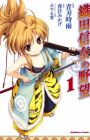
I will preface that Bounen no Xamdou (Xam’d: Lost Memories) has been my favorite anime of all time since I watched it for the first time around a decade ago. This manga has been a white whale of sorts for me; I had long since come to terms with the fact that the only way I would ever be able to read it would be to either learn Japanese or wait for a potential fan translation.
I’ve held off on the former because, frankly, how could I possibly explain to people that my principal motivation for learning an entire language is to read a three chapter
...
spinoff comic from 2008 with almost zero information online without sounding like a deranged mega-weeb wearing an ill-fitting yutaka whose every other sentence begins with “erm, actually…”?
So, the latter it was. But the chances of a quite obscure spinoff manga from a mostly forgotten show from nearly two decades ago having enough interest to have someone spend the time to make a translation? Might as well play the lottery.
After doing my routine checking-to-see-if-Junreisha-no-Compass-got-translated ritual every couple years I get on a manga browsing kick, I finally hit gold. There it was, my holy grail. In hindsight, I probably should’ve played the lottery. (Thanks to Ainikki The Archivist for a great and beautifully formatted translation!)
My long-winded, rambling intro seeped in an inflated sense of self-importance aside, the question remains: was Bounen no Xamdou: Junreisha no Compass worth the wait? I think so. Although it depends what you’re looking for. I will be looking at the manga mostly in terms of how it contributes to the anime it’s derived from, as I assume interest in reading this manga would be born from watching its parent anime.
This story centers around three characters. First, there’s Karahina and Hina, two sisters from Tessik (Nakiami’s birthplace in the anime). The former is a brash, short-tempered girl who will stop at nothing to protect her sister, and the latter is a cheery-dispositioned girl rendered mute by an accident in her childhood that embedded a Hiruko in her that gives her the ability to transform into a Xam’d (similar to Akiyuki’s inciting incident from the anime). There is also Isshin, a somewhat meek boy that got roped into travelling with the sisters after an altercation between them and the military (Also similar to Akiyuki’s role in the anime).
These characters possess similarities to some of the central characters in the parent show, although their dynamic is quite different, as the manga was much lighter in tone than the anime, having many comedic moments. Karahina is often the source of comic relief, as her loud personality and penchant for justifying stealing using religious doctrines leads to a number of chaotic situations, a bemoaning Isshin in tow. In a way, Isshin and Karahina’s somewhat adversarial relationship is a more comical version of Akiyuki and Nakiami’s strained relationship early on in the show. Hina is the Xam’d stand-in, and while she gets a few cool action sequences, she unfortunately isn’t much of her own character outside of that.
This leads me to the manga’s biggest shortcoming being its length, or rather the lack thereof. It tries to tell a fairly ambitious story within only three chapters, and while this allows for several diverse locations and sequences, the characters suffer for it. Isshin, and to a lesser extent Karahina, just barely get an arc, leaving Hina mostly as a plot device.
That being said, the character arcs that do exist in the manga are in harmony to themes presented in the anime. Isshin went from cowardly to standing up for Karahina and Hina despite the political tensions surrounding the people of Tessik, citing the belief in all living people and things having equal value—a belief that was central to Nakiami’s character in the anime. It was also nice to see Isshin's friendship develop with the sisters.
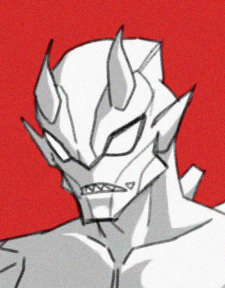
As a quick aside, the artstyle was also a bit of a step down from the Ghibli-esque look from the anime, although it fit the difference in tone well enough, as well as the action sequences being dynamic and cool to look at. The design of Hina’s Xam’d form was also a certified banger—the bridal veil-like fins and legs reminiscent of harem pants fit in great with the rest of the wonderfully strange Xam’d designs. (According to the design notes in the manga, it was designed by Seiichi Hashimoto, the designer of the Xam’d from the show, so it checks out.)
Importantly, this manga doesn’t trounce on anything the anime stood for, although if you liked the anime for its more subtle moments, you won’t really find that in the comedic tone and breakneck pace of the manga. (Although I will say the ending does capture the essence of some of this.) Despite this, revisiting the world of Xam’d in manga form was quite the treat. While not adding any explicitly new information, the manga helped to flesh out the world a bit which is always a plus.
The best part of this manga for me was the references to the anime. As you may have already realized that I am a big fan of the show, it got me like Leonardo DiCaprio from “Once Upon a Time in Hollywood” pointing at my screen. I doubt most people are into Xam’d: Lost Memories enough in 2025 to devolve into the lowest common denominator amongst media consumers going “OMG I recognize that!!!” when they see something they know, but it’s charming to see nonetheless (especially the one in the epilogue).
Overall I enjoyed my brief time with this manga, especially after waiting for a decade before reading it, copium be damned (or Xam’d…lol). I would mark my Xam’d: Lost Memories journey finished here, but I hear there is a two-part novelization of the show written by the director himself that gives a more in-depth look at the characters. Maybe I should learn Japanese after all…
Reviewer’s Rating: 7
What did you think of this review?
Nice
 0
0
Love it
 0
0
Funny
 0
0
Confusing
 0
0
Well-written
 0
0
Creative
 0
0Show all




.png)