Mar 11, 2013
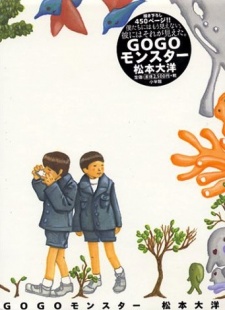
Youth can be an incomprehensible and overwhelming deluge of new ideas and emotions. This sensation is most certainly heightened in the place that they amalgamate and coalesce: at school. Everyone has a different way of adapting to this, but they generally all fall under a similar guise: children simply try to fit in the best they can through the emulation of their peers. But then there’s people like Yuki Tachibana.
Elementary schooler, Yuki, goes his own way by instinctively distancing himself from the sheer inscrutability of youth. He perceives school life in a very different way than most. As Yuki sees it, there’s an assemblage of
...
monsters working behind the scenes who are the cause of every major development within the school. When a kid almost drowns, Yuki surmises that the monsters were trying to pull him down. Even something as innocuous as a slight change in the students’ collective behavior is the clear result of the monsters’ manipulation, according to Yuki. Furthermore, because he acts out on these visions, he is ostracized by his peers and treated as a delusional kid in need of help by most of the school’s staff, leading Yuki to dismissively regard most adults as ‘rotten,’ thoroughly alienating himself in the process.
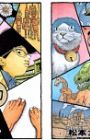
But Taiyo Matsumoto, the mangaka responsible for Gogo Monster, isn’t quick to reveal whether this is a truly supernatural occurrence that only Yuki is privy to, or if it’s all imagined in a subconscious attempt to rationalize his peers’ incomprehensible behavior. This duplicity is depicted in a masterfully expressionistic style that puts the reader into the same mental space as Yuki Tachibana. Drops of rain are given faces, people mutate into monsters, and the entire geography of the school evolves with its students’ collective worldview. Matsumoto’s line work is very sketchy and expressive, creating an suitably surrealistic atmosphere. When Yuki’s mental equilibrium takes a turn for the worse, the line work becomes hastier and the proportion of Yuki’s surroundings become progressively more skewed and abstract. Matsumoto also employs a very cinematic style, making use of frequent pillow shots and filmic pacing. This style is very characteristic of Matsumoto's work, but it's especially at home in Gogo Monster. All things considered, Gogo Monster is an unique and engaging experience start to finish, and that is in no small part due to Matsumoto’s idiosyncratic craftsmanship.
This unique presentation is hardly a novelty though, as it is all for the benefit of carrying out Gogo Monster’s proportionally peculiar story. In essence, Gogo Monster is Yuki’s coming of age story, albeit a very surreal take on the theme. Whether real or imagined, the monsters are the catalyst for Yuki’s growth as a character. Taken as a supernatural story, the monsters can be seen as an obstacle only Yuki can overcome, and becoming a stronger person in turn. Yet taken as a psychological story, one could easily view them as a defense mechanism employed by Yuki as a means of rationalizing his classmates’ behavior, or even a means of coping with his loneliness - some emotional problems that Yuki will have to overcome. It might even be a combination of both. In order to completely immerse the reader in Yuki’s world, the audience is only meant to understand as much as Yuki does. All of these lines of thought are equally poignant and intriguing, but it doesn’t become evident until the story’s beautiful resolution which is true - most of Gogo Monster is spent building its immersive atmosphere. What is consistent through this build up, though, is that it presents a rare insight directly into something as abstract as the mind of a youth coming into its own, and an incredibly distinct one at that.
Thankfully, Gogo Monster’s story isn’t nearly as impenetrable as this might suggest. The school’s caretaker is one of the few adults who is not ‘rotten' and provides a very valuable role model for the impressionable Yuki. Having worked at the school for many years, he has known many people with outlooks similar to Yuki’s - kids with a “special talent for seeing things the rest of us can’t see” - and is very sympathetic towards Yuki’s worldview, but he also hints that it is something Yuki will grow out of it soon. There’s a palpable uncertainty to the nature of Yuki’s visions, so the presence of the caretaker - a sympathetic and more objective third party - is in many ways the anchor that holds the story together, making Gogo Monster’s story a far more balanced and less overwhelming experience overall. Another source of balance can be found in Yuki’s few acquaintances, Makoto and IQ. Makoto is one of the few ‘normal’ kids who dares to reach out to Yuki in a rare attempt to truly understand what lies beneath his eccentric demeanor. Befitting of his name, IQ is a genius who's characterized by a similar proclivity to be a bit of an oddball recluse. He even hides his head in a box, which grows in size relative to the general conduct of his schoolmates, as a sort of defense mechanism. Being in a somewhat similar situation as Yuki, they find solace in each other at key points in the story. These three characters are paramount in instigating Yuki’s growth as a character and establishing a relatively neutral equilibrium, both for Yuki and the story as a whole.
At the end of the day, Gogo Monster flawlessly marries a complex coming of age story with an equally compelling presentation. It’s a rare example of something where its form truly reflects its content, and while both are something worthy of admiration on their own, the effect of them working in tandem as perfectly as they do is nothing short of awe inspiring.
Reviewer’s Rating: 10
What did you think of this review?
Nice
 0
0
Love it
 0
0
Funny
 0
0
Confusing
 0
0
Well-written
 0
0
Creative
 0
0Show all



.png)