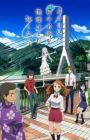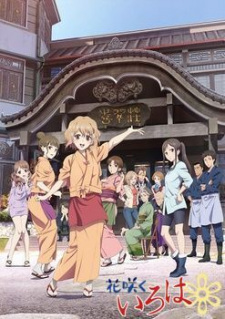
Alternative TitlesEnglish: Hanasaku Iroha ~Blossoms for Tomorrow~ Synonyms: Hana-Saku Iroha Japanese: 花咲くいろは
Information
Type: TV
Episodes: 26
Status: Finished Airing
Aired: Apr 3, 2011 to Sep 25, 2011
Duration:
24 min. per episode Rating:
PG-13 - Teens 13 or older
L represents licensing company
StatisticsScore: 8.061 (scored by 29269 users)
Ranked: #3922
Popularity: #243
Members: 57,290
Favorites: 572 1 indicates a weighted score
My Info
Popular Tags
No tags found |
SynopsisAfter her single mother decides to run off with a boyfriend to dodge debt collectors, the young and energetic Ohana is sent to live with her grandmother. However, her grandmother is the strict owner of a hot springs inn and requires her to work at the inn to pay for her living expenses. Although Ohana is unhappy about this situation at first, she decides to make the best of her situation and work hard. Ohana's life is suddenly filled with fun, mischief, and drama!
[Written by MAL Rewrite] |
Related AnimeAdaptation: Hanasaku Iroha Side story: Hanasaku Iroha: Home Sweet Home
Characters & Voice Actors
Staff
Reviews
|
|
Raffinate
90 of 146 people found this review helpful
|
26 of 26 episodes seen
|
| Overall |
8 |
| Story |
8 |
| Animation |
9 |
| Sound |
8 |
| Character |
9 |
| Enjoyment |
8 |
I enjoy slice of life. I really do. The problem I have with them is that it’s incredibly difficult to find one that isn’t terrible. The two biggest pitfalls I find with the genre are the lack of compelling plots and the lack of depth as the episodes get drowned in clichés. They often end up simply being boring as the episodes drag on to the formulaic beach/school festival/holiday routine in an attempt to entertain. Needless to say, I’m usually turned off by the introduction to a slice of life anime before I can even get into the series.
I watched Hanasku Iroha with massive heaps of cautious optimism. The entire premise sounded a little worrying. It tells of a teenage girl, Ohana, who experiences a set of circumstances that would send her to live and work with her grandmother, who owns and manages a hot spring inn of a small town. A hot spring inn staffed by mostly teenage girls? With that setup, fanservice seemed to be primary driving force.
Watching the first few episodes, I was pleasantly surprised. The characters had depth and were likable. The stereotype of the doting grandmother never got played out, settling for the minor stereotype of the “tough love” grandmother instead. There were actual obstacles presented to the characters. The events of one episode held consequences over the next episode. And for some bizarre reason, the anime that least needed fantastic animation had some of the best animation of the season.
The central message of Hanasaku Iroha is one about purpose. Ohana is pulled out of her comfort zone and sent into an unknown town. Here, the insecurities of her life are magnified. Here, she suddenly is faced with the uncertainty of where she wants to go in life. Here, she is forced to grow up, just a little bit. However, she embraces her new life and tries to find her place as one of the waitresses of the inn. She begins to learn more about herself, her place in life, and her family. Her resolve to face these challenges serve bring about change in the staff of the inn. Each member of the staff are faced with a crossroads on where they see themselves heading. As the story progresses, there is legitimate growth in each character. In the end, even the status quo of the inn is changed as a result of this growth with Ohana’s grandmother closing the inn to allow the staff to pursue their own dreams.
One of the best points of the series is how well they understand their audience. Each point that needs to be made is clearly made without underestimating the audience’s ability to understand. They show character development and conflicts rather than telling us about it. Some of the best scenes have no words at all, something that can easily be afforded with the animation quality. As a result, the plot doesn’t get too caught up in its own complications. They focus in on a situation just enough to get us tied to the characters before attempting to tug at our heartstrings.
As captivating and dramatic as it is, Hanasaku Iroha has its drawbacks. Remember that fanservice I suspected a few paragraphs back? It’s certainly here. It never completely dominates the series, but it doesn’t add anything either. My stance of fanservice is a disapproving one. I’ve never felt that it’s truly necessary for the female characters to disrobe for whatever reason or to include all these bath scenes. At best, it’s an odd scene to inject into an otherwise good episode; at worst, it is the entire series. Thankfully, the episodes that do include fanservice use them with a decent amount of restraint. Like I said earlier, it doesn’t harm the series as a whole. It’s just a bit unnecessary.
The romantic dramas within the series are a whole mixed bag for me. I enjoyed the drama they added and how it complicated the situation at the inn at times. Yet, the infuriating pacing and lack of closure on some of the stories really got to me. I know that the focus is supposed to be on the characters themselves while the romance is used to contrast their growth throughout the show. Then again, with the possible announcement of a second season, there should be plenty of time to flesh out those side stories in addition to showing us what the staff is up to now.
Hanasaku Iroha has reaffirmed my belief in slice of life series. It’s raised the bar for what will pass as entertaining and engaging and hopefully, it’ll continue to do so in its possible second season. I’m still going to approach these shows with cautious optimism, though. There’s just too much crap out there sometimes. read more
|
|
Archaeon
195 of 333 people found this review helpful
|
26 of 26 episodes seen
|
| Overall |
7 |
| Story |
6 |
| Animation |
9 |
| Sound |
8 |
| Character |
7 |
| Enjoyment |
7 |
"Like father, like son. Like mother, like daughter"
There's an age old belief that certain traits are passed down from parents to children, and like most ancient convictions, there's an element of truth to this one. It's a well known fact that much of a person's future behaviour is learned during their formative years, and while it's true that children will instinctively copy the mannerisms and behaviours of the role models closest to them (which in most cases means their parents), even trained professionals and researchers can't fully explain the "inheritance" of less tangible traits like stubbornness, temper, perspicacity, etc.
But what does all that have to do with a show about a girl who goes off to work at a hotsprings inn? Well, not enough to be honest, and that's biggest problem.
Hanasaku Iroha (The ABC's of Blooming), is an original anime from P.A. Works that tells the story of Matsumae Ohana, a 16 highschool student who, due to a variety of circumstances regarding her mother, is forced to move away from Tokyo to live with her estranged maternal grandmother, Shijima Sui, at the hotsprings inn that she owns. Knowing that she has no choice in the matter Ohana tries to make the best of her situation, and at the request of her grandmother she begins working at Kissui Inn.
It all sounds like a fairly straightforward set up for some teenaged melodrama, and for the most part that's what viewers will get. The plot is functional, but the anime can often have difficulty getting to the point or sticking to the storyline, and there's little in the way of originality where the narrative is concerned. In addition to this there appears to be no real direction or cohesiveness with the progression of the series, and these factors may cause viewers to wonder when the story will offer up some actual development.
That said, there's a surprisingly interesting subtextual thread that runs through the plot (which we'll cover in a bit), but because of the numerous issues with the main storyline it's often overlooked. The sad part is that Hanasaku Iroha would have had a much, much better storyline if Okada Mari had simply removed certain events from the screenplay and tightened up the narrative.
Thankfully, some thought seems to have gone into the visuals.
P.A. Works deserve some applause for the effort they've made in producing Hanasaku Iroha as it's easily one of the better looking anime of 2011. The artwork tends towards realism rather than the cartoonish offerings of several titles I could mention, and while this allows for some rather picturesque backgrounds and settings, there are numerous occasions where the usage of various lighting effects create some truly stunning imagery. The animation is fluid, and unlike many other shows of this type, there's a surprising range of movement for both people and animals.
The characters are an interesting mix of styles and shapes that can sometimes appear a little plain, but in actuality there's a method to their design that may not be obvious at first glance. The thing to bear in mind is that the story takes place at a working hotsprings inn, and because of that Sekiguchi Kanami has tried to create a contrast with the picturesque surroundings.
One of the notable aspects of Hanasaku Iroha is the background music, or rather, the lack of it. There's a nice variety of styles on offer ranging from pastoral pieces (which in some cases sound a bit like elevator music), to upbeat little ditties, but it's the lack of musical accompaniment in many scenes that fits very well with the often quiet tone of the series.
Which is why the number of tracks used for the opening and ending themes seem ... a little too much.
Like many 26 episode anime, Hanasaku Iroha features two main opening and ending songs that change over at the midway point of the series. The show begins with a surprisingly well put together sequence that introduces the more prominent characters, but the track used for this, "Hana no Iro" by Nano Ripe, is a fairly bland piece that only works because of some good audio/visual choreography. In contrast to this closing sequence is a simple montage of Ohana and her three friends that has been set to "Hazy" by Sphere. From episode fourteen the opening track changes to "Omokage Warp" by Nano Ripe (again), which is a far more upbeat song than the previous one, and while the animated sequence is different to that of the first OP, the quality and content are pretty similar. The closing song, "Hanasaku Iroha" by Clammbon, is a feelgood ballad set to an animated image of Ohana and her friends, but unlike the other sequences it doesn't seem like much effort has been put into this one.
There are also two more ending themes, "Tsukikage to Buranko" (episode 6), and "Yumeji" (episode 8), once again performed by Nano Ripe, but there doesn't actually seem to be any real reason for their inclusion so one has to wonder why they were used in the first place.
Given the fact that this is a highschool drama, one might expect a degree of overemphasis when it comes to the acting, but there's surprisingly little of this in the dialogue. The script is well balanced between each of the roles, and while there are occasions where the seiyuu "fest it up", in general the voice actors deliver some very good performances. In addition to this there's a surprising, yet clear demarcation between the adult and teenage roles that is apparent not just in the manner of speech, but also in the language used.
One of the problems with the lack of direction and cohesiveness in the storyline is that it has a direct impact on the prominent characters, and this is the main reason why some viewers consider Ohana to be a very lacklustre lead role. Unfortunately, there's little in the dialogue that can actually raise her above average, and while there are clear efforts made to develop her character, these can often seem contrived or unnecessary.
That said, it's the supporting characters who really steal the show.
From Ohana's mother, Matsumae Satsuki, to Kawajiri Takako, the business consultant for Kissui Inn, the adult roles are defined from the start of the series, and this makes a nice contrast to the somewhat vague characterisation of Minko, Nako and Yuina (Ohana's friends). The series also makes the effort to further develop several of the supporting roles, and because of this the subtextual thread in the plot comes to light.
On the surface Hanasaku Iroha is nothing more than another teenaged melodrama, but underneath it's also a story about family and role models, and that aspect of the series is far more intriguing than much of the exisitng plot. The relationship between Sui, Satsuki and Enishi forms the cornerstone of everything that happens at Kissui Inn, and unlike many other anime out there the series handles the dynamics of this in a very realistic manner. Thanks to the efforts made to highlight how each person affects the other two, several minor but key clarifications of the storyline become apparent, the most notable being the reasons for the estrangement between Satsuki and her mother, Enishi's desperate attempts to win his mother's approval and finally step out of the shadow of his sister, and Ohana's festival wish at the end of the series.
Hanasaku Iroha isn't as good as it could have been, but that doesn't make it bad. If one is able to tolerate the tangents in the storyline then it really is a pretty decent show at its core, and it's a fairly good depiction of working life in a hotel. That said, at 26 episodes this series really is far too long, and it can often feel like certain events or situations were added only to fill the required number of episodes. Unfortunately the detrimental effect this has on the character interactions may lead to some viewers giving up on the show entirely,
The sad part is that if the series had been trimmed down and the subtextual plot given more prominence, this could easily have been a contender for the best anime of 2011, but as it is right now it's nothing more than another show that joins the ranks of "Coulda, Woulda, Shoulda". read more
Recommendations
|
|
Each person has to come up with a dream for themselves. However, sometimes you need someone to show you the way. Both of the females try to make their dreams come true, one in finding her dream, and one in achieving the dream she's already found.
the protagonist in both is very similar in personality. both anime are about achieving a dream. In both the protagonist has a school friend that has feelings for her. Both give you a nice relaxing happy feeling. Great animation and ost too.
Ohana and Chihaya are strong-willed female leads. Both series are similar in terms of tone, themes, and execution with regard to character building.
it has the similar feel and almost the same kind of character vibes..
•Both Females have the same view on life
•Both feature people trying new things with new friends
•Both have the same warmhearted feeling to them
•Exploration & Emotion!
Both have gorgeous animation and are about the lead characters pursuing their dreams. They also give a similar feeling when you watch them.
Similar main female leads with straightforward personalities. Both series involve the main character trying to achieve her dream. Both series are also dramatic and emotional at times, especially Chihayafuru.
Both series are lighthearted and contains a small cast of likeable characters in a typical every day life of view.
Both series contains characters who are following a dream and hoping to make it into a reality through hard work, determination, and a little help with the encouragement of their friends.
The series' main characters also has strong wills and determined to achieve that dream.
Both series contains drama, comedy, and a little inklings of romance here and there as the characters interacts with one another (either from the past, present, and what's to come for them into the future).
Both series' main female protagonists also has similar personalities.
Both Chihayafuru and Hanasaku Iroha are coming of age stories about young women struggling to find their place in world. Ohana and Chihaya both search for something to be passion about and their stories follow them through their hard work and determination towards their goals: becoming the best, succeeding and making the people around them feel good. Both stories center themselves around traditional Japanese cultural themes (inn keeping, karuta). Both have beautiful animation and character designs, paired with wonderful costumes. There is also a degree of romance (specifically love triangles) in both series as well as lot of female bonding. Both of these series are exceptionally good and I would highly recommend them to anyone who likes female-empowerment stories or slice-of-life in general.
Both of these shows are about the main character's finding of a unknown hobby. Ohana and Chihaya are also very similar personality-wise.
|
|
|
Both Anime have beautiful Animation, the characters are amazingly diverse and the story is driven by the emotions of the characters and one can feel like they are really there. It is also slice of life that carefully picks what it is going to be about and focuses primarily on that with the little extras on the side
P.A. Works made both of these gorgeous shows. Characters also are quite similar.
High quality art and animation, colourful, adorable, shining characters
Both series are from the same company, P.A. Works, and have similar atmosphere, music, and character designs. I can't help but see Ohana from Hanasaku Iroha in Konatsu, due to their similar looks, their lovable determination, and silly actions. Sakai also looks similar to Minko and has already shown that she can disagree just as loudly, though perhaps less violently.
This show does center around High School and include male characters more than Hanasaku Iroha, but I'm sure that fans of the first will find at least some of the charm in this show as well.
Both series has a slice-of-life stylish theme in the story. The characters design are similar as P.A. Works is involved in both series.
Both series are also realistic and explores every day life.
Additionally, Tari Tari and Hanasaku Iroha has the similar feeling of wanting to accomplish something in life with the help of their friends.
Both have the same style of artwork (animated by P.A. Works).
The characters have very similar personalities: Ohana and Miyamoto both have the energetic determined personality; Nako and Sawa are both the quite good friends, and Minko and Sakai are both cold and tsundere.
They have the same school setting as well.
Both are focused on a group of close friends making the genre slightly slice-of-life but with a bit of deeper meaning to them.
The art is Very similar, both produced by the same studio ( PA.works)
They both have a story line based on slice of life and drama
Although Hanasaku Iroha is more romance drama, Tari Tari is more personal Drama ( drama that is about the character only for example trauma) with slight comedy.
|
Opening Theme#1: "Hana no Iro (ハナノイロ)" by nano.RIPE (eps 2-13) #2: "Omokage Warp (面影ワープ)" by nano.RIPE (eps 14-25)
Ending Theme#1: "Hana no Iro (ハナノイロ)" by nano.RIPE (ep 1) #2: "Hazy" by Sphere (eps 2-5, 7, 9-10, 12-13) #3: "Tsukikage to Buranko (月影とブランコ)" by nano.RIPE (ep 6) #4: "Yumeji (夢路)" by nano.RIPE (eps 8, 26) #5: "Saibou Kioku (細胞キオク)" by nano.RIPE (ep 11)
#6: "Hanasaku Iroha (はなさくいろは)" by Clammbon (クラムボン) (eps 14-21, 23, 24) #7: "Hi Leap (ハイリープ)" by nano.RIPE (ep 22)
more
Fansubbing Groups
Which fansubbers do you like the best? Click + to approve of their subs for this show. Click - if you don't think they did such a great job.
Animakai [Animakai] (Brazilian Portuguese)
Related ClubsKanae Itou Fanclub, Slice of Life Club , Lyos Anime, Anime Revolution ♡, P.A. Works Fan Club, MAL Rewrite, Hana-Saku Iroha FC, Hanasaku Iroha, uOttawa Anime Club, nano.RIPE FC, SeitoCast Anime Podcast, Scrumdiddlyumptious Food in Anime, Yuuki Kaji Fans., Rikugou.org, Minako Kotobuki FC, Anime Power Rankings, Will Of Fire, P.A Works, Anime Land, PA WorksOmigawa Chiaki Fan Club, Ohana Matsumae FC, ★ Лучший аниме проект в сети - AniMedia.TV ★, Character Manager, Minchi FC, Romance Bit*hes see all
Recently Watched By|
39 minutes ago |
56 minutes ago |
1 hour ago |
1 hour ago |
1 hour ago | |
2 hours ago |
2 hours ago |
3 hours ago |
3 hours ago |
3 hours ago |
|
|