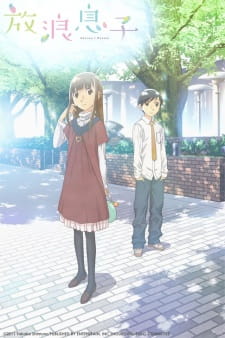
Alternative TitlesEnglish: Wandering Son Synonyms: The Transient Son Japanese: 放浪息子
Information
Type: TV
Episodes: 11
Status: Finished Airing
Aired: Jan 14, 2011 to Apr 1, 2011
Duration:
23 min. per episode Rating:
PG-13 - Teens 13 or older
L represents licensing company
StatisticsScore: 7.861 (scored by 7879 users)
Ranked: #6112
Popularity: #713
Members: 17,367
Favorites: 137 1 indicates a weighted score
My Info
Popular Tags
No tags found |
SynopsisThe story depicts a young boy named Shuuichi Nitori who wants to be a girl, and his friend Yoshino Takatsuki, a girl who wants to be a boy. The series deals with issues such as transsexuality, gender identity, and the beginning of puberty.
Please note that this series was 11 episodes when aired on TV but 12 episodes when it was released on BD & DVD. See more info for further details.
(Source: Wikipedia) |
Related AnimeAdaptation: Hourou Musuko Other: Hourou Musuko Specials
Characters & Voice Actors
Staff
Reviews
|
|
JudeMaverick
32 of 46 people found this review helpful
|
11 of 11 episodes seen
|
| Overall |
9 |
| Story |
9 |
| Animation |
10 |
| Sound |
8 |
| Character |
8 |
| Enjoyment |
9 |
There is no doubt in anyone’s mind that a poorly researched work on a touchy subject can frustrate people off. The anime medium is infamous for blatantly using offensive stereotypes; One Piece is one of the weirdest examples out there for attacking racism and then, using racial stereotypes.
Then, there’s the animes that deal with the LGBT community.
Stereotyped as flamboyant creatures, the LGBT community suffers through insulting stereotypes and invectives. One of the least prominent group of the LGBT body is transgender community; there is so little focus on them. As far as most ignorant people are concerned, they are crossdressers. Nothing more.
Hourou Musuko, or Wandering Son, is a work, based on the bestselling manga, that focuses on crossdressers, puberty, and transgender issues. It serves to educate -- and entertain -- viewers about gender identity. What does it mean to be a boy or a girl? Why do people have so many problems with guys dressing up as girls? Are crossdressers “weird”?
The work tackles these questions through the eyes of Nitori Shuichi. He never like being a boy; he always feels he should have been a girl. Takatsuki Yoshino, a girl, wishes she is born as a boy. She hates wearing girly clothing. Both these main characters feel strangled over societal norms on gender issues and this anime adaptation does great justice in focusing their struggles.
Because this work starts in medias res, the drama immediately starts and that is one of its greatest strengths. It doesn’t waddle on setting the work; the work has an inviting introduction that explains most of the events explained in the manga in the first episode. Personally, the first episode is one of my favorite first episodes out there; it is so impressive that I said, “Wow.”
While it rests on the familiar tropes and archetypes, there is an engaging twist on everything. If you think love triangles are the most boring trope out there, Hourou Musuko will flabbergast you. Chiba Saori, a straight female character, falls in love with Nitori as a girl while Nitori has a crush on Takatsuki. The love triangle situation grows even more complex and captures the viewers’ imagination. Dramatic and slice-of-life situations are there for a reason: to characterize. There is nothing redundant about them and everything feels well-placed. Interestingly enough, the work climaxes on the silly anime cliche: a play in a cultural festival; however, it is one of the best endings out there in anime.
Everything about the characters feels realistic. Nitori and Takatsuki are definitely two of the best written LGBT characters out there; they act like people in real life facing actual dramatic situations. Except they have problems identifying themselves. Saori, while being a more unconventional -- and almost insane -- character, has a degree of believability. Ariga Makoto, Suehiro Anna, and Doi Shinpei -- despite their labels as supporting characters -- are strong characters that complement the drama in the work; it seems bizarre to call them supporting characters. While Sarashina Chizuru may vex viewers, her placement is a necessary evil.
The minimalist watercolor palette for its art is powerful. Bright colors and thin outlines almost feel like you are viewing a moving watercolor painting. Lush backgrounds have never been this interesting. The character designs look fantastic and dynamic. What can I say? Hourou Musuko’s art style is unbelievably incredible.
“Itsudatte” by Daisuke is a charming acoustic piece for an OP: clear vocals, catchy acoustic pieces, fantastic lyrics. While I find it hilarious that the OP focuses on furniture and symbols, its symbolism is worthy of praise. It introduces the serious yet enchanting elements of this work. The ED, “For You” by Rie Fu, is a soothing pop music, but loses its memorability quickly.
Fans argue that its noitaminA’s position creates problems with this work. Its 11 episode structure has condensed the work quite significantly. Despite that, it is an excellent way to introduce viewers to the manga; its easygoingness gives little problems.
So how does Hourou Musuko compare to the likes of other slice-of-life works? Excellent. Its pleasant nature does not scare off viewers; rather, it educates them about the issues. The animation staff did not back off from the issues, no matter the consequences. That, to me, is admirable. read more
|
|
Lord_El_Wilio
41 of 63 people found this review helpful
|
11 of 11 episodes seen
|
| Overall |
8 |
| Story |
7 |
| Animation |
10 |
| Sound |
9 |
| Character |
8 |
| Enjoyment |
8 |
Let me get this straight, I usually don’t watch gender-bender series or anything that is related to the genre. Actually, I don’t recall one anime that I saw that the focus was with cross-dressing of any sort. That said, Wandering Son would actually be the first anime that I have seen that made usage of this trope. And to be honest, it came to be one of the best series of the winter 2011. Wandering Son is a short and calm anime that was enjoyable for its simple, but thoughtful story.
Wandering Son starts off with an interesting structure. Instead of starting from an extremity, the beginning or the ending, the anime begins somewhere in the middle of the original story. Of course, it is assuming that either the viewer is familiar with the manga or is watching the series seriously. I’m saying this because it is easy to get lost in the anime as it refers a lot to pass events and it is mostly through dialogue than flashbacks. Actually, I applaud the director for using such a direction, simply because that the story works on already constructed and broken relations rather than focusing on making some. However, where the story keeps its real strength is in the problematic itself. Of course, our main characters have an idea of cross-dressing and wanting to be the opposite sex, but such dilemma is never blatantly exposed in the anime, nor does it make it over-dramatic. Instead, Wandering Son almost works as a slice of life. And by that I do not mean IT IS a slice of life, since it is absolutely not, but the story is found between the lines, between the dialogues and the actions of the characters. This way, the anime is helped by a correct blend between light moments and drama. While it is mostly a serious show, the happy moments are never actually forced and it sometimes it is not really sure if a scene was to be happy or sad. Ironically, the lack of focus in the story can also be a weak point for some, as it may get hard to get into a story that doesn’t really shows itself. From this point, it is really a matter of preference. Personally, I think the calm development is the best way to go, since a direct focus would make it too dramatic for nothing. Of course, the story wouldn’t matter without its cast, which exactly knows what it has to do.
Wandering Son has a relatively large cast. Only, it is clear that the anime only focus on the main characters rather than the supportive cast. This way, the small amount of 11 episodes is enough for the viewer to learn about the characters that are really important to the show. As for the others, they play their supportive role very well and that is a big plus point in the series. What is really fascinating about the cast is really the way they are used as whole rather than individually. More precisely, the representation of the classroom can almost be taken as one big character. The chemistry of the students is something I’ve rarely seen in the medium. Individually, the characters aren’t bad at all, but there is a tad annoyance. Looking at characters such as Nitori, Takatsuki and Chiba, they are certainly well written characters. However, especially for Chiba, their way of thinking can often look too far away from the physical age. It’s always hard to represent children or prepubescent teen correctly and realistically in anime and Wandering Son certainly doesn’t have the best one of them all. Of course, I might be wrong on this one, but the characters really were too mature for their age. Though, I wouldn’t say it’s a problem since it works greatly with the story and the feeling of the anime. Childish characters wouldn’t go well with subjects such as gender crisis and the fear of puberty.
The anime is accompanied by a wonderful soundtrack. While the opening song might be debatable, (I for myself wasn’t a big fan of it) the series itself is helped by wonderful melodramatic piano compositions. A prime example is in the first episode where Claire de Lune is played at the end. Not only I respect them for the use of a very popular composition, but it was also completely fitting with the situation. The music is never poignant in Wandering Son. Instead, it is played gently and calmly in the background. You don’t really pay attention, but you know it is well there. As for the voice acting, glad to know that it wasn’t a typical high pitched voice you would often see with children. For most of them, they did a really good job, and while Nitori had mostly a monotone voice, it went very well with its personality.
Another point that is easy to notice in Wandering Son is the artwork which is very similar to book art. I don’t know the reason behind this, but I found it to be relieving. In contrast to the melancholy feeling of the series, the light pastel colors help the viewer to go through the whole series and take it as a lighter anime. The character design is meant to be normal in this show, and so it’s usual for them to look like typical children. However, the artwork is enough to make them look different from the mass. I just can’t say it enough; I simply fell in love with the artwork.
To fill it up completely, Wandering Son is simply a good anime that blends dramatics elements with lighter ones in the best way possible. Even though the style might not be your cup of tea, which is a valid point, I still recommend it to everyone who wants to try something serious once in a while. Really, it shows how the anime industry is still trying to give us original titles rather than the same formula over and over again.
read more
Recommendations
|
|
Both are beautiful slice of life dramas that involve peculiar romance. Aoi Hana's about 2 girls that fall in love and Hourou Musuko's about a boy that wants to be a girl and a girl that wants to be a boy that fall in love.
They're both adapted from manga which have been written and drawn by the same mangaka, Takako Shimura.
If you like one of these anime, you will like the other.
Besides the fact that they have the same manga author, they have an incredibly similar feel. Both Hourou Musuko and Aoi Hana are slow-paced dramas dealing with different characters as they grow up and issues with their sexuality, although they touch on different topics and the characters in Aoi Hana are a little older. Each of them have great, relaxing BGM to go along with their stories. I'd say they're about the same in quality.
Both animes are based in mangas from the same mangaka.
Similar ethereal art.
The characters express their emotions and problems through plays.
|
|
|
Both are anime about childhood friends in the same school. They have similar art too.
Anime is about students in schools and both has the light feel to them.
Both animes are about a group of school friends who have been together for very long.
|
Opening Theme"Itsudatte" by Daisuke (eps 1-10)
Ending Theme#1: "For You" by Rie Fu #2: "Itsudatte" by Daisuke (ep 11)
Fansubbing Groups
Which fansubbers do you like the best? Click + to approve of their subs for this show. Click - if you don't think they did such a great job.
Related Clubs***FictionJunction YUUKA (Yuuka Nanri) Fanclub***, Anime boys who are looking like girls, Watch Anime Together Club Headquarters, noitaminA, Dark Legends fan club!, Anime Blue, Anime Experience, Draccon's Tea House, Youthful Days - Young bl & friendships , Heterophobia, Kickapoo Fansub, Hourou Musuko~fan club~, Traps & Reverse Traps, Shounen-ai / Shoujo-ai Brasil
Recently Watched By|
6 minutes ago |
3 hours ago |
3 hours ago |
5 hours ago |
5 hours ago | |
7 hours ago |
7 hours ago |
7 hours ago |
9 hours ago |
11 hours ago |
|
|