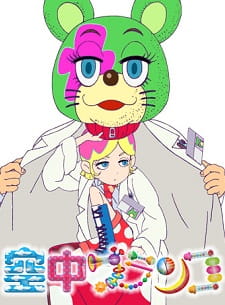
Alternative TitlesEnglish: Welcome to Irabu's Office Synonyms: Kuchu Buranko, Trapeze, Flying Trapeze Japanese: 空中ブランコ
Information
Type: TV
Episodes: 11
Status: Finished Airing
Aired: Oct 15, 2009 to Dec 24, 2009
Duration:
25 min. per episode Rating:
R - 17+ (violence & profanity)
L represents licensing company
StatisticsScore: 8.201 (scored by 7345 users)
Ranked: #2762
Popularity: #953
Members: 18,593
Favorites: 408 1 indicates a weighted score
My Info
Popular Tags
No tags found |
Recommendations Submitted by Users
|
|
Very similar style in which they tell their stories. You see events from different perspectives and how everyone is related by the end of each series. They each may seem solely episodic but by the end you see the big picture and how everything fit together. They're both pretty psychological and delve into its characters minds to confront their delusions and problems.
Crazy art style, weird characters, and both are shows not by Shaft.
All episodes technically fall within the same time frame with newer scenes often approaching older ones from a different perspective.
Both series are more than capable of offering a multitude of bizarre situations complete with their own purpose without ever losing their entertainment or depth value.
Coupled with this, they employ a wonderful, sensational art style that directly contrasts the show.
Few psychological shows, let alone anime, are this entertaining and this good!
Kuuchuu doesn't exactly have an overall narrative like Tatami Galaxy, but it has subtleties that infer that certain events are connected.
Tatami's stories are culminating. As such, it gambles it all on it's final point.
Both series have very unique art-styles, unique stories, and are great.
Trapeze, though has follows the personal struggles of several individuals who share a common psychiatrist.
|
|
|
Both works are about investigating disorders. Kuuchuu Buranko is about treating actual psychiatric disorders while Bakemonogatari is about treating the supernatural. Think of Buranko as the psychiatric version of Bakemonogatari and Bakemonogatari as the supernatural version of Buranko.
both deal with unusual problems and both contains specific art. as Bakemonogatari contains small arcs with spiritual problems, Kuuchuu Buranko deals with pacients with psychological problems.
Both have interesting styles of art, often making use of photographs or realistic images in the animation. Kuuchuu Buranko features a new patient every episode, and Bakemonogatari has short arcs, each focused on one of the girls.
|
|
|
Both of them deal with the inner universe within a human's head. We explore various images of unconscious through an unique style of animation and character designs. Mind Game and Kuchu Buranko also features some real actors playing roles of anime characters. Sometimes they're integrated in the whole picture, by adding some drawn elements to their appearance, sometimes they completely separate from anime.
PS personally don't like to write recs after the first ep, but in this case it seems that Kuchu will work out in Mind Game style.
Both have innovative and different art styles and deal with psychologycal themes.
Using a similar art style and high-energy animation, both are deliciously surreal and amazingly engaging.
|
|
|
Wonderfully, these two anime capture your attention from the start. The protagonists of the series dually act as minor and major roles in the "episodic" storyline. The two protagonists from Bartender and Trapeze tend to deal with peoples social troubles and help them solve them through strangely fitting and often intriguing ways. The anime Bartender is more serious, while Trapeze cracks jokes to enhance the psychedelic mood. If you're contemplating on watching these and are led astray by the art or concept, give either a try! If you enjoyed or are enjoying either, check the other one out - you won't be disappointed.
Psychological slice of life with intellectual plot and adult characters. The only main character is the one who listen to the stories of his customers and unites all pieces of this mosaic.
|
|
|
Both anime are crazy comedies about psychological issues. They include playing with different types of animation and are drawn in an uniqe way.
Unique and new, at times even strange or crazy, animation, offbeat stories and characters, and most importantly people with odd psychological problems.
|
|
|
Both of these anime deal with the psycosis of the mind, paranoia, problems with how people mentally think, as a good deal of the characters have some sort of problem with themselves or other people around them, coming from having some sort of mental problem that needs to be fixed. Of course... the way the problems are fixed varies in the two shows.
Paranoia Agent's numerous cast is also made up of very varied people interconnected with one another and each suffering of a particular mental ailment. The series explores deep into their psyches, if in a way less obvious manner than Kuchu Buranko while building up a compelling paranormal plot.
|
|
|
Both shows are psychological shows with some zany "realistic" character designs. Kuuchuu is about an array of psychological problems while Aku no Hana is about growing up.
|
|
|
This may seem crazy, seeing that xxxHolic is a supernatural show and Kuchu Buranko is about psychological disorders, but if you look beyond their genre they really are rather similar.
Both shows involve the main characters and their sidekicks solving people's problems; both make you look at things from a different perspective; and both have problem solvers who are rather crazy, Irabu in one and Yuuko in another. Effective, but crazy.
Plot-wise, xxxHolic and its sequel are more developed as there are way more episodes, but they're both equally entertaining.
|
|
|
Hmm, psychiatrist vs. mushishi..!!
|
|
|
Though both are vastly different in genre and plots, the two are very similar in terms of presentation. For those who fell for the artistic usage of patterns in Gankutsuou as I did, then Kuuchuu Buranko might be for you. KB is a mish-mash of medias, combining colorful, ornate patterns with live media. Like Gankutsuou, it is was truly makes this eleven episode series unique. Also, as stated before, despite the different genres and telling of stories, the two have compelling tales, and is certainly worth a watch for something different than the norm of today's ecchi and otherwise.
|
|
|
both of them attract with the atmosphere and performance of the complete madness, put in an order which makes it impossible to turn eyes off it.
|
|
|
They both totally F*CK around with your head
|
|
|
Deals with psychology. If you liked Kuuchuu, Perfect Blue is definitively worth checking out as it falls into that abstract psychological genre as Kuuchuu, Mind Game, Paranoia Agent and Paprika. These series are King in value, in my opinion.
|
|
|
Zany animation, eccentric characters and a very eye opening, unique feature of introducing real humans in anime.
|
|
|
Both anime are episodic, revolving around a central character who helps various others solve their problems. Natsume Yuujinchou focuses more on the relationships between characters and the heartwarming feeling, while Trapeze focuses more on the personal development of the self and the comedy of the process. The similarity is subtle and not apparent at first glance, but for me, at least, there was a comforting feeling common to both series.
Oh, and in my opinion, both are very, very good.
|
|
|
Kuchu Buranko is the newest series made by the same staff of Mononoke. Despite having considerable different themes and settings, both have unique art style and animation techniques, with mysterious and intriguing plots led by mysterious and intriguing main characters. If you're enjoying Kuchu Buranko, check Mononoke. If you enjoyed Mononoke, check Kuchu Buranko.
|
|
|
Both anime has an element of using real people. Cooking Idol has a segment of real people instructing cooking, while Kuchu Buranko has real people in the anime.
|
|
|
There are weird people in both shows and a similar use of vibrant and saturated colors.
|
|
|
strange, colorful, funny and crazy.
|
|
|
Both deal with psychological problems and the ways to solve them.
The visual part is also similar - it gives the viewer the same feeling of irreality.
Both are filled with weird characters.
|
|
|
Various psychiatric disorder
|
|
|
Both Anime use experimental animation using cut outs of real life photography, or things simular to it.
|
|
|
Both animes use real people in the shows
|
|